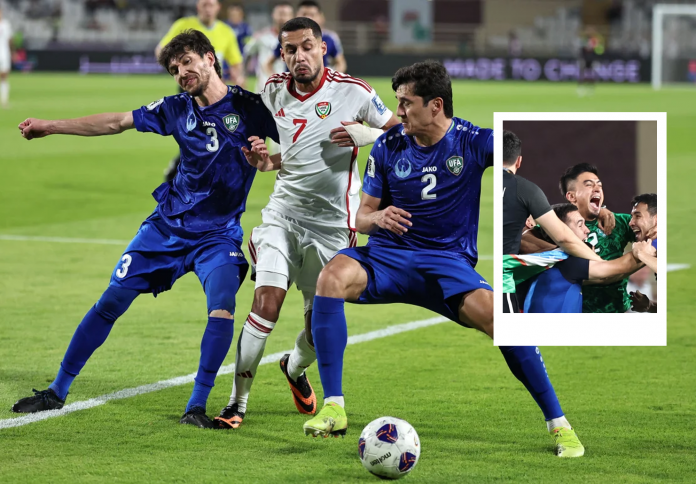
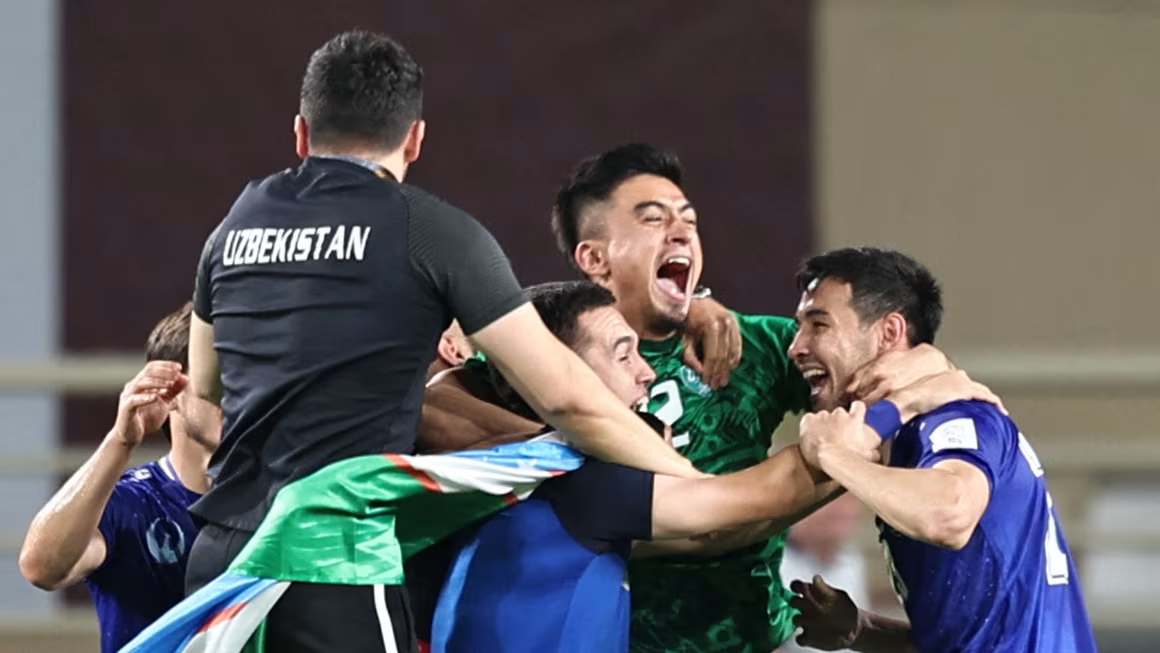
Uzbekistan has made sporting history by qualifying for its first-ever FIFA World Cup, becoming the first Central Asian nation to reach football’s biggest stage. A hard-fought draw against the United Arab Emirates in Abu Dhabi sealed the milestone, igniting celebration in the soccer-obsessed country of 36 million.
A nation’s dream becomes reality
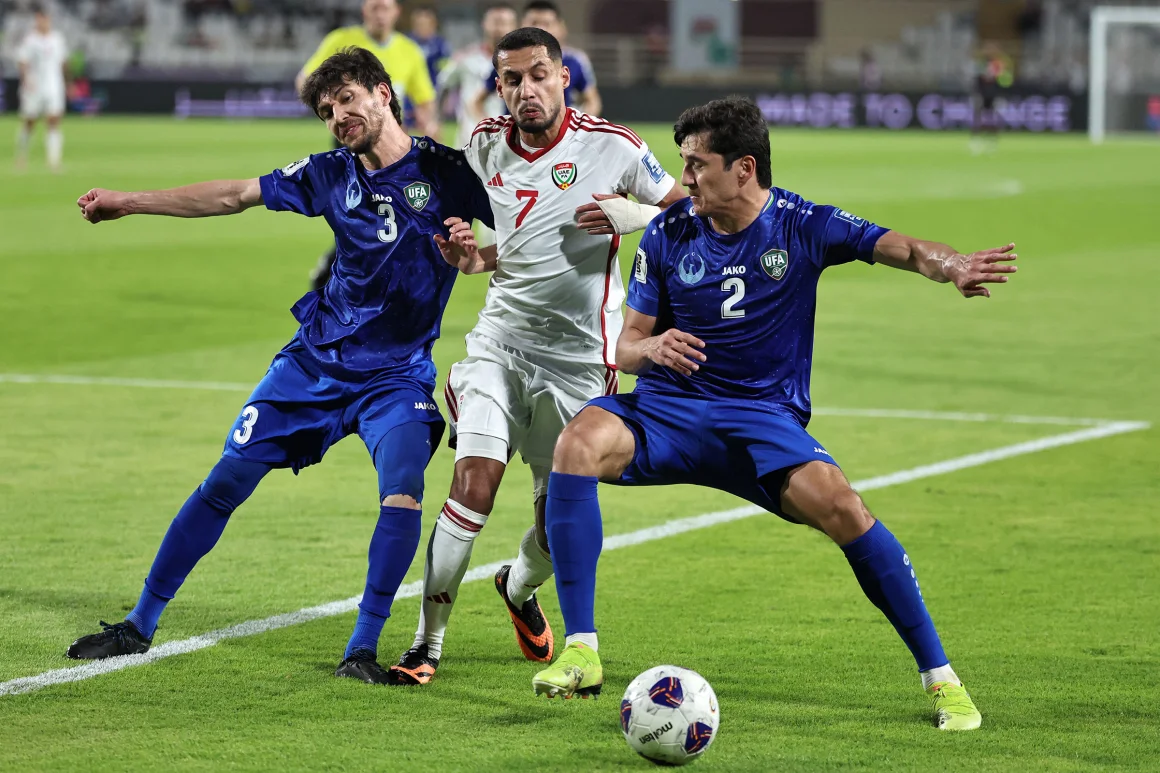
On a humid night in Abu Dhabi, the White Wolves of Uzbekistan secured a result that echoed far beyond the final whistle. The 0-0 draw against the UAE may not have been glamorous on the score sheet, but it was historic. It guaranteed Uzbekistan a top-two finish in Group A of the Asian qualifiers, and with it, a place in the 2026 FIFA World Cup to be held across the United States, Canada, and Mexico.
This moment marks the first time a Central Asian nation has ever qualified for the World Cup—an achievement that has electrified the region and elevated Uzbekistan to a new level on the international sporting stage. It also came with a sense of poetic timing, arriving on the Islamic holiday of Eid al-Adha, which made the celebrations even more profound for the majority-Muslim nation.
“This is a brilliant result, which will be written in golden letters in the annals of our national sport,” President Shavkat Mirziyoyev said in a statement. “Our players have given a true holiday gift to the people of Uzbekistan.”
The heroes behind the historic night
At the heart of Uzbekistan’s gritty defensive performance was goalkeeper Utkir Yusupov, who made six crucial saves to keep the Emirati attack at bay—including a dramatic, last-second stop that preserved the draw. For a team built on organization, youthful talent, and hunger, it was a fitting way to earn their place among football’s elite.
The defensive core of the squad is anchored by 21-year-old Abdukodir Khusanov, a towering center-back who signed for Manchester City in January in a £33.6 million (approx. $45 million) move. Alongside him, striker Eldor Shomurodov brings years of European experience, having played in Italy’s Serie A since 2020. Another standout is forward Abbosbek Fayzullaev, a dynamic attacker at CSKA Moscow who was named Asia’s Youth Player of the Year in 2022.
These players are the visible faces of a deeper transformation in Uzbek football—one that has been in the making for over a decade through investment in youth systems, infrastructure, and international exposure.
A golden generation and a growing legacy
Uzbekistan’s qualification for the 2026 World Cup is no fluke. It is the culmination of sustained success across all age groups. The country won the AFC U-23 Asian Cup in 2018, followed by the U-20 title in 2023, and most recently, the U-17 Asian Cup in 2024. Earlier this year, the national U-23 team also secured a berth at the 2024 Olympic Games—another first for the nation.
With the country currently ranked 57th in the FIFA men’s rankings, Uzbekistan is now punching above its weight and positioning itself as a growing power in Asian football. While the expansion of the World Cup to 48 teams has provided more opportunities for nations in Asia, Uzbekistan’s early qualification—with a match to spare—suggests they would likely have made it even under the old 32-team format.
What stands out is the timing and consistency of this rise. Since gaining independence from the Soviet Union in 1991, Uzbekistan has nurtured a quiet ambition in the sporting world. Now, that ambition has matured into results that resonate across the continent and beyond.
A celebration beyond football
The scenes back home in Uzbekistan were jubilant. Streets across Tashkent and other cities filled with flag-waving fans, traditional drumming, and fireworks. Families gathered in squares to watch replays, while social media exploded with congratulations in Uzbek, Russian, and English.
The cultural impact of this achievement is hard to overstate. Football has long been a passion in Uzbekistan and throughout Central Asia, but success at the senior international level has remained elusive—until now. For a region often overlooked in global sporting conversations, Uzbekistan’s qualification represents not just personal triumph but collective validation.
Wednesday’s upcoming home match against Qatar in Tashkent, while no longer decisive for qualification, is expected to be a celebration of unprecedented scale. Tickets are sold out, and the players will be welcomed as national heroes.
New standards for Central Asia
Uzbekistan’s milestone has also raised the bar for its neighbors. While countries like Kazakhstan, Kyrgyzstan, and Tajikistan have made strides in domestic football, none have managed to break through on the world stage.
That changed again just hours after Uzbekistan’s triumph when Jordan also qualified for its first World Cup by defeating Oman 3-0. In the broader context of Asian football, this reflects a welcome shift toward greater parity and competitive diversity—traditionally, the region’s qualifiers have been dominated by Japan, South Korea, Iran, and Australia, who have once again made it to the finals. Now, with Uzbekistan and Jordan in the mix, and with additional qualifying spots available in the expanded format, the football map of Asia is evolving—and getting deeper.
Eyes on 2026
As Uzbekistan looks ahead to the World Cup, the question now becomes: how far can they go? With a generation of European-based players, a tested tactical identity, and a nation fully behind them, the White Wolves enter uncharted territory—but not unprepared. They will be underdogs, certainly. But if their rise over the last decade has shown anything, it’s that Uzbekistan thrives when underestimated.
The journey that began in the streets of Tashkent, on dusty training pitches and under the radar of the footballing elite, has finally led to the sport’s biggest stage. Now, the world is watching.