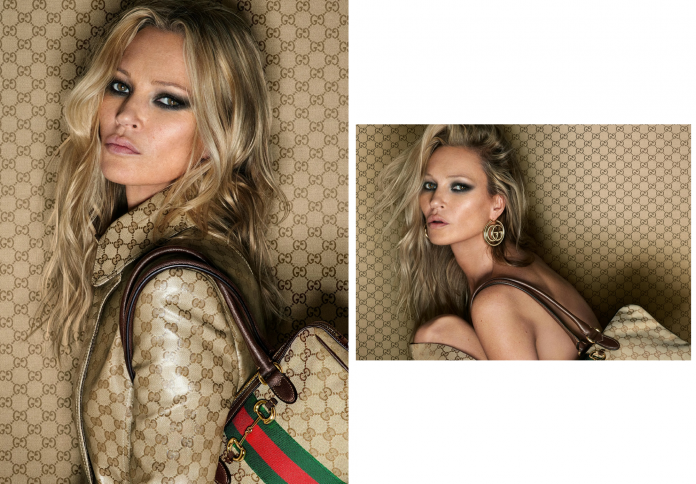
In the Spring/Summer 2026 campaign, titled “The Beauty and the Bag,” Gucci has once again proven its capacity to transform the humble accessory into a totemic symbol of modern luxury. Under the creative direction of Sabato De Sarno, the campaign serves as an extended love letter to the brand’s new cornerstone: the Borsetto Giglio handbag. By framing this specific silhouette against the backdrop of an ethereal, dreamlike urban landscape, Gucci suggests that the handbag is not merely an accessory to one’s outfit, but the anchor of one’s entire narrative. This collection marks a departure from the maximalist chaos of previous years, favoring a refined, architectural approach that balances the house’s storied heritage with a sharp, forward-looking pulse.
The Anatomy of the Borsetto Giglio
The Borsetto Giglio—Italian for “Lily Bag”—is the definitive protagonist of the season, designed with a structural integrity that bridges the gap between historical archival shapes and contemporary utility. Characterized by its soft yet resilient leather, intricate geometric hardware, and a signature lily-inspired clasp, the bag represents a return to the “refined minimalism” that has defined De Sarno’s tenure. Unlike the oversized, slouchy totes that dominated the previous fashion cycle, the Borsetto Giglio is compact, deliberate, and undeniably architectural. Its design language is centered on tactile satisfaction; the leather is treated to be as smooth as silk yet durable enough for the rigors of daily wear, proving that Gucci is prioritizing the “lived-in” luxury that today’s discerning consumer demands.
What makes this bag particularly striking is its versatility. In the campaign, it is styled with both the sharp, tailored silhouettes of the daytime office-wear and the fluid, iridescent evening dresses that dominated the S/S 2026 runway. The transition is seamless, reinforcing the idea that the Borsetto Giglio is a “trans-seasonal” investment piece. By focusing on a single, powerful silhouette, Gucci is signaling a shift toward a more focused design philosophy. Instead of bombarding the market with endless options, they are doubling down on an object of desire that feels timeless, signaling a new level of confidence in the brand’s creative direction.
The Beauty and the Bag: A Visual Narrative
The campaign itself, shot by visionary photographer David Sims, treats the handbag with the reverence usually reserved for portraiture. “The Beauty and the Bag” isn’t just a marketing slogan; it is a conceptual exploration of the symbiotic relationship between a woman and her most intimate companion—her bag. The imagery is stripped of unnecessary artifice, focusing instead on the light, shadow, and interaction between the model and the accessory. This minimalist approach allows the product to stand as the primary storyteller. In one notable frame, the handbag is placed in the center of a bustling city street, a singular point of calm amidst the blur of movement, emphasizing its role as a steady, reliable anchor in the wearer’s life.
By stripping away the bells and whistles, Gucci highlights the craftsmanship inherent in the Borsetto Giglio. Every stitch, the weight of the metal hardware, and the tension of the handle are displayed with crystalline clarity. This transparency is a calculated move to appeal to a generation of shoppers who prioritize quality and heritage over fleeting trends. It positions Gucci not just as a fashion house, but as a technical master, reminding the global audience that behind the glitz of the catwalk lies a deep, unwavering dedication to the art of leatherwork that has sustained the house for over a century.
The Architecture of Modern Desire
As Gucci moves deeper into 2026, the S/S 2026 collection acts as a benchmark for the industry’s current fixation on “quiet, grounded luxury.” The success of the Borsetto Giglio will likely set the tone for the coming seasons, proving that the consumer is moving away from logos and toward subtle, unmistakable markers of quality. De Sarno’s Gucci is becoming a brand defined by its ability to synthesize “the dream” of high fashion with the practical realities of the modern woman’s lifestyle. It is a balancing act that requires both artistic flair and commercial precision, a duality that the brand currently navigates with remarkable ease.
The long-term impact of this campaign will be measured not just in sales, but in the brand’s ability to maintain its cultural relevance through simplicity. By turning the spotlight onto one hero piece, Gucci is creating a “must-have” phenomenon that feels earned rather than forced. In a market where luxury houses are constantly fighting for “viral” moments, Gucci’s pivot toward the architectural beauty of the Borsetto Giglio feels like a breath of fresh air. It is a reminder that when a design is inherently right, it doesn’t need to shout to be heard; it simply needs to be held.