Design is rarely a linear progression of function; at its best, it is a restless interrogation of materials, histories, and the very ways we inhabit our spaces. As we move through the early months of 2026, the pieces that capture our collective imagination are those that defy expectations—whether through the use of carbon-absorbing micro-algae, the revival of ancient nomadic textiles, or the structural playfulness of slanted timber. This month, the curation of furniture and lighting featured in our highlights reflects a deliberate pivot toward the experimental. From the streets of London to the studios of Mexico City, these eight standout works serve as a reminder that the most compelling design today is not just about utility; it is about storytelling, ecological awareness, and the quiet subversion of the everyday.
Material Alchemy and Ecological Narrative
The most striking trend this month is the emergence of “living materials” that do more than occupy space—they actively engage with their environment. Japanese studio We+ continues their exploration into sustainable futures with SO-Colored, a project that amalgamates powdered micro-algae with bio-derived resins. These vibrant, geometric lamps are a masterclass in regenerative design; not only do they utilize one of the earth’s oldest biological resources, but the material also functions as a carbon sink, absorbing CO2 throughout its lifecycle.

This dedication to material narrative is mirrored in Hawa Al-Najjar’s Soof Chair. Crafted from felted wool, silk, and waxed linen, the piece is a poignant homage to the ancestral cloaks of shepherds from the Caucasus and Kurdistan. By grounding the design in deep cultural history and utilizing renewable, biodegradable components, Al-Najjar elevates furniture into a vessel for heritage preservation. It is a work that invites us to think not just about the object’s place in our home, but about its eventual return to the soil.
Subverting Structural Expectations
Beyond the material, there is a clear appetite for structural subversion—designs that force the eye to pause and re-evaluate. In Seoungsik’s X’Y’Z chair series is a prime example of this visual intrigue. By intentionally slanting the timber seating at unexpected angles, the designer creates a trompe l’oeil effect that challenges our assumptions about comfort and stability. It turns the act of sitting into a deliberate, conscious choice, encouraging users to find new ways to recline and engage with the furniture.

Similarly, Brian Thoreen’s Pink Rubber Shifting sconce finds beauty in the unexpected properties of synthetic materials. Known for his playful material experiments, Thoreen uses cascading folds of pink rubber to create a sculptural light source. Installed in the Mexico City restaurant Rosetta, the lamp captures a soft, diffused glow that emphasizes its generous curves, proving that industrial materials, when treated with artistic intent, can produce results that are both ethereal and highly intimate.
Reclaiming History through Modern Lens
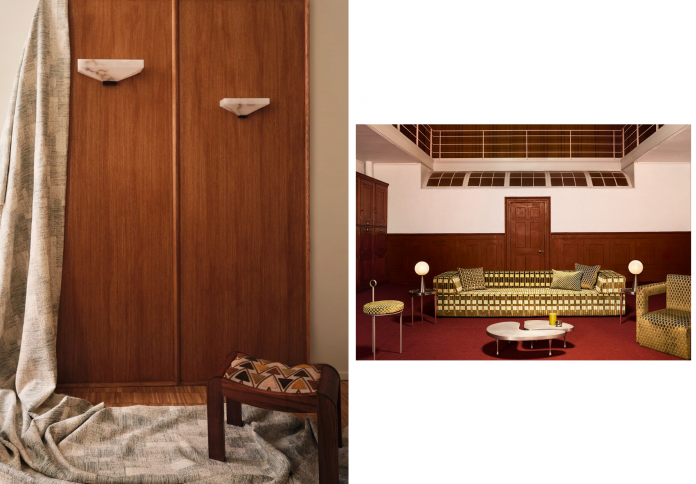
Sometimes, the most innovative step forward is one that looks backward. The collaboration between textiles brand Kirkby and Transport for London (TfL), Underground Vol III, serves as a bridge between the past century of public transit and the contemporary home. By upholstering furniture in patterns derived from iconic moquette designs—fabrics that have defined London’s travel experience since the 1910s—the collection transforms a mundane, collective history into a series of highly personal domestic objects.

This dialogue between form and function is also evident in the La Corbeille wall lamps by Hauvette & Madani. By shifting from the studio’s traditional timber to a strikingly veiny alabaster, they have transformed the lamp into a sculptural sconce that integrates seamlessly into a bespoke wooden wardrobe. It is a clever, two-in-one solution that emphasizes the importance of fluid design in the modern, space-conscious home. When combined with the clean, screw-less geometry of Kutarq Studio’s 4D Coffee Table—a triumph of hand-bent craftsmanship—it becomes clear that the focus for March has been on the marriage of technical precision and poetic execution.
The Future of the Domestic Interior

As we close out the first quarter of 2026, these selections illustrate a broader shift in the design landscape. We are moving away from the mass-produced, static object toward work that requires an emotional investment. Whether it is the bold, colour-drenched geometry of We+ or the quiet, heritage-led craftsmanship of Al-Najjar, these pieces prove that our domestic environments are becoming increasingly personalized and intellectually demanding. Design, in its current iteration, is no longer just about filling a void; it is about curating a lived experience that acknowledges our responsibility to the planet and our connection to the deep histories that have shaped the objects we use every day.