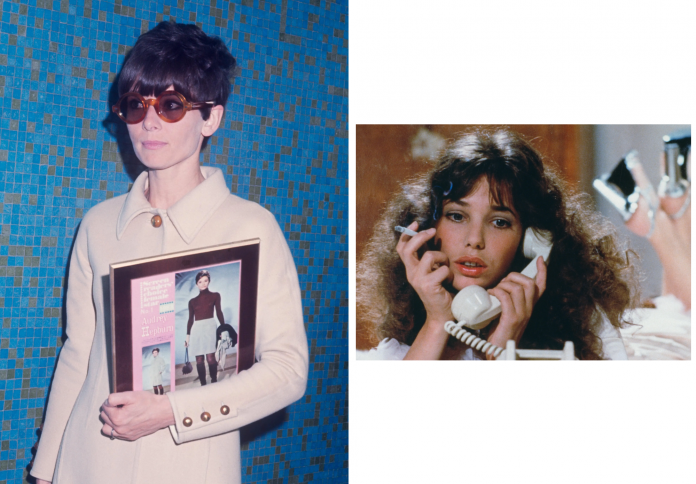
In a culture defined by the rapid churn of digital trends, the concept of the “It Girl” has evolved from a superficial title into a complex psychological phenomenon. No longer merely a reflection of fame or beauty, the It Girl of 2026 represents a masterclass in identity curation. By examining icons from the past—such as Jane Birkin, Audrey Hepburn, and Kate Moss—we find that their enduring status was never about excess, but about clarity. These women did not just follow trends; they imprinted themselves upon the collective consciousness through a ruthless commitment to self-definition. They understood that the most seductive illusion is not effortlessness, but the disappearance of effort, turning the act of dressing into a form of intellectual and visual coherence that remains legible even decades later.
The Anatomy of Coherence
What separates the transient influencer from the archetypal It Girl is the concept of consistency. While modern social media encourages constant reinvention, the It Girl archetype thrives on a “ruthless commitment” to a specific visual language. Whether it is Jane Birkin’s signature undone bangs or the chaotic-but-couture aesthetic of Sarah Jessica Parker, these figures used their personal style as a site of sublimation, translating desire, anxiety, and rebellion into a repeatable, identifiable aesthetic. They understood the power of the “edit”—choosing to subtract rather than add—to create a visual identity that reads almost instantly. In a world of endless options, their power lies in their ability to remain identifiable, transforming their style from a mere collection of garments into a personal methodology.
This clarity of identity acts as an anchor for the audience. As we navigate a landscape of digital overload, our brains are hardwired to recognize and remember what is coherent. The It Girl offers a shortcut for an entire “vibe,” a quality that persists long after the specific trends they championed have faded. By studying their consistency—noting what they repeat, what they refuse to wear, and how they define their aesthetic limits—we see that being an It Girl is less about the wardrobe and more about the discipline of the self. They serve as a north star for those seeking to resolve the tension between who they are and the image they project, proving that the most powerful thing one can be is legible.
From Myth to Method
The transition of the It Girl from a historical myth to a contemporary method is a direct result of our obsession with visibility in the attention economy. Today’s It Girl is often viewed through a “digital hall of mirrors,” where the pressure to optimize and perform existence leads to a cycle of imitation. Yet, the true power of the archetype remains in the radical act of remaining “ordinary” or distinct. The most impactful figures today are those who resist the pressure to conform to the “Aesthetic of the Day,” instead reclaiming personal style as an expression of self-love rather than self-improvement. They treat their image as a site of precision, moving away from the “compare and despair” cycle that characterizes so much of modern social media usage.
Ultimately, the phenomenon is a study in what we lack. We crown these women because they seem to have resolved a sense of internal coherence that many of us are still searching for. They act as a mirror for our own aspirations, offering a glimpse of what it looks like to be fully “resolved” in one’s own skin. Whether through the lens of a Freudian interpretation of fashion or simply as a result of expert personal branding, the It Girl remains a vital figure. By choosing a visual language and staying fluent in it, they remind us that style is not just about what we wear, but about the clarity with which we communicate our identity to the world.