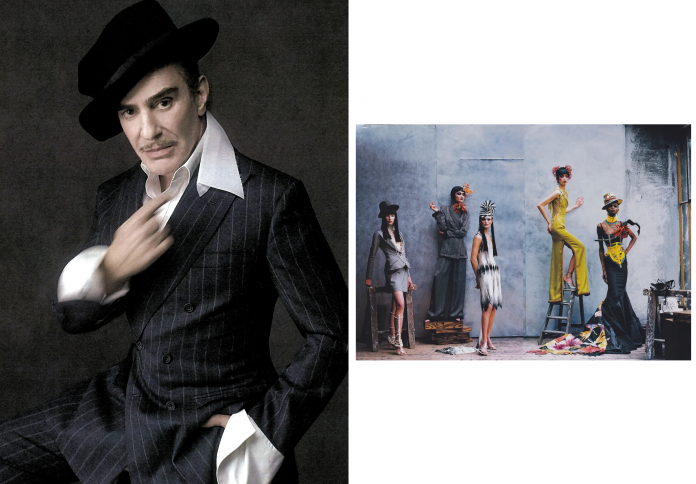
In a move that has effectively recalibrated the boundaries between high-concept couture and high-street accessibility, John Galliano’s partnership with Zara has emerged as the most significant fashion milestone of 2026. By synthesizing the theatrical DNA of the designer’s storied career with the manufacturing prowess of the Inditex giant, the collection—dubbed “Galliano for Zara”—transcends the typical “designer-to-mass-market” collaboration. It represents a bold attempt to democratize the intricate, storytelling-heavy designs that previously existed only within the gilded sphere of the atelier. As the collection lands in select global flagships this June, the fashion industry is forced to confront a new reality: the avant-garde, once the preserve of the elite, has been successfully translated into a wearable, industrial-scale language.
The Synthesis of Narrative and Utility
John Galliano is arguably the most accomplished storyteller in modern fashion, and his Zara collection is a masterclass in distilled narrative. Rather than diluting his vision to suit mass-market expectations, Galliano has leaned into his signature tropes: bias-cut silhouettes, intricate archival drapery, and romantic, historical undertones. The collection features a curated range of evening wear, statement outwear, and accessories that feel unmistakably Galliano, yet are executed with the commercial pragmatism required for a global rollout. The technical feat here is the translation of complex pattern-cutting—the hallmark of Galliano’s work at Dior and Maison Margiela—into a scalable, production-friendly format that maintains the structural integrity of the original design.
For the modern consumer, this partnership offers an unprecedented opportunity to own a piece of “Galliano history” without the barrier of entry associated with couture pricing. The collection manages to feel “lived-in” and ethereal, bridging the gap between historical romanticism and the demands of contemporary street style. It is a testament to Galliano’s evolving relationship with his audience; he has proven that his creative process is not tethered to the rarity of the materials, but to the precision of the cut and the emotional resonance of the final garment. By focusing on the “spirit” of his craft rather than just the decadence, he has created a range that feels both highly personal and entirely democratized.
A New Blueprint for Design Collaborations
The logistical success of this collaboration lies in the strategic deployment of materials and the rethinking of the Zara manufacturing model. By utilizing high-grade synthetic blends alongside limited runs of premium, sustainably sourced textiles, the design team was able to recreate the tactile complexity of Galliano’s runway pieces. This is not merely a brand-stamped collection; it is a full-scale creative intervention. Zara’s leadership has acknowledged that this partnership represents a pivot toward a more “authorial” approach to design, moving away from rapid-trend imitation toward a model where high-fashion creative directors oversee the production of limited-edition, capsule-driven content.
This shift suggests that the future of the high street may lie in this type of deep, creative integration. For Zara, the partnership provides a rare injection of “fashion authority,” elevating the brand’s standing among critical observers and high-fashion enthusiasts. For Galliano, the collaboration provides a platform to test his ideas within a completely different ecosystem, proving that his vision can withstand the pressures of global mass production. It is a symbiotic relationship that challenges the long-standing industry hierarchy, suggesting that the “new luxury” may no longer be defined by exclusivity, but by the ability to broadcast a singular, complex vision to a global audience.
The Cultural Impact of the Avant-Garde
As the Galliano for Zara collection becomes a fixture in wardrobes across the globe, its impact on the wider cultural conversation is already being felt. The garments have sparked intense debate regarding the role of the designer in a post-fast-fashion world, with many suggesting that this collection sets a new gold standard for future collaborations. It has forced critics to reconsider the artistic value of the high street, demonstrating that beauty and intellectual rigor can flourish even within the constraints of mass commerce. Whether this collection is viewed as a triumph of democratization or a radical expansion of the designer’s reach, it remains an undeniable landmark in the history of the 2026 fashion cycle.
Ultimately, the Galliano for Zara partnership serves as a bridge between two worlds that were once considered mutually exclusive. It invites the public to engage with the avant-garde in a way that feels intimate, relevant, and attainable, proving that the most enduring fashion is that which remains true to its creator’s voice. As the industry looks toward the next major creative disruption, this collection will stand as a reminder that the power of design lies not in where it is sold, but in the clarity of the vision that brings it to life. John Galliano has not just designed a collection for the masses; he has invited the world to participate in the ongoing evolution of his extraordinary creative narrative.