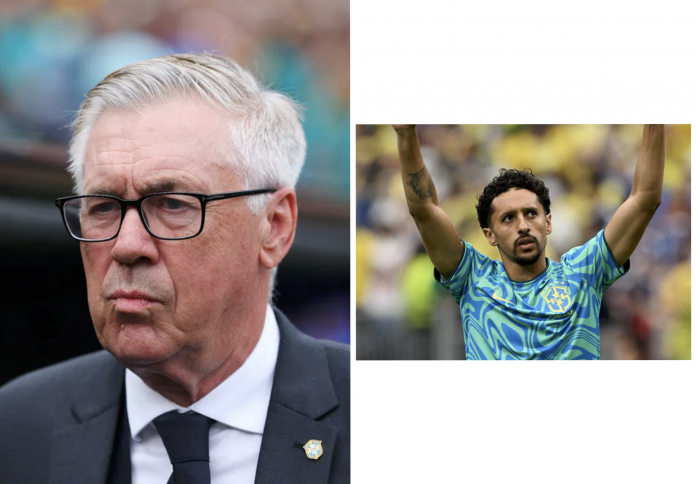
Brazil’s arrival in Kolkata for an October 2026 friendly against India carried a significance that extended far beyond the usual pre-match itinerary. Crowds welcomed the visiting side, while the city’s long-standing affection for South American football gave the occasion a festival atmosphere. The match brought the five-time world champions to the Vivekananda Yuba Bharati Krirangan, often called Salt Lake Stadium, where Indian football supporters could see an elite international opponent at home. Brazil coach Carlo Ancelotti spoke about wanting to provide entertaining football for the fans. Yet the deeper story was not simply the celebrity of visiting players. Kolkata has nurtured football loyalties across borders and generations; for its supporters, the match made an imagined sporting connection briefly physical, local and close enough to experience from the stands.
A welcome built before the team landed
Crowds of supporters greeted Brazil at the airport ahead of the friendly, but the excitement was not improvised for one international visit. Kolkata has long sustained intense affection for Brazilian football. Alongside Argentina, Brazil attracts devoted support in the eastern Indian city, especially when World Cup tournaments encourage neighborhoods to display national colors and debate rival traditions.
The connection is striking because neither team represents the city geographically. Football loyalties operate differently from state boundaries: memorable World Cup performances, influential players and family rituals can create attachments strong enough to survive years without a match in person. Kolkata's enthusiasm for Brazil is therefore part of its own local football culture, not simply imported fandom.
In that setting, a friendly against India represented a rare overlap between distant admiration and the national team's direct experience. Fans accustomed to supporting Brazil from television screens were able to welcome the side in their city. Indian players, meanwhile, faced an opportunity to measure themselves against opponents associated with one of the game's most recognizable football histories.
The stadium as a shared stage
The India–Brazil fixture was scheduled for October 3 at the Vivekananda Yuba Bharati Krirangan. The All India Football Federation announced the match in July and emphasized the exceptional standard of the opposition. Brazil had won five men's World Cups, and the federation described the encounter as an important landmark for Indian football.
Salt Lake Stadium already had a record of hosting major international football moments. Argentina played a friendly there in 2011 before a crowd reported to exceed 60,000, and Brazil's younger players appeared in Kolkata during the 2017 Under-17 World Cup. These events helped establish the venue as a credible setting for the sport's biggest global identities.
A stadium does more than contain spectators during matches of this kind. It becomes a space where the city's existing attachment is visible. Jerseys, banners and collective responses transform private fandom into public participation. The significance of a friendly is not limited to rankings or tournament points; in places where elite international matches are rare, the opportunity to be present becomes an event of its own.
Ancelotti’s promise and India’s challenge
Brazil manager Carlo Ancelotti recognized that the reception demanded a performance capable of matching the mood. Before the match, he said he was pleased to bring the national team to a region where its football is deeply appreciated. Wanting to entertain an enthusiastic crowd is different from guaranteeing a result, and the distinction matters in the unpredictable setting of international football.
For India's footballers, the occasion presented a contrasting set of responsibilities. They were representing the host nation against a side with vastly different international achievements. AIFF officials described the match as a rare chance for Indian players to test themselves against top-level opposition and learn from the experience.
That learning cannot be assumed from the fixture alone. A famous opponent can expose weaknesses in pressing, spacing and technical execution, but improvement depends on what players and coaches take from the experience afterward. The attraction of Brazil's reputation is immediate; the value for India's longer-term development requires analysis and follow-through once the celebrations end.
Why Brazilian football travels so well
Brazilian football's international reputation rests on generations of recognizable players, successful teams and a style that supporters often associate with creative attacking ambition. The history supplies fans with stories that can pass through families: different heroes become reference points for different ages, but affection for the yellow shirt persists.
Kolkata's dual enthusiasm for Brazil and Argentina adds another dimension. The rivalry may be far from South America, yet supporters use it to express belonging within the city's own sporting landscape. World Cup decorations are not simply decorations. They are declarations of loyalty, invitations to debate and rituals repeated across tournaments.
A visit from Brazil makes those rituals more concrete without requiring everyone to support the visiting team over India on match day. Someone can admire the Seleção's history and still want the home side to succeed. The coexistence of these loyalties is one reason an international friendly can produce complex, unusually generous sporting emotion.
What survives the final whistle
Major exhibition games are sometimes treated as temporary spectacles, their value rising and falling with the immediate score. Kolkata offers another measure. Brazil's presence contributes to a local sporting memory that includes earlier international visits and generations of World Cup watching. That memory can outlast the ninety minutes regardless of the result.
For Indian football institutions, the challenge is to convert visibility into practical benefits. Playing a leading national team can draw attention to the sport, yet growing opportunities for Indian players demands consistent development beyond a single high-profile fixture. The stadium crowd is evidence of enthusiasm, not a substitute for infrastructure.
The welcome given to Brazil in October 2026 made one thing plain: global football has deep local lives. Kolkata did not need a visiting team to discover its passion. The arrival of Ancelotti's side simply allowed that passion to occupy the airport, the streets and the stadium all at once.