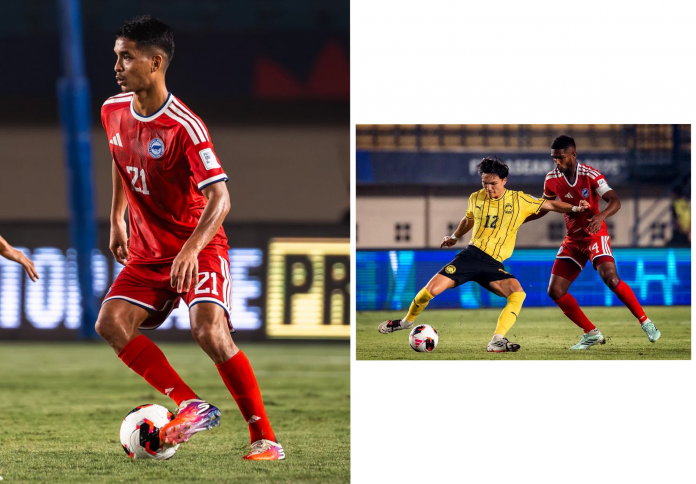
Singapore’s 6–0 defeat to Malaysia in the FIFA ASEAN Cup on October 1, 2026 was already an uncomfortable sporting result. The next day's conversation, however, moved well beyond the score. Viewers had heard a football commentary filled with strange references to European clubs and even a remark invoking golfer Tiger Woods. Mediacorp said the audio had been supplied by FIFA’s appointed host broadcaster and acknowledged audience concerns, while arrangements were made to replace it with a corrected version. Some fans wondered whether artificial intelligence was responsible, but reporting indicated the commentary was not AI-generated. The episode illustrates an overlooked dimension of major sports events: broadcasters do not simply show a match; their words help audiences understand it, and when that account breaks down, confidence in the coverage can falter regardless of what happens on the field.
The match was not the only thing viewers questioned
Malaysia's commanding victory over Singapore at the Si Jalak Harupat Stadium in Bandung ought to have given viewers plenty to discuss: the score, Singapore's defensive problems and what the result meant for the emerging FIFA ASEAN Cup. Instead, excerpts of the commentary began circulating because they seemed disconnected from the match itself.
References to European clubs including Liverpool and Borussia Dortmund confused fans watching a Southeast Asian international fixture. A particularly bewildering line invoked Tiger Woods as though the golfer were part of the football action. Such mistakes are not harmless decorations. Live commentary is supposed to identify what spectators are seeing and supply accurate context at moments when the screen cannot explain everything.
Errors also acquire special weight during a lopsided result. The Singapore team already faced scrutiny after conceding six goals to its regional rival. A broadcast that introduces irrelevant material divides public attention and risks making the event feel less professionally presented than the competition itself intends.
Who was responsible for the audio?
On October 2, Mediacorp said that the commentary was supplied by a host broadcaster appointed by FIFA rather than created independently for its own transmission. The Singapore broadcaster acknowledged complaints and said it had raised those concerns with the relevant parties. The host broadcaster was preparing corrected commentary intended to replace the existing version on mewatch.
That explanation matters because audiences often regard the platform carrying a match as responsible for every element of the viewing experience. In international production, however, the live feed and the commentary may pass through several organizations. Knowing where the audio originated does not make the errors acceptable, but it helps identify where correction and accountability should occur.
Reports also indicated that the commentator would not complete two remaining assignments and had received medical care following a health issue during the match. This detail is important to handle carefully: it should not become the basis for speculation about an individual's condition or a simplistic explanation for each mistake. The publicly established issue remains the quality of the broadcast and how institutions respond to it.
Why AI became the immediate suspicion
Some viewers suspected that the bizarre commentary had been generated by artificial intelligence. The guess is understandable in a media environment where synthetic voices and automated sports products have become familiar discussion topics. Unusual phrasing and improbable associations can resemble the errors people associate with language models.
Yet resemblance is not evidence. Reporting on the incident indicated that the commentary was not AI-generated. Audio checks performed by The Straits Times also pointed toward a human voice. The distinction matters because misattributing an event to technology can distract from the actual chain of production and the people and organizations responsible for quality control.
There is a larger lesson for media audiences. Technology can be a convenient explanation whenever a public performance appears strange, but allegations about how content was produced still require verification. Whether a broadcaster uses a human commentator, automated assistance or a mixture of tools, the output must be evaluated on accuracy and editorial standards rather than assumptions about its origin.
An ambitious tournament needs credible presentation
The FIFA ASEAN Cup was launched as an international platform to give Southeast Asian national teams greater visibility. FIFA had announced prize money and participation payments intended to support the competition's appeal. An event designed to elevate regional football depends not only on the teams and stadiums but also on the quality of its presentation to audiences across markets.
Commentary is especially influential when spectators are unfamiliar with particular players or football cultures. Clear descriptions can explain positioning, identify emerging talent and frame the stakes of a fixture. Mistakes involving unrelated leagues or another sport interrupt that educational role at precisely the moment a new tournament wants to establish an identity.
The corrections promised after the Singapore–Malaysia game therefore carry practical significance. Replacing flawed audio in an on-demand version cannot alter the live experience, but it acknowledges that the record of a match should be as accurate as possible. Future production also needs processes robust enough to detect and respond to problems quickly.
A defeat and a broadcast failure are separate stories
Singapore's result still demands a football analysis independent of the commentary controversy. A six-goal loss to Malaysia raises questions about tactics, defensive organization and competitive readiness. Coaches and players should not be evaluated through the confusion created by people describing the match from outside the field.
Likewise, criticism of the broadcast need not become personal ridicule. Viewers were entitled to expect relevant, accurate commentary, and the organizations involved were right to address complaints. The response should focus on responsibility, quality assurance and safeguarding reliable coverage rather than inventing explanations about the commentator.
The most useful conclusion from Bandung is not an argument about whether a strange sentence sounded synthetic. It is a reminder that the credibility of a sporting event rests on multiple layers. Fans need the match to be competitive, the feed to be accessible and the voices describing the play to be grounded in what is actually happening.