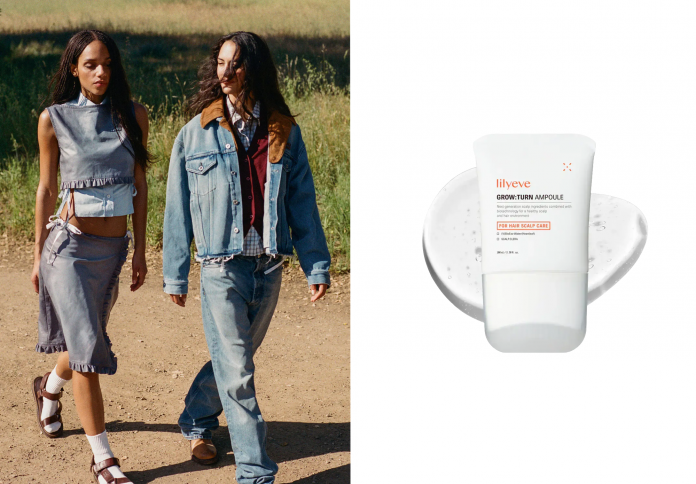
The international fascination with Korean beauty has increasingly expanded from facial skincare into haircare. Summer conditions make the shift particularly timely: humidity can intensify frizz, while sun, salt water, styling heat, and repeated washing can leave hair feeling rough or difficult to manage. Korean serums, scalp products, and conditioning treatments enter this discussion with familiar promises of shine, repair, and more comfortable daily maintenance. Yet hair is not simply skin that happens to grow longer. The fiber already visible above the scalp is biologically different from living skin, and the word repair can mean many things. The more informative way to approach a crowded product shelf is to separate scalp care from conditioning, understand what a product can realistically change, and evaluate the finish on individual hair rather than chasing a single universal ideal of glass-like shine.
The summer problem has several causes
Humidity changes how hair behaves partly because moisture in the surrounding air affects the fiber's bonds and shape. Heat styling can damage the cuticle, while friction, coloring, and repeated manipulation contribute to roughness. Salt water and sun exposure add further complications depending on hair condition and the amount of time outdoors. These factors do not create one single summer hair problem, and therefore should not automatically lead to one universal treatment.
A person with fine straight hair may want frizz control without losing movement. Someone with curls may prioritize definition and reduced dryness. Bleached hair can require a different balance of conditioning and protein-related treatments from undamaged hair. Products described as restorative are most useful when the description is tied to an observable issue: less tangling, easier combing, or a smoother surface after drying.
Shine is a surface effect
Glossy hair reflects light relatively evenly. When the outer cuticle is lifted or rough, reflected light scatters and the fiber can appear dull. Many conditioners, oils, and silicones work by changing surface feel and reducing friction. This can create a visible difference without reversing every form of underlying damage. Cosmetic smoothing is not fraudulent; it simply describes a different kind of benefit from growing healthier new hair.
The vocabulary of glass hair borrows from the visual ideals of skincare. It suggests a uniform reflective finish, often shown on carefully styled straight hair. That image is useful as an aesthetic reference, but it should not become a measure of whether textured or curly hair is healthy. Shine is affected by natural geometry, styling, color, and lighting. Hair can be well maintained without looking like a polished sheet.
Scalp treatment is a different category
Serums formulated for the scalp are applied to living skin and may address comfort, dryness, or other specific concerns depending on their ingredients. Treatments marketed for hair lengths chiefly interact with the fiber. Confusing those two uses creates unrealistic expectations: applying oil to split ends may temporarily improve appearance, but it does not heal the strand as living tissue would. A scalp tonic, meanwhile, should not be judged by how glossy the ends become.
Persistent scalp itching, inflammation, or significant hair shedding should not be assumed to have a cosmetic cause. Professional evaluation may be appropriate. For routine haircare, however, simple observation helps. Notice whether a product leaves buildup, affects volume, irritates the scalp, or changes how easily the hair can be handled the following day. Those practical outcomes matter more than broad promises of revitalization.
What Korean beauty contributes to the conversation
K-beauty's global success has accustomed customers to comparing textures, layering products, and paying attention to daily maintenance rather than relying solely on occasional intensive treatments. Haircare can borrow parts of that philosophy: gentle cleansing matched to need, conditioning after washing, heat protection when styling, and targeted products rather than an excessive sequence. Origin is context for a product story, not proof of superior performance.
A seven-product editorial selection can encourage exploration, but no reader requires seven new purchases to build a coherent routine. A leave-in conditioner and a styling serum may overlap in function, depending on formulation. Lightweight options may suit one hair type while heavier oils benefit another. Understanding texture, dosage, and placement is especially important in categories where too much product can make hair appear flat or greasy.
The value of a routine that survives August
Summer haircare needs to function amid swimming, commuting, travel, and rushed mornings. A leave-in product that is pleasant only under controlled salon conditions will not necessarily become a daily staple. The useful questions are straightforward: how long does application take, does the result survive humidity, and how does the fiber feel after several washes? An immediate photograph tells less than observing repeated use.
The crossover from Korean skincare to haircare also reveals a more mature beauty conversation. Consumers have become familiar with the idea that visible improvement can come from consistent care rather than dramatic intervention. Applied thoughtfully, the same principle works for hair. The goal is not to impose one finish on everyone, but to identify a manageable combination of cleansing, conditioning, and protection that respects the hair a person actually has.
Haircare terminology can confuse shoppers because the same word may describe several outcomes. Strength can refer to reduced breakage during combing, a temporary improvement in flexibility, or a measured change in fiber performance. Growth is a separate biological process originating in follicles beneath the scalp. Cosmetics used on hair lengths should not be treated as proof of new growth. Even the term frizz describes an appearance rather than a single cause. Looking for descriptions of testing and considering the hair's history of bleaching, coloring, or frequent heat styling yields a more practical purchasing decision than accepting a broad list of benefits at face value.