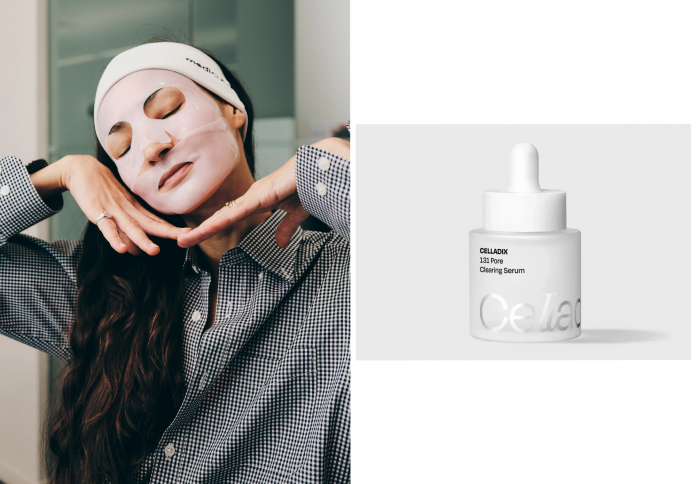
Visible pores have become a remarkably persistent beauty concern, despite being an ordinary feature of healthy skin. The latest crop of serums, exfoliants, and devices promises a smoother-looking complexion, with names such as Medicube, Innisfree, and Celladix appearing in the conversation. Yet the language of pore minimization often blurs several different goals: clearing congestion, reducing shine, improving texture, and changing how skin looks under light. These are not interchangeable outcomes. Understanding the distinction makes shopping less mysterious and skincare routines less aggressive. A useful pore-care strategy starts not with an impossible ambition to erase openings in the skin, but with practical decisions about cleansing, exfoliating, hydration, and daily sun protection. The reward is a healthier relationship with both products and the face they are supposed to improve.
Pores are structures, not blemishes
A pore is an opening associated with a hair follicle and its sebaceous gland. Oil moves through this structure to reach the skin's surface; the opening is not a defect that should be closed permanently. The apparent diameter varies with anatomy, oil production, age, and how clearly the edges are visible. The realistic promise of skincare is to alter those visible conditions, not eliminate the structure. That fundamental distinction is frequently absent when marketing speaks of a poreless complexion.
Oil and dead skin can accumulate around follicular openings, creating congestion that makes texture seem more prominent. Light reflecting off shiny areas can heighten the effect. Makeup can settle in uneven patches, giving an optical impression of larger pores. The same person may therefore report very different skin texture in a softly lit bathroom, direct sunlight, and a phone camera close-up. These changes are important because they make instant before-and-after photographs a poor substitute for careful evaluation.
What the active ingredients can actually do
Salicylic acid is oil soluble, which makes it useful in routines designed to tackle clogged pores and blackheads. Retinoids can support turnover and address some acne-related changes, although tolerance and suitability vary. Niacinamide may help with oiliness or the appearance of unevenness in some formulations. None can redraw the genetic architecture of the follicle. Claims that depend on a dramatic permanent shrinkage deserve skepticism, even when the product itself has legitimate benefits.
Exfoliation requires restraint. Combining multiple acids, scrubs, and a powerful retinoid can irritate the skin barrier, triggering redness, dryness, or more visible texture. Product strength, frequency, and overall formulation matter at least as much as the ingredient name printed on the label. Someone starting a new active usually learns more by introducing it gradually and observing their skin than by copying an elaborate regimen seen in a short-form video.
Devices bring another set of questions
The appearance of Medicube's Booster Pro in beauty coverage illustrates the widening definition of a home skincare routine. A device asks customers to evaluate more than a cream's texture or ingredient list. They also need to understand what the technology is intended to do, what evidence supports that use, and whether its benefits depend on pairing it with other products. A demonstration at a fashion event can communicate a brand's aesthetic, but it does not establish clinical effectiveness for every user.
Device-related claims should be distinguished carefully from the properties of a serum applied alongside it. A visible glow immediately after treatment may reflect moisture, massage, or lighting rather than a lasting structural change. Instructions, safety warnings, and contraindications deserve a close read. When an appliance promises to solve several unrelated concerns at once, asking which outcomes have actually been measured can prevent an expensive purchase made on atmosphere alone.
Texture is not the same thing as health
The vocabulary of glass skin and blurred skin rewards surfaces that photograph evenly. In ordinary life, however, visible pores coexist with functioning, healthy skin. The pursuit of a completely uniform finish risks turning normal variation into a continuous treatment project. Product selections should respond to a meaningful concern such as persistent acne or irritation, not merely the presence of tiny openings visible in a magnified image.
A basic routine also establishes a useful control group: gentle cleansing as needed, moisturizer suitable for the skin, and broad-spectrum sunscreen. Without that foundation, a new treatment may seem transformative simply because it adds hydration. Likewise, irritation from too many products can be mistaken for stubborn acne or a need for stronger exfoliation. Simplicity makes it easier to identify what actually helps.
A better way to judge the shelf
Medicube, Innisfree, and Celladix may occupy different places on a shopper's list, but the decision process should remain the same. First identify whether the concern is blackheads, frequent breakouts, shine, pigmentation, or texture; then match ingredients and product type to that need. Compare directions and tolerability, not only dramatic user-generated photographs. Packaging language that mentions pores can conceal quite different mechanisms, so two apparently comparable bottles may not be substitutes.
Results also need a sensible time horizon. Cleansing may change surface oil relatively quickly; other skincare effects take repeated use, and some concerns require professional assessment. A product can be useful without transforming skin into a filter. The most reliable measure of success is a manageable routine that improves comfort or a defined concern while preserving the barrier. Pores will remain, as they should.
A further distinction concerns how long a visible improvement lasts. A primer can blur texture until it is washed away, while an acne treatment may require steady use before congestion changes. Both outcomes can be desirable, but confusing them leads to frustration. Users should decide whether they want an immediate cosmetic finish or a sustained change in a specific skin concern. Comparing photographs taken at the same time of day and under similar light is a modest way to judge the difference. When irritation persists, trying another stronger acid is not necessarily a sensible response; speaking with a qualified professional may be more useful.