A bright yellow star on a cheek can turn an ordinary breakout into an unmistakable style choice. That proposition would have seemed improbable when acne treatments were marketed chiefly as things to conceal. Hydrocolloid patches began with a practical purpose: covering a blemish, absorbing fluid, and discouraging fingers from picking at irritated skin. Yet their evolution into stars, flowers, and graphic shapes shows how the relationship between skincare and appearance has shifted. Starface helped make the change visible in 2019, while newer designs from brands including Rhode extend the idea that a treatment can be seen rather than hidden. The patch now occupies an unusual place between everyday skin care and fashion accessory, and its popularity raises a useful distinction between what a product does for a blemish and what wearing it communicates.
When a Spot Treatment Became Something to Show
In September 2019, Starface introduced yellow, star-shaped hydrocolloid stickers. The product looked unusually cheerful for something designed to sit directly on a pimple. Its distinctive geometry mattered. A skin-toned circle might disappear from a distance; a bright star plainly announces itself. The point was not to imitate flawless skin but to make an everyday imperfection easier to live with in public.
Starface was created by Julie Schott and Brian Bordainick. Schott had worked as a beauty editor, a background that helped place the venture at the meeting point of cosmetic products and conversations about how skin is represented. The company did not invent hydrocolloid dressings. It repackaged a familiar type of protective material in a way that invited people to reconsider the social meaning of an acne treatment. The original design also offered a clearly recognizable visual identity: unlike a conventional invisible dot, the product could be identified in photographs.

The arrival of those stars coincided with a broader willingness to post photographs of real skin, rather than present retouched complexions as the only acceptable beauty image. Celebrities and social-media users subsequently wore visible patches in images shared beyond the bathroom mirror. That visibility was part of the product's appeal, but it also carried a modestly practical message: a blemish does not require someone to retreat from ordinary life.
The Dressing Beneath the Decoration
Strip away the color and shape, and a basic hydrocolloid patch is a small dressing. Hydrocolloid materials have a history in wound care because they can maintain a protected, moist environment and absorb fluid. On a superficial blemish, a patch can help shield the area from contact and reduce the temptation to squeeze or scratch. These are useful functions, though they are not equivalent to treating every process that causes acne.
That limitation matters when packaging promises quick results. A superficial, fluid-containing blemish presents a different problem from a deep, painful nodule. An adhesive covering may help with the former without reaching the underlying inflammation of the latter. Some patches contain additional ingredients, whereas plain hydrocolloid versions rely primarily on the dressing material. The two types should not be discussed as though they have identical effects.
The American Academy of Dermatology describes acne as a condition with multiple forms and treatment options. Depending on the circumstances, evidence-based care may involve topical medicines and, for more severe cases, medical assessment. A patch can occupy one small part of that routine. It cannot replace an individualized treatment plan for persistent or scarring acne, and it should not become an excuse to ignore worsening irritation.
Why Visibility Changed the Product Category
Traditional beauty marketing often positioned a visible blemish as a problem that needed immediate camouflage. A brightly colored patch reverses the visual logic. Rather than promising invisibility, it offers the wearer control over how a spot appears. This is a small but consequential change: someone can acknowledge acne while still making a deliberate aesthetic choice about their face.
Starface's star shape became recognizable enough to support different colors and variations. Its impact was not confined to a single design, however. The success of conspicuous patches helped establish a broader visual vocabulary for blemish care. A treatment could be playful, collectable, or coordinated with makeup rather than hidden beneath it. That does not mean every person with acne wants their skin to attract attention. It means that discretion is no longer the only option being sold.
There is also a paradox in making skincare fashionable. A visible patch may reduce embarrassment for one wearer while creating pressure for another to purchase a branded accessory for a condition that requires no public performance. The most compelling development is therefore choice, not the assumption that all acne should be decorated. Transparent patches remain useful precisely because some occasions or personal preferences call for less visibility.
Rhode Takes the Graphic Language in Another Direction
Rhode's Spotwear range demonstrates how far the category has moved beyond a single yellow star. The brand presents hydrocolloid patches in curved, floral, and other graphic forms, including shapes designed to read as deliberate details on the face. These products place skincare within the same visual world as color cosmetics and the carefully styled product photography associated with contemporary beauty launches.
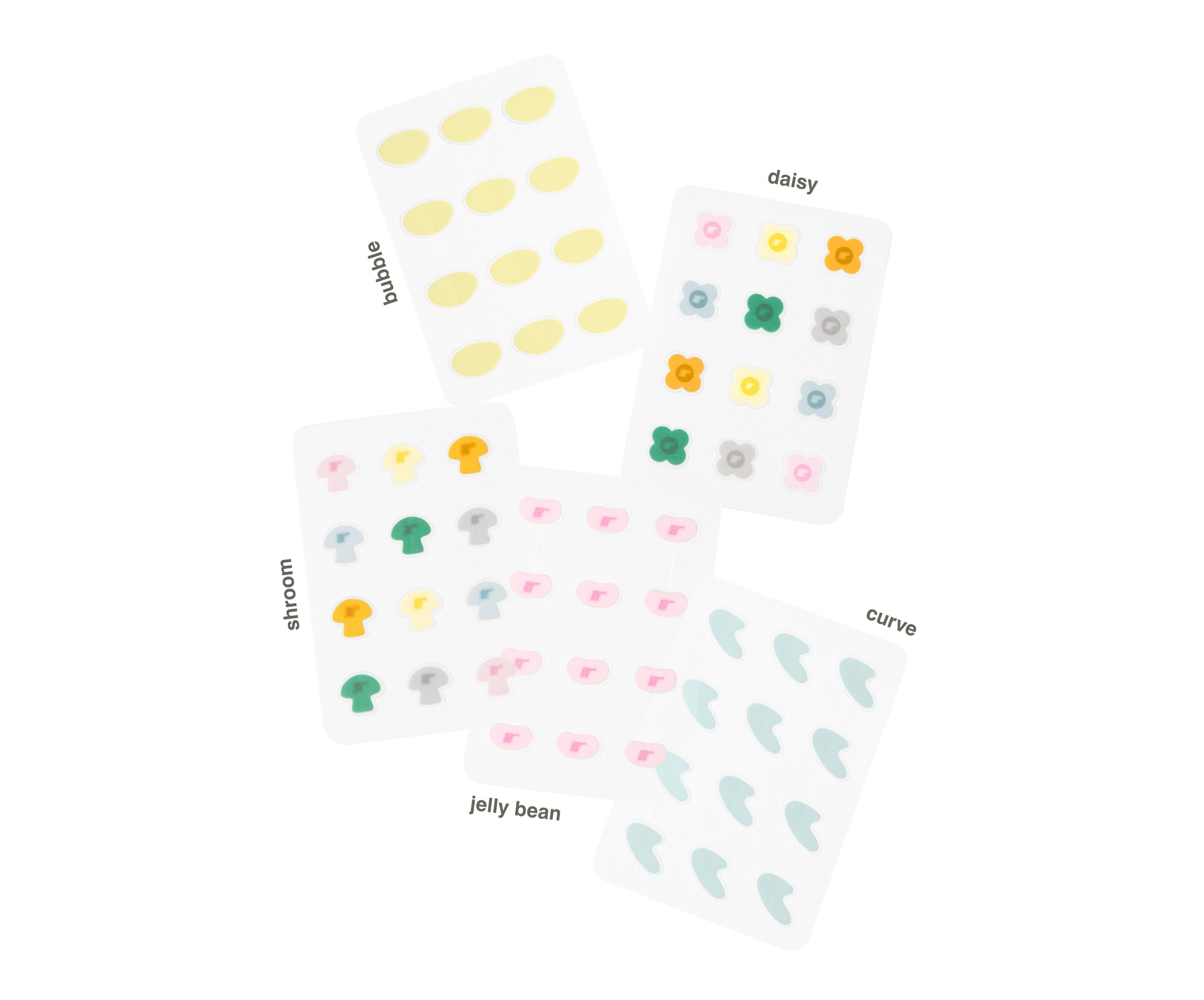
The approach is revealing because the patch's function remains relatively modest while its styling possibilities multiply. The difference between a translucent circle and a pastel flower is not merely decorative in commercial terms. Each addresses a different preference for visibility and identity, even if both rely on the familiar premise of a localized adhesive covering. The accessory has become an additional design surface in a beauty routine.
Rhode's imagery also illustrates a shift in how such products are photographed. Instead of showing a blemish only as a medical before-and-after problem, campaigns can focus on the arrangement, color, and texture of the patches themselves. This aesthetic emphasis explains the category's unusual position in the market, but product images are not clinical evidence. A compelling portrait should not be confused with proof that a sticker works on every kind of acne.
The Difference Between Skin Confidence and Skin Care
The most enduring part of the pimple-patch story may be the separation of two questions that beauty advertising often combines: whether a product is medically useful and whether wearing it feels socially comfortable. A hydrocolloid dressing offers a particular kind of physical protection. A colorful shape offers another kind of permission, allowing an ordinary blemish to remain visible without automatically being treated as a flaw that must be erased.
That distinction also places limits on the trend. Acne can be painful, persistent, and emotionally difficult, and no cheerful package makes those experiences trivial. A patch may be helpful for a small surface spot while someone dealing with more serious breakouts needs treatment that addresses underlying causes. Consumers gain most when the playful presentation comes with equally clear information about intended use and limitations.
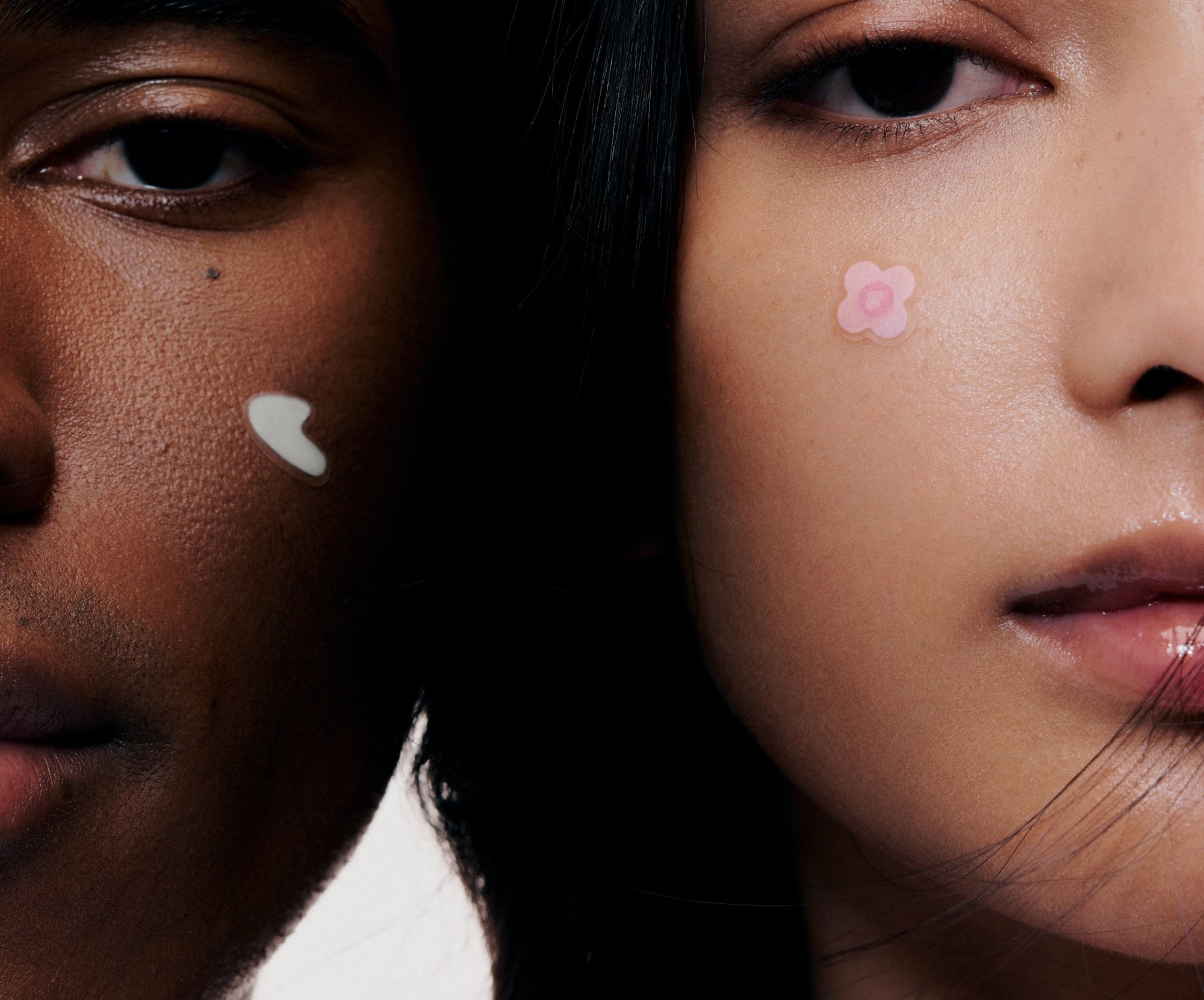
The yellow star and the pastel flower offer different versions of the same cultural possibility: a person does not have to pretend their skin is perfectly smooth in order to participate in beauty. Whether the next popular patch is almost invisible or impossible to miss, the practical material underneath still matters. The changing design language simply gives wearers more ways to decide what they want the world to see.