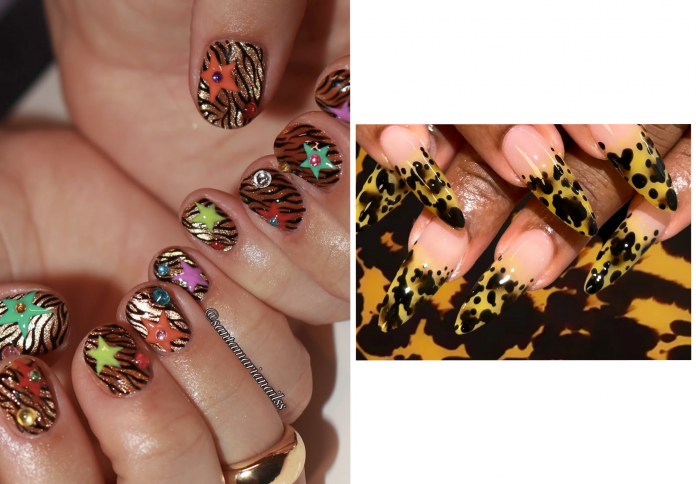
Animal-print nails are a small-scale fashion experiment with surprising range. Tortoiseshell amber, sharply contrasted zebra stripes, irregular leopard spots, and tiger-like markings communicate different moods despite sharing a reference to the natural world. Their appeal is not simply that the prints are recognizable. They turn the fingernail into a miniature surface where pattern, scale, color, and negative space can be controlled with precision. A full set can become a statement, while a single patterned accent makes a quieter argument. As nail artists and clients search for designs that feel individual without requiring a completely new color vocabulary, animal patterns offer a versatile meeting point between wardrobe and manicure. Choosing one means thinking like a designer: about proportion, contrast, wearability, and the distance from which the result will be viewed.
From wardrobe motif to miniature image
Leopard print has traveled across coats, bags, shoes, and accessories for generations. On a nail, however, the pattern must be compressed into a surface only a few millimeters wide. Scale is therefore crucial. Spots that look convincing on a garment may overwhelm a short fingertip if copied literally. A skilled nail artist edits the rhythm of marks so that the pattern remains readable without losing the small area's shape.
Different animals generate different design problems. Zebra stripes depend on confident contrast and movement; cow spots need generous spacing; tortoiseshell requires translucent layers that suggest depth rather than sharply outlined symbols. These distinctions matter because the finished result is judged not only as an image but as part of the hand. Placement can make nails appear longer, wider, softer, or more graphic.
Tortoiseshell offers complexity without neon
The tortoiseshell manicure is especially useful for clients attracted to pattern but wary of very bright colors. Honey, caramel, amber, and deep brown form a palette that works with many neutral wardrobes. Its appeal depends on a sense of depth: darker patches appear suspended inside warmer translucent tones. When the effect is flat and opaque, it can lose the material reference that gives tortoiseshell its distinctive visual richness.
A full tortoiseshell set can feel polished and cohesive, but the motif also works as an accent beside chocolate brown or a sheer base. The latter approach changes the effect from an all-over print into a point of contrast. The design is not inherently minimal, yet controlled color and placement can make it understated compared with high-contrast animal markings.
The character of a stripe
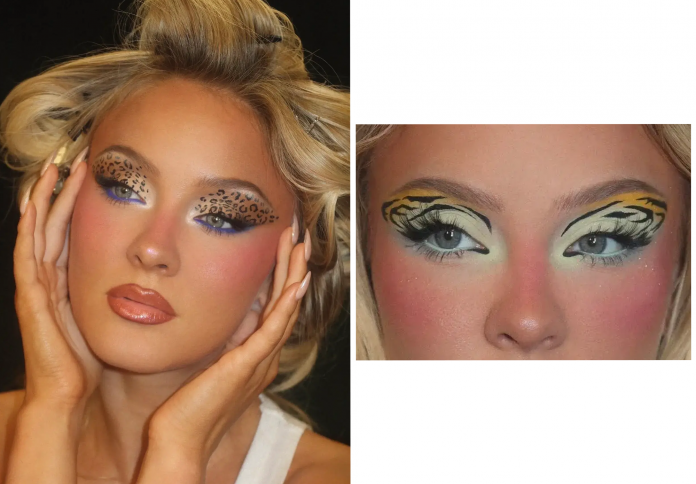
Tiger and zebra treatments bring a more energetic rhythm. A line can bend with the nail's curvature, narrow toward an edge, or stop before reaching the cuticle. Those decisions give the design movement even when the hand is still. Black on cream provides a familiar reference, while unexpected color combinations can detach the motif from literal animal coloring and make it more openly graphic.
The hand presents practical constraints that are less evident in a close-up photograph. Nail length affects how much room is available for a pattern; natural growth shifts the composition over time. A client who works frequently with their hands may prefer shorter nails with one or two bold marks rather than elaborate repeated elements. Successful nail art reconciles the photograph with what it is like to wear the design all week.
Mixed sets and purposeful asymmetry
There is no requirement for every nail to repeat the same print. A set might combine leopard spots with a solid warm tone, introduce a single tiger-stripe accent, or place tiny markings along the tip of an otherwise transparent manicure. Such variations can make animal motifs feel more personal. They also let the nail artist control visual density, ensuring the hand is not dominated by identical dark shapes.
Mixing prints demands coherence. The easiest connection may be a restricted palette, a repeated finish, or similar spacing between marks. Without some organizing principle, a collection of disparate motifs can look accidental. Nail art succeeds when asymmetry appears intentional, allowing each fingertip a slightly different role within a recognizable overall design.
The best reference is a conversation starter
Inspiration photographs are useful, but they cannot account for nail curvature, skin tone, preferred length, or maintenance habits. Bringing several examples to an appointment can reveal what matters most: the warm translucency of tortoiseshell, the high contrast of stripes, or the casual energy of irregular spots. An artist can then adapt the motif to the client's nails rather than imposing a photograph wholesale.
Animal prints endure because their structures are familiar while their expression is almost endlessly adjustable. A leopard accent can appear playful; an amber pattern can seem elegant; a distorted stripe can become nearly abstract. The most interesting manicure is not necessarily the one closest to a real animal. It is the one that recognizes the nail as its own small design environment.
Finish is another underappreciated design choice. Gloss can deepen the appearance of amber and dark brown in tortoiseshell, while a matte topcoat can make high-contrast markings feel flatter and more illustrative. Very fine metallic accents introduce yet another texture, though they can compete with already busy patterns. Salon photographs should ideally show the hands in ordinary light as well as dramatic close-ups, because a manicure moves constantly and is seen at different distances. The best consultation includes discussion of durability, removal, and whether the design works on a natural nail, gel overlay, or an extension, each of which changes the practical experience.