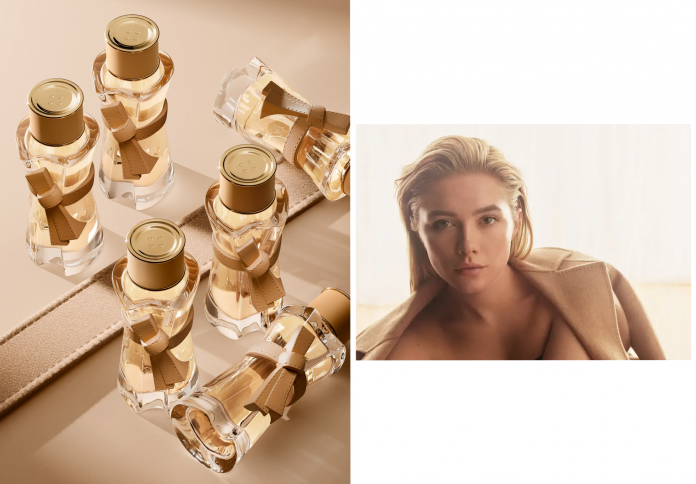
Max Mara's introduction of Le Parfum in 2026 extends a label associated with considered tailoring into the intimate territory of scent. The fashion house has built an identity around coats, sophisticated silhouettes and clothes intended to remain relevant beyond one season. A fragrance bearing its name faces a distinctive challenge: how can an invisible composition express a design language people normally recognize through fabric, proportion and movement? The launch, linked in coverage with actor Florence Pugh, offers an opportunity to examine the distance between a brand's established image and the emotional experience of wearing perfume. A luxury fragrance can be bought independently of an expensive wardrobe. Yet its success depends on whether the wearer feels something coherent between the bottle, the scent and the house that created it.
From the Coat to the Dressing Table
A Max Mara coat communicates through cut, fabric and the way it moves with the body. Perfume works through duration and perception instead. It arrives in stages, changes as it interacts with the skin and can evoke memories that do not correspond to a runway image. For a fashion label entering this territory, the difficult task is not merely selecting attractive packaging; it is translating a recognizable set of values into a different medium.
Le Parfum was presented as an expression of sophisticated femininity. That description suits the established vocabulary surrounding Max Mara, but it is broad enough to require a tangible experience before it becomes meaningful. A consumer can evaluate the coherence of the design, the scent's evolution and the ease with which it fits different settings, rather than accepting an abstract promise of elegance.
The Power of an Established Name
Max Mara's identity has developed through decades of clothing that tends to privilege strong fundamentals over fleeting novelty. This gives a perfume launch a useful starting point. Customers who admire the label may approach the fragrance with expectations of polish, restraint or confidence. Those associations can attract an audience before anyone has smelled the product. At the same time, recognition creates pressure: a poorly matched composition could feel disconnected from the wardrobe it supposedly represents.
Fashion houses do not automatically become compelling perfumers by virtue of their reputation. Fragrance purchases involve individual taste and bodily response, including how long a wearer enjoys the composition after its initial impression. A good bottle can open the conversation, but a satisfying scent must sustain it.
Florence Pugh and a Modern Kind of Presence
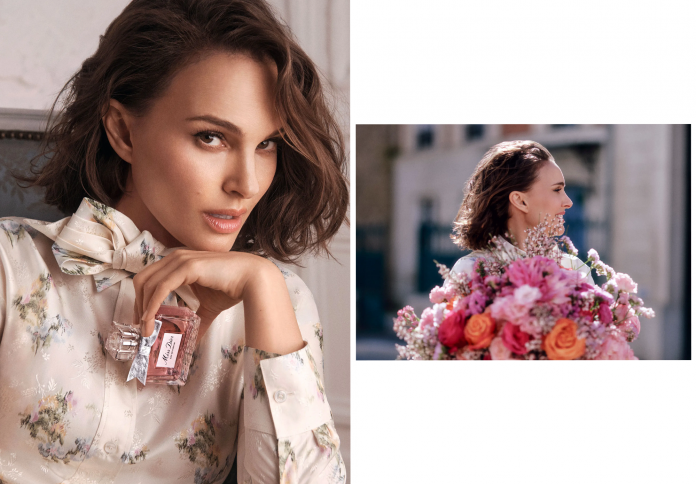
Florence Pugh was associated with the launch coverage, bringing an actor's presence into a story about fragrance and fashion. Her public image has included confident red-carpet choices and a willingness to shift between expressive styling and more restrained looks. That versatility offers a plausible visual context for a brand concerned with a self-possessed form of femininity. It would nevertheless be a mistake to infer a product's exact notes or technical qualities from the personality attached to its campaign.
Celebrity imagery works best when it clarifies an aesthetic, rather than substituting for the object being sold. The wearer ultimately has to decide whether the perfume feels personal. The face in the campaign may attract attention; repeated use is a much more private decision.
Luxury Without a Garment
Fragrance can provide an entry point to a luxury house for people who would not buy a coat or complete outfit. That accessibility is relative: prestige scent remains a discretionary purchase, and price alone cannot indicate whether it will suit someone. But the format allows a fashion identity to enter ordinary mornings, travel bags and evening rituals. The brand can be experienced through a small gesture rather than a head-to-toe look.
This changes the emotional terms of consumption. A tailored garment is usually visible to other people, while perfume can be noticeable only at close range. That intimacy requires a different kind of confidence from the wearer, one less dependent on recognition. The most persuasive brand extensions acknowledge the difference rather than simply decorating a bottle with familiar codes.
The relationship between fashion and scent also involves a problem of translation. Fabric can be assessed visually and by touch; perfume cannot be reliably judged through a campaign photograph. The promise of sophisticated femininity may suggest the atmosphere Max Mara hopes to create, but wearers bring their own expectations to the bottle. One person's impression of restraint might be another's idea of softness, while confidence has no fixed aromatic equivalent.
This ambiguity can be productive. Rather than specifying the way every customer should feel, Le Parfum can become a point of departure for different personal rituals. But the brand must take care not to imply that buying a fragrance can reproduce the lifestyle represented by its clothing campaigns. The most durable luxury purchase is one that remains satisfying once its promotional associations have faded.
A Scent Must Stand Alone
The success of Le Parfum should ultimately be judged by the fragrance itself: whether its balance appeals over time, whether it feels distinctive and whether buyers return after the excitement of a new release fades. Fashion heritage may shape the first impression, but it cannot provide the sensory experience. No campaign can accurately predict how an individual will respond to a scent on their own skin.
Max Mara's move into perfume reveals why the strongest luxury labels are interested in much more than clothing. The aim is to create continuity across the moments in which people form a sense of themselves. For Le Parfum, that continuity has to be earned somewhere beyond the campaign image—at the point where a bottle is opened and the wardrobe becomes an atmosphere.