Chris Fleming’s first Emmy nomination arrived after roughly two decades of developing comedy that never fit neatly inside stand-up’s usual frame. His HBO special Live at the Palace captures a performer who uses voice, song, posture and sudden physical transformation as parts of the same sentence. The recognition matters because Fleming’s career was not built through instant virality alone, even though online work expanded his audience. It grew through rooms where laughter could be measured second by second and material adjusted through direct contact. His current success is therefore less a discovery than an overdue change in scale: an idiosyncratic artist finally meeting institutions large enough to notice the craft beneath the chaos.
Conducting a Room of Laughter
At Chris Fleming and Friends, nearly 300 people fill the Largo in West Hollywood, yet Fleming listens as if each laugh were an individual instrument. He moves between guest sets, changes clothes and monitors the room with unusual intensity. If a response feels wrong, he may interrupt the flow and address it. The behavior turns audience feedback into part of the performance rather than evidence collected afterward.
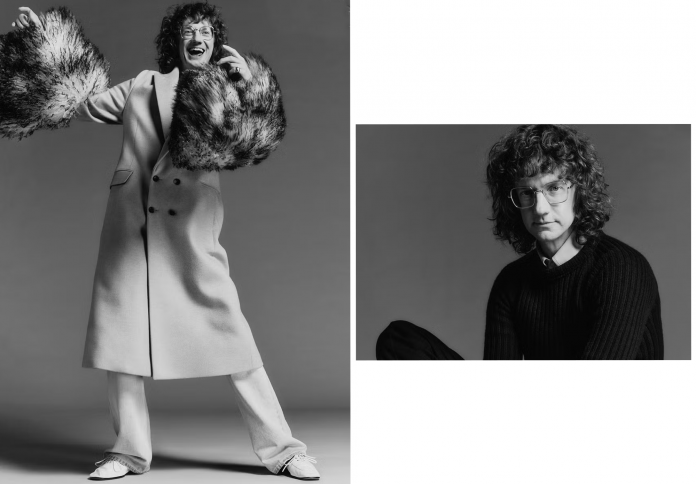
Fleming has compared the sensation to conducting. That description suits a comic whose rhythm is inseparable from movement. His curly hair, large clear glasses and expressive body are not decorative additions to written jokes. A hand angle, a glide across the stage or an abrupt fold toward the floor can become the line’s final word.

More Than Stand-Up
Calling Fleming a stand-up comic is accurate but incomplete. His work incorporates absurdist observation, character invention, songs and a physical looseness that can resemble dance or improvised theater. One bit may examine shoppers at a suburban craft store; another may classify a recognizable type of airplane passenger. The material begins in ordinary behavior, then stretches until the social category becomes surreal.
That elasticity explains why his performances can feel manic without being careless. The apparent spontaneity rests on precise control of wording, posture and escalation. Fleming’s generosity also distinguishes the work. The joke often treats human strangeness as abundant rather than contemptible. He can be ruthless about a behavior while leaving room for the audience to recognize itself.
Twenty Years Before the Nomination
Live at the Palace premiered on HBO Max and earned Fleming an Emmy nomination for Outstanding Writing for a Variety Special. Awards naturally compress a story into a breakthrough moment, but the nomination followed more than two decades of performance. Years of smaller rooms, touring, online sketches and previous specials supplied the technique visible in the broadcast.
The long interval matters in a culture that presents creative careers as sudden discoveries. Fleming’s trajectory shows that singular work may require the artist to build an audience capable of reading it. Mainstream platforms did not invent his style; they eventually caught up to it. Recognition changes resources and reach, but the artistic language was developed during the supposedly marginal years.

The Internet Was a Stage, Not a Shortcut
Online video allowed Fleming’s characters and sketches to travel beyond local venues. Digital circulation can make unconventional comedy legible by finding scattered viewers who share its wavelength. Yet a viral clip and a sustained live set demand different disciplines. The screen permits editing and repetition; a theater requires the performer to manage attention continuously.
Fleming’s current work benefits from both environments. Internet audiences understand the rapid tonal shifts, while years onstage give him the ability to alter pressure in real time. The career does not demonstrate that creators should choose between online reach and traditional performance. It demonstrates how one space can cultivate an audience while another tests the work’s structure.
Success Without Sanding Down the Oddness
Institutional attention often arrives with a temptation to simplify what made an artist distinctive. Fleming’s appeal depends on refusing that exchange. His fashion, physicality and unusual line readings are not barriers that must be removed for a larger public; they are the mechanisms through which the comedy operates. The Emmy nomination is meaningful precisely because the work did not become conventional on its way toward recognition.
That does not mean obscurity was romantic. Fleming has spoken plainly about the anxiety of toiling without opportunity. The useful lesson is not that artists should wait patiently for justice. It is that development can happen outside the spotlight, and delayed recognition may reveal a mature practice rather than a late beginning. Fleming is finally where a broader industry can see him, but he arrived carrying a form built over twenty years.
The variety-show format is particularly suited to Fleming because it prevents the evening from hardening into a sealed monologue. Surprise guests change the temperature, and his returns between sets require rapid recalibration. Hosting becomes another form of authorship: he shapes contrast, creates permission for other performers and keeps the room alert to changes in form. That communal architecture complicates the myth of the lone comic battling an audience and reveals a performer attentive to the ecology of a night. Even his anxiety about volume becomes useful information, directing how the next moment should expand, pause or unexpectedly turn.