The history of musicians acting on screen is not a parade of novelty casting. At its best, the crossover reveals qualities that songs only partially expose: restraint, comic timing, physical vulnerability and the ability to disappear inside another person’s rhythm. From Barbra Streisand and Cher to Tupac Shakur, Whitney Houston, SZA and newer figures entering ambitious projects, the most memorable turns resist the assumption that charisma automatically equals acting. They work because a musician learns when not to command the frame. As cinema’s definition of a bankable star becomes less stable, performers with established audiences offer studios visibility—but the roles that endure are the ones that convert familiarity into surprise.
Fame Opens the Door, Not the Scene
Casting a musician gives a film an immediate advantage: audiences already recognize the face, voice and public mythology. That familiarity can generate financing, press and curiosity before production begins. It also creates a problem. Viewers arrive expecting the persona from albums, concerts and interviews, and the performance must either use that expectation intelligently or make it disappear.
The distinction separates stunt casting from meaningful acting. A cameo may delight because recognition is the entire point, as when an elusive pop figure briefly appears and electrifies a theater. A dramatic role must survive after that first gasp. The musician has to listen, react and occupy silence without leaning on the authority of the stage. Screen presence becomes most interesting when it is no longer identical to star presence.

The Pioneers Who Erased the Border
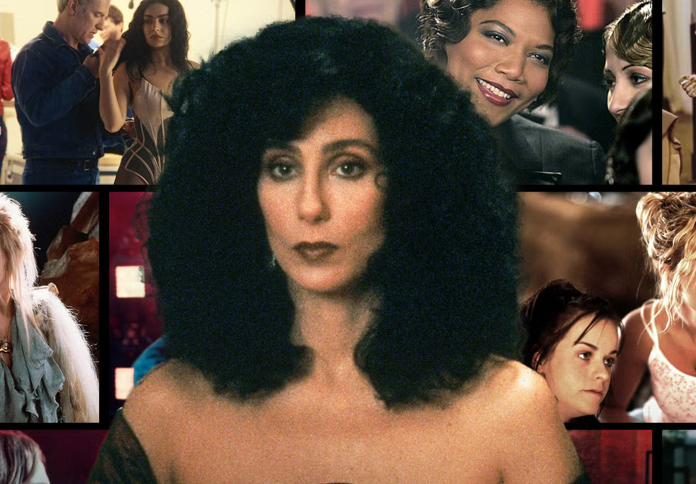
Barbra Streisand made the separation between singer and actor feel almost artificial. Her dramatic work in The Way We Were depends on political conviction, romantic tension and an ability to let intelligence shape every exchange. Cher achieved a different transformation in Moonstruck, grounding glamour in fatigue, appetite and comic practicality. The performance won an Academy Award because it did not ask the audience to applaud a pop icon pretending to be ordinary; it created a complete woman whose choices drive the film.
Dolly Parton’s work in 9 to 5 used warmth and timing while allowing anger about workplace inequality to remain legible. Whitney Houston brought both guardedness and radiance to The Bodyguard, a film that deliberately blurred the boundary between a world-famous singer and a fictional star under pressure. These roles understood persona as raw material rather than a cage.
Musicians Can Carry Dangerous Stillness
Tupac Shakur’s screen work demonstrated how quickly musical intensity could become dramatic volatility. In Juice, charm and threat move through the same body, making unpredictability central to the performance. Other artists have succeeded by moving in the opposite direction. A singer accustomed to projecting across an arena can become compelling on film by reducing gesture and allowing the camera to find thought before speech.
That scale adjustment is a craft problem. Concert performance rewards legibility at distance; cinema records hesitation, breath and involuntary reaction. Musicians often possess rhythm, memory and emotional access, but they must relearn how those abilities operate under close observation. The best directors do not merely capture existing charisma. They create conditions in which the performer can risk looking uncertain, unglamorous or morally compromised.

A New Generation Crosses Over
Recent projects suggest the pipeline is accelerating. SZA’s leading role in One of Them Days, King Princess’s growing credits, Phoebe Bridgers appearing beside Robert Pattinson, and announced work involving Billie Eilish, Gracie Abrams, Role Model and PinkPantheress show studios exploring musicians across comedy, literary adaptation and auteur cinema. Charli XCX’s expanding screen presence similarly fits an artist already interested in character, fashion and cultural performance.
Not every experiment will succeed, and that uncertainty is part of the appeal. An established actor arrives with a screen history; a musician can feel newly available to the camera. Their lack of conventional training may produce awkwardness, but it may also prevent habitual choices. When directors cast for a specific energy rather than follower counts, unfamiliarity can become a creative asset.
The Meaning of “Movie Star” Is Changing
Classical Hollywood built movie stardom through repeated theatrical releases and a relatively concentrated media environment. Today, audiences divide attention among streaming platforms, social feeds, games, podcasts and live events. Few actors can dominate that landscape alone. Musicians already move across several of those spaces, carrying communities that are accustomed to following an era rather than a single product.
That does not make them automatic replacements for film stars. It makes them useful figures in a more fragmented definition of celebrity. The durable crossovers will be those in which industrial logic and artistic logic align: a recognizable musician attracts initial attention, while a specific role reveals something the public image could not. The thrill is not simply seeing a singer on a screen. It is watching someone known for controlling a stage surrender enough control to become another person.
Musicians also bring an unusual relationship with sound to a set. They understand tempo, phrasing and the emotional effect of breath, even when no song is involved. Those instincts can sharpen dialogue, but they can also produce performance that feels overly arranged. Film acting becomes persuasive when musical intelligence turns invisible—when a pause lands correctly without announcing its rhythm. The crossovers worth remembering are not victories for one profession over another; they are examples of an artist learning a second grammar.