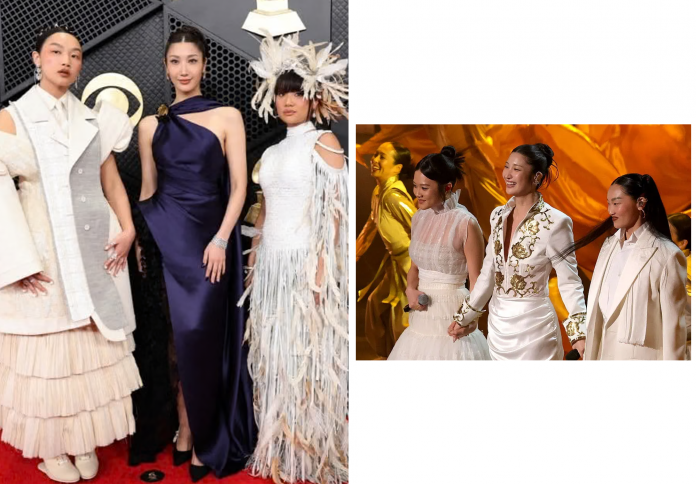
The 98th Academy Awards, held in the spring of 2026, became the stage for a cultural phenomenon that transcended the screen. Netflix’s animated powerhouse K-Pop Demon Hunters secured a historic foothold in industry history, taking home the Oscars for Best Animated Feature and Best Original Song. Yet, beneath the shimmer of the red carpet and the deafening cheers of fans, the night served as a lightning rod for broader conversations regarding inclusivity and respect in Hollywood. As the voices of the film’s fictional idol group, HUNTR/X—performers EJAE, Audrey Nuna, and Rei Ami—commanded the stage with a show-stopping rendition of their hit “Golden,” the evening highlighted both the meteoric rise of K-pop’s international dominance and the persistent friction between global cultural movements and traditional institutional gatekeeping.
A Historic Night Marred by Institutional Faux Pas
The crowning achievement of the evening was the victory of “Golden,” which became the first K-pop-inspired track to win an Academy Award for Best Original Song. The win was a poignant, hard-won validation for singer and songwriter EJAE, who spoke movingly on stage about her journey as a fan who was once mocked for her passion, only to see the world embrace it in its original Korean-infused form. However, the moment of triumph was abruptly stifled during the acceptance speech by a producer from the team.

As the production team began to share their gratitude, the stage’s play-off music surged, and the microphones were cut, prompting the speakers to exit mid-sentence. The interruption ignited a firestorm of controversy among fans and industry observers alike, who noted that other artists throughout the night had been granted significantly more leeway with their time. Social media erupted with accusations that the Academy had acted with blatant disrespect—or worse, racial bias—toward the K-pop-associated team, overshadowing what should have been a moment of pure, cross-cultural celebration.
The Voices Behind the Mythology
The film’s success is inseparable from the artistry of EJAE, Audrey Nuna, and Rei Ami, the real-life vocalists who provided the singing voices for the film’s central trio, Huntrix. Their collaboration has been described as a masterclass in modern pop synergy, bridging the gap between animation, concert-style performance, and traditional cinematic storytelling. Throughout the 2026 awards circuit, the trio became fashion icons in their own right, frequently seen in elevated red-carpet attire that blended high-fashion sensibilities with the bold, maximalist aesthetics of the K-pop industry.
Beyond their vocal contributions, these artists have successfully navigated the transition from “the voices of a character” to recognized public figures. Their appearances at major events, including the BRIT Awards and Coachella, alongside the massive success of their soundtrack, have cemented the fictional group HUNTR/X as a legitimate pop-culture entity. Their willingness to engage with fans—and each other—through candid beauty tutorials and behind-the-scenes content has only deepened the attachment of a massive, predominantly youthful audience.
Plotting a Path Forward: The Future of the Franchise
Despite the massive success of the first film, the future of the K-Pop Demon Hunters universe remains a point of intense speculation. While a sequel has been officially confirmed, the studio has remained cagey about the release date, with early estimates suggesting fans may have to wait until 2029 for the next installment. This patient approach is in keeping with the franchise’s strategy, which prioritizes a high-quality production cycle over rushed iterations.
Talks surrounding a potential live-action adaptation or stage musical have also circulated, though the creators have been notably protective of the animated medium. The focus for now remains on the enduring popularity of the original film—a testament to the power of a narrative that balances the crass, silly, and fun reality of the idol industry with the high-stakes thrills of Korean shamanistic fantasy. As the dust settles on their Oscar success, the team behind the film has made it clear that their priority remains expanding the world of Huntrix in a way that continues to feel authentic to its roots.
A Cultural Touchstone for a New Generation
The cultural impact of K-Pop Demon Hunters extends far beyond its box office receipts or its awards mantle. It has served as a vehicle for a new generation to see themselves represented in a format that finally feels honest to their experiences. As EJAE noted during the awards season, the film is a vital bridge for those who have long gone “longing” for stories that reflect their own cultural intersections.
The Academy Awards may have provided a moment of tension, but it also provided a platform that forced a global audience to reckon with the importance of these voices. As the “Golden” anthem continues to play in stadiums and streaming queues worldwide, the legacy of the film is already set. It is no longer just a movie; it is a movement that has successfully merged the ancient, the mythical, and the modern into a singular, high-octane spectacle.