In the spring of 2026, the promotional tour for A24’s “The Drama” became as culturally significant as the film itself. Directed by Kristoffer Borgli and starring Zendaya and Robert Pattinson, the film explores the fragile foundations of a relationship during the week leading up to a wedding. However, it was the press cycle—orchestrated by Zendaya and her longtime stylist, Law Roach—that captured the global imagination. By adopting the “Something Old, Something New, Something Borrowed, Something Blue” bridal tradition, the campaign transformed every red carpet and talk-show appearance into a piece of meta-narrative storytelling. This approach to “method dressing” not only served as a brilliant marketing tool for a film about marital secrets but also solidified Zendaya’s status as a preeminent icon of modern, intentional fashion.
The Anatomy of a Bridal-Coded Press Tour
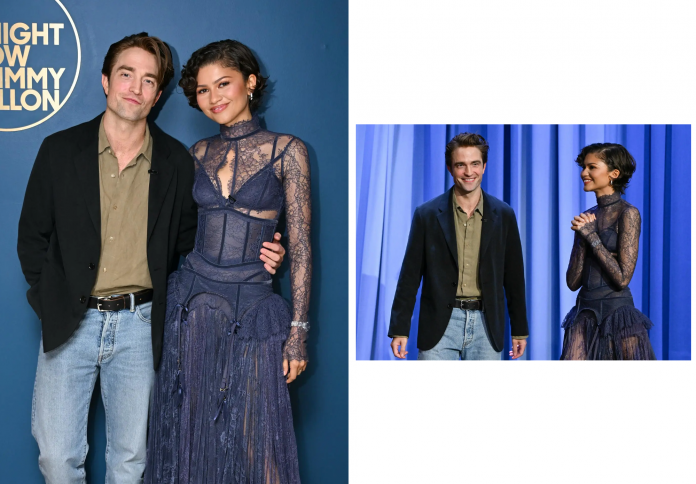
The campaign for “The Drama” was a masterclass in thematic consistency. The press tour opened in Los Angeles on March 17, 2026, where Zendaya donned a Vivienne Westwood bridal gown—the same piece she wore to the 2015 Oscars—to fulfill the “Something Old” requirement. This was followed by a sharp turn into “Something New” at the Paris premiere, where she debuted a custom Louis Vuitton gown featuring a dramatic, cascading bow. The narrative reached its midpoint in Rome, where she showcased “Something Borrowed”: a plunging black Armani Privé dress previously worn by Cate Blanchett. Finally, the “Something Blue” requirement was completed during a highly publicized appearance on The Tonight Show Starring Jimmy Fallon, where she stunned in an ethereal, cool-toned Zimmermann gown.
This narrative-driven styling did more than just generate viral headlines; it effectively blurred the line between the film’s plot and the reality of the performers. By using the iconography of marriage, Zendaya and Roach invited the audience into a wider conversation about the sanctity and the performance of weddings. It allowed the film—a romantic black comedy-drama that takes an unexpectedly dark turn—to stay top-of-mind for potential viewers, turning a standard movie rollout into a monthly-long event that rewarded eagle-eyed fans who tracked the progression of the “Something Blue” puzzle.
The Drama: A Tonal Pivot
While the press looks garnered the most immediate attention, the film itself has proven to be one of the most polarizing and successful independent features of 2026. Kristoffer Borgli’s script, which centers on a couple whose lives are upended by a shocking revelation during a dinner with friends, has been praised for its offbeat, shifting tone. Critics have highlighted the film’s ability to transition from lighthearted, observational humor to profound emotional weight, a signature stylistic choice for the director. With a worldwide gross exceeding $132 million against a $28 million budget, the project has solidified its place as a massive success for A24, proving that audiences are still hungry for original, high-concept storytelling.
The performance of both Zendaya and Pattinson has been central to this success. Their chemistry—anchored by the reality of their off-screen industry experiences—provides the necessary gravity to balance the film’s more absurd moments. The movie, which hit theaters on April 3, 2026, has already left the theatrical window and has been available via video-on-demand for several months. For those who missed the cinematic experience, HBO Max has scheduled the film’s digital streaming debut for August 14, 2026, ensuring that this conversation-starting feature will continue to find new audiences throughout the remainder of the year.
A Legacy of Method Dressing
The campaign for “The Drama” stands as a definitive moment for 2026 pop culture. It demonstrated the power of the “intent-led” wardrobe, where fashion is not merely an accompaniment to film, but an essential extension of the creative work. By refusing to follow the traditional promotional path, the team behind “The Drama” proved that when a marketing strategy is as carefully crafted as the screenplay itself, it can elevate a standard theatrical release into a cultural phenomenon. It is a legacy that will likely influence how film studios approach future press tours, emphasizing the value of creative risk and long-form visual narratives.
Ultimately, “The Drama” will be remembered as much for the gowns on the red carpet as for the narrative on the screen. It was a project that understood the zeitgeist perfectly, capturing our collective obsession with weddings, performance, and the secrets we keep from those we love. As the film moves to streaming, it leaves behind a blueprint for how to engage a global audience in a fractured media landscape: through precision, narrative cohesion, and a commitment to making every single moment of exposure count.