While Orlando has long been synonymous with the global theater of its world-famous theme parks, 2026 reveals a metropolis undergoing a profound cultural and environmental reawakening. No longer just a gateway to ticketed attractions, Orlando is maturing into a multifaceted hub where high-tech innovation, diverse culinary landscapes, and a surprisingly wild natural heart coalesce. As the city continues to expand its footprint with new performing arts centers and sophisticated urban districts, it offers the discerning traveler a compelling duality: the high-octane thrills of its iconic entertainment corridor and the quiet, crystalline beauty of its surrounding freshwater springs. For those willing to look beyond the gates, Orlando presents a surprising, vibrant blueprint for a post-theme-park identity that honors both its modern aspirations and its deeply rooted Florida landscape.
The Innovation and Cultural Engine
The narrative of “new” Orlando is centered on its evolution into a true boomtown. The Creative Village, a sprawling 68-acre district, stands as a testament to the city’s pivot toward a digital and technology-driven economy, providing a stark contrast to the whimsical architecture of its southern neighbors. Complementing this high-tech rise is the expansion of the Dr. Phillips Center for the Performing Arts, a cornerstone of the city’s cultural ambition. This district, particularly when experienced through the lens of Thornton Park’s historic bungalows and vibrant street-side dining, offers a sophisticated, urban rhythm that rivals the most established cities in Florida.
This cultural depth is further amplified by a dining scene that has rapidly diversified. The rise of Latin-inspired culinary destinations and hidden Ethiopian and Eritrean gems reflects the city’s burgeoning status as a melting pot. Whether browsing the local goods at the Winter Park Farmers’ Market or experiencing the refined, diverse menus in downtown’s evolving neighborhoods, the visitor finds an Orlando that is no longer content to cater solely to tourists, but is actively cultivating a unique, indigenous urban culture.
A Wilderness of Springs and Shadows
Perhaps the most startling revelation for the visitor in 2026 is the accessibility of Florida’s “wild” heart. Just a short drive from the neon glow of International Drive, the region’s natural environment offers a sanctuary of bracing, 72°F freshwater springs. Places like Wekiwa Springs State Park and Kelly Park/Rock Springs are not mere peripheral attractions; they are the true soul of Central Florida. Here, the experience is defined by the “Noir-Avant” beauty of crystal-clear water cutting through dense, ancient forests of live oaks and palmettos.
Whether paddling through these crystalline corridors in transparent kayaks or observing the quiet congregation of manatees at Blue Spring State Park, the traveler is invited to engage with a landscape that is both fragile and fierce. It is a reminder of the alligator-inhabited reality of Florida’s canals and marshes, where respect for the ecosystem is a prerequisite for entry. This natural world is the perfect antidote to the high-sensory overload of the major resorts, offering a grounded, meditative experience that connects the visitor to the primal, shifting rhythms of the state’s interior.
Designing a Sustainable Future
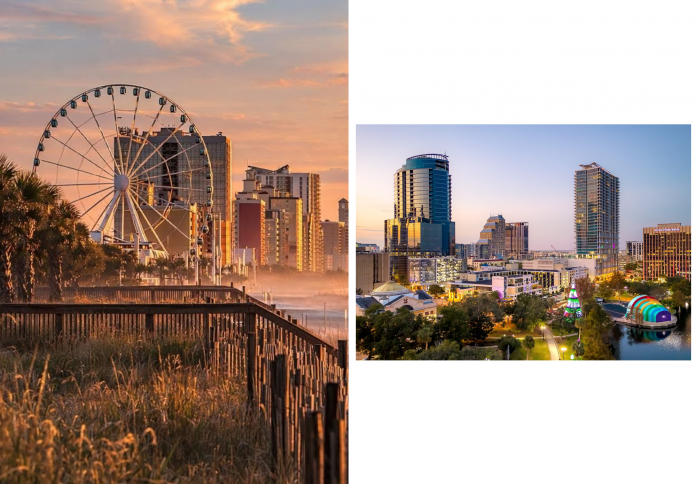
As Orlando navigates the pressures of rapid growth and millions of annual visitors, it is increasingly adopting a more intentional approach to travel. The integration of the SunRail system and the promise of expanded high-speed rail connections signal a shift away from the city’s car-dependent past. For the traveler, this means the ability to explore beyond the theme park bubble with greater ease, moving between the sophisticated urbanism of Lake Eola’s skyline and the raw, natural expanse of the surrounding wildlife preserves.
The goal for 2026 is a harmonious balance: maintaining Orlando’s status as a premier global entertainment capital while protecting the fragile ecological treasures that define the region. By prioritizing sustainable dining—such as the responsible sourcing found at local markets—and advocating for the protection of its springs and forests, the city is carving out a new role as a steward of its own unique environment.
An Invitation to the Unexpected
Orlando in 2026 is a destination that demands to be revisited. It is a city that has stared down the label of “theme park town” and responded with a vibrant, meticulously designed renaissance. For the traveler, the scholar, or the design enthusiast, it offers a dual experience: the thrill of human imagination at its most kinetic, and the serene, quiet majesty of the Florida wild.
It is a reminder that even the most well-known destinations contain hidden layers. By successfully marrying the brute strength of its massive entertainment infrastructure with the soft, calculated intelligence of a rising urban center, Orlando has secured its place as one of the world’s most interesting urban centers. It is a city that has evolved beyond its ticketed gates to offer a vibrant, deeply designed, and unexpectedly wild renaissance. For the traveler, Orlando is a testament to the fact that progress and preservation can coexist, provided one knows where to look.