How a musician’s fascination with a single haunting song sparked a decade-long journey into the heart of Iceland’s glaciers, leading to a groundbreaking exploration of the sounds hidden within melting ice. As climate change accelerates the loss of these majestic landscapes, Konstantine Vlasis is using sound as a powerful tool to reveal the unseen movements and stories of glaciers—offering a fresh perspective on environmental change that goes beyond what the eye can see. His work bridges music, science, and culture, capturing the sonic life of Iceland’s ice to deepen our connection to a rapidly changing world.
When music meets melting ice
Konstantine Vlasis never imagined that a single track from the Icelandic band Sigur Rós would send him on a decade-long journey to the peaks of Iceland’s glaciers. The 2013 song Lækurinn (“The Stream”)—an ambient piece accompanied only by the gentle sound of flowing water—struck a chord with Vlasis. As a percussionist trained in soundscapes, a practice that blends sound with environment, he found himself intrigued not only by the music but by the natural source of that sound: glacial meltwater trickling down Iceland’s mountains.
Years later, Vlasis’s curiosity transformed into a mission. Now pursuing a PhD supported by New York University and the Leifur Eiríksson Foundation, he records the actual sounds of Iceland’s glaciers—cracking ice, bubbling meltwater, and even the inaudible infrasound vibrations—to explore what these frozen giants reveal beyond their stark visual presence. His research offers a fresh perspective on climate change, one that invites us to listen closely to the environment rather than merely observe it.
The disappearing giants of Iceland
Iceland’s glaciers cover around 10% of the country’s landmass, but climate change is rapidly melting these icy giants. Scientists predict that by 2100, Iceland could lose half of its glacial volume, leaving only small caps on the highest peaks. In response, the United Nations has designated 2025 as the Year of Glacier Preservation, underscoring the urgency of this environmental crisis.
For Vlasis, sound is more than just an artistic medium—it’s a tool for climate communication. “You can’t see glacial movement in real time, but you can hear it,” he explains. Unlike static images or graphs, the sounds of glaciers are dynamic, reflecting the constant flow and fracture of ice. This sonic dimension can help people connect emotionally and intellectually with the realities of melting glaciers in a way that visual data alone cannot.
With over 2.3 million tourists flocking to Iceland annually to witness its breathtaking glacial landscapes, Vlasis’s work has the potential to resonate far beyond academic circles. His recordings document a rapidly disappearing world, preserving the acoustic memory of glaciers that future generations may never see.
Tracing streams and stories
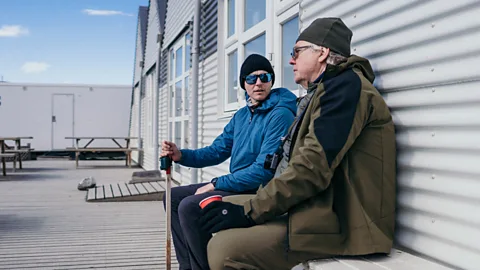
The song Lækurinn sparked Vlasis’s curiosity because of its deep metaphorical ties to aging, time, and the passage of life—all themes intertwined with flowing water. But the stream he heard wasn’t just symbolic; many of Iceland’s streams are fed directly by glacial meltwater. This connection between metaphor and reality led him to ask, “What happens when the stream isn’t just a symbol but a direct reflection of ice melting into water?”
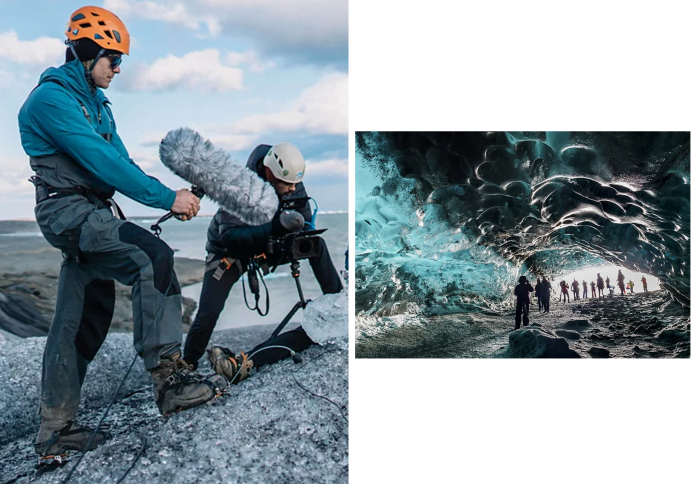
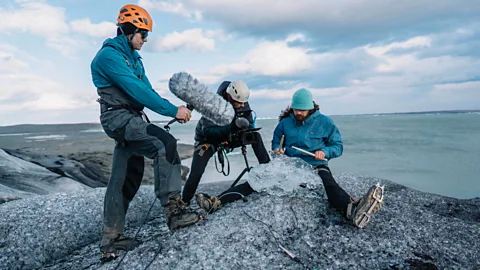
His research became a journey of discovery across Iceland’s rugged terrain. Armed with microphones and recording equipment, Vlasis climbed glaciers to capture the subtle sounds of ice shifting and water flowing. Alongside these field recordings, he engaged with local communities to understand how Iceland’s glaciers have shaped culture and identity through history.
Vlasis describes this interplay of nature and human experience as the “human ecology” of glaciers. “We are shaping and impacting in many different ways,” he says. His work highlights that glaciers are not isolated natural features but part of a larger network of relationships between environment and society.
Listening to glaciers in motion
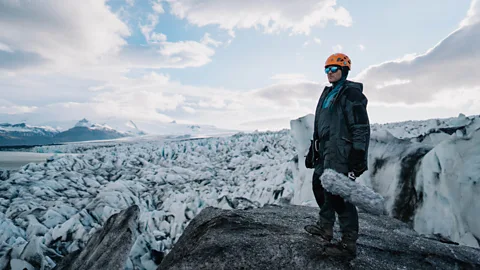
So, how exactly does one listen to a glacier? Vlasis explains that every movement a glacier makes produces sound. A glacier flows slowly but relentlessly downhill, its immense weight causing ice to crack, rumble, and shift. These noises have rhythm, tempo, and dynamics—almost like a living, breathing organism.
Beyond the audible range, glaciers also emit infrasound—ultra-low-frequency vibrations that humans cannot hear naturally. To capture these, Vlasis uses specialized contact microphones that attach directly to the ice and then digitally raise the pitch to make the sounds perceptible. “It’s like a stethoscope,” he says, “listening to the health of the landscape.”
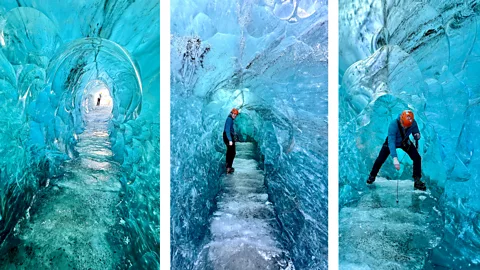
Inside the ice, air bubbles trapped over millennia hold records of past atmospheric conditions. When the ice melts, these bubbles pop and fizz in the meltwater, creating a delicate soundscape that Vlasis carefully records. This sonic archive offers clues about environmental changes hidden deep within the glaciers.
The power of traditional songs
Vlasis’s research is not limited to natural sounds. The other critical element is Iceland’s rímur—traditional narrative songs and poems passed down through generations. These ancient works often include detailed references to weather events, floods, and natural disasters, preserving oral histories that predate written records.
By analysing the lyrics of rímur, Vlasis extracts what he calls “environmental archives,” offering valuable insights into how Icelanders have historically experienced and understood glaciers. These songs act as a cultural mirror reflecting humanity’s long-standing relationship with the natural world.
A sonic forecast of a melting world
One of Vlasis’s most ambitious projects is a collaboration with scientists who model the future loss of Iceland’s glaciers. Together, they created 2124, a performance piece where a drummer plays rhythmic patterns atop the Breiðamerkurjökull glacier, representing one year per beat. As the piece progresses, the tempo accelerates, mirroring the rapid pace of glacial melting predicted over the next century.
The effect is haunting and beautiful, a musical forecast of a world without glaciers. “As the glacier melts, you hear the meltwater streams grow louder until you feel like you’re inside an ice cave,” Vlasis explains. “Then suddenly, the piece rushes back to the surface—like a final, urgent call.”
When glaciers sing: The future of sound and climate
Recognized with the 2024 Fulbright-National Geographic Award, Vlasis’s next project When Glaciers Sing will blend field recordings, traditional Icelandic songs, and data sonification into an immersive audio experience. Set to launch on streaming platforms in spring 2026, it promises to bring the stories of glaciers—and the urgent realities of climate change—to a global audience through sound.
In a world flooded with images and statistics, Konstantine Vlasis’s work reminds us of the power of listening. Through the voices of melting ice and ancient songs, he offers a new language for understanding our planet’s changing landscape—one that encourages empathy, awareness, and action.