Consciousness is among the most intimate yet mysterious aspects of life — a phenomenon we feel deeply but struggle to define. Scientists have long depended on people’s ability to report their own experiences, but this method fails when dealing with those who cannot speak, such as infants and animals. The challenge has spurred researchers in philosophy, psychology and neuroscience to develop new ways of detecting consciousness without relying on words. Their findings not only deepen our understanding of minds across species but also stir urgent questions about artificial intelligence and whether machines could ever truly be “aware.”
Decoding consciousness in infants
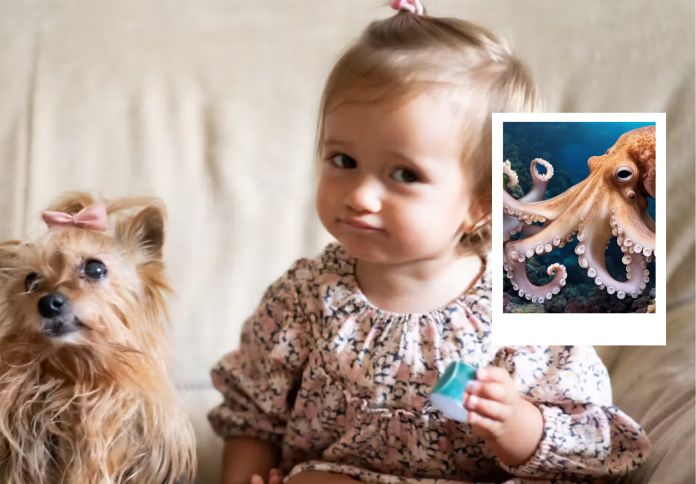
Studying consciousness typically depends on verbal self-reports — a luxury infants cannot provide. Yet, most researchers agree babies are conscious in some sense. To bridge this gap, scientists have turned to indirect methods, developing what’s known as the “natural kinds” approach. This strategy identifies behavioural and brain-based markers seen in conscious adults and then searches for them in infants.
For example, patterns of brain activity called event-related potentials appear when adults consciously perceive something, disappearing when perception is subliminal. Detecting these patterns in babies — and noting how they strengthen with age — offers clues about their mental life. Still, experts such as developmental psychologist Andy Bremner caution against relying on a single marker. Instead, a convergence of evidence, such as sustained attention or the ability to imitate an observed action later, builds a stronger case for infant consciousness.
The challenge of animal awareness
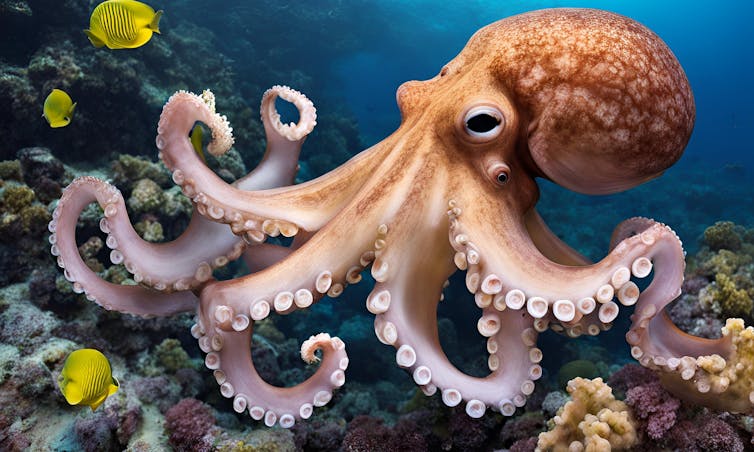
While the public often assumes animals like dogs, chimpanzees or octopuses are conscious, the scientific challenge lies in determining how far down the evolutionary ladder this awareness extends. Octopuses, for example, display behaviours suggesting they feel pain: tending to injured limbs or avoiding places tied to unpleasant experiences. Insects, however, present a murkier picture. Bees and ants may exhibit complex behaviours, but whether they have subjective experiences remains uncertain.
One promising method is the “theory-light” approach, which sidesteps the problem of choosing a single “correct” theory of human consciousness — a contentious topic, given the dozens of competing models. Instead, it focuses on identifying points of agreement across theories, such as the idea that consciousness links sensory perception with higher-level thinking. Applying such shared principles could help determine which animals genuinely possess awareness, with implications for how we treat them.
From animals to artificial minds
Research into animal consciousness inevitably prompts comparisons with artificial intelligence. If certain behaviours or cognitive markers indicate awareness in animals, could they also emerge in robots or AI systems? Some robotics designs already draw inspiration from nature — particularly swarming insects — to create autonomous, cooperative machines. Should we discover that these insects are conscious, a provocative question follows: might the robots modeled on them inherit some form of awareness?
This possibility complicates our relationship with AI. As robots integrate into social and cultural life, the moral and philosophical stakes rise. Conscious machines would not only challenge legal and ethical frameworks but also redefine our understanding of mind itself.
A debate without resolution
The question of AI consciousness splits researchers into two camps. One insists that without biological brains, machines cannot possess subjective experience; the only consciousness we know exists in living organisms. The other argues that if an artificial system matches the complexity and functionality of a biological mind, its lack of flesh and blood should not disqualify it from being considered conscious.
This centuries-old philosophical divide remains unresolved. Until there is a consensus on what consciousness truly is — and how to measure it across radically different entities — the question of whether babies, animals, and even robots share this enigmatic quality will continue to captivate, and confound, science.