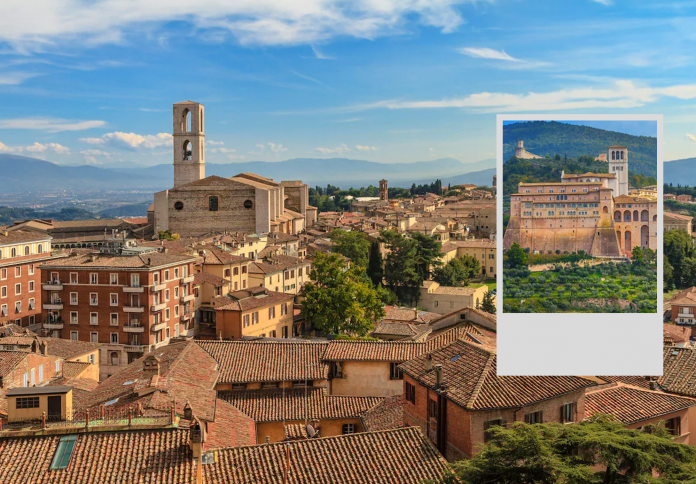
Tucked away in the rolling green heart of Italy, Perugia remains a hidden gem untouched by the mass tourism that floods Florence and Rome. With its ancient layers, artistic soul, and vibrant student energy, this charming Umbrian capital offers travelers a rich blend of history, authenticity, and dolce vita—all without the crowds.
A city steeped in time
Perugia is not the sort of place you simply stumble upon. It reveals itself slowly—first through winding roads into Umbria’s lush countryside, and then, quite literally, from the bottom up. The journey into the city is like stepping into a time machine. A long, dim tunnel beneath ancient city walls leads to an escalator that climbs steadily through centuries. By the time you emerge into the sun-drenched Piazza Italia, you’ve traversed nearly 3,000 years of history.
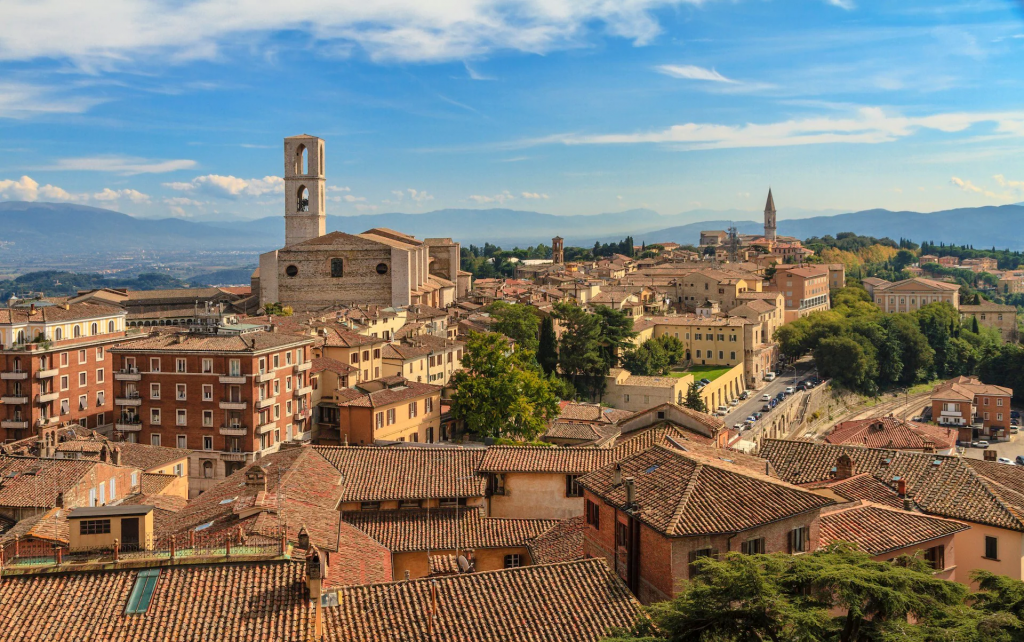
Here, at the city’s summit, people gather not just for a cappuccino or Aperol spritz, but for the views. The piazza opens out over Umbria’s emerald hills, a landscape so serene it seems untouched by time. While Tuscany may draw the crowds, Umbria holds the same rustic charm—without the chaos or inflated prices. And at the center of it all is Perugia: authentic, atmospheric, and incredibly underrated.
Living history without the lines
Like most travelers, the author once skipped Perugia entirely, heading straight to Assisi from the airport, unaware of the treasure left behind. While Assisi dazzles with its sacred history and Franciscan serenity, Perugia delivers something else: a deeply lived-in sense of the past, brought to life by the people who call it home. You won’t find ticking bucket-list attractions here. Instead, you find atmosphere, artistry, and architecture steeped in layers—from the Etruscans to the Renaissance.
Nowhere is this more evident than in the Palazzo dei Priori, the city’s Gothic centerpiece. Inside is the Galleria Nazionale dell’Umbria, home to Renaissance masterworks by Pietro Vannucci—better known as Perugino. As the teacher of Raphael and student of Piero della Francesca, Perugino’s tender religious paintings glow with life even 500 years on. Seeing them in a building he once walked through gives the experience an eerie immediacy.
A youthful heart beneath ancient stones
Despite its age, Perugia pulses with youthful energy. It owes much of this spirit to its university, one of the oldest in the world, dating back to 1308. Today, its 26,000 students fill the piazzas, cafés, and hidden courtyards with a buzz that keeps the city fresh. Adding to the mix is a smaller international university for foreign students, making Perugia unexpectedly cosmopolitan for its modest population.
The locals, too, reflect this dynamic mix of tradition and modernity. Take Fabrizio Croce, a former musician-turned-city official with roots in Naples and a heart firmly planted in Perugia. His enthusiasm for the city is infectious, and his pride, evident. While guiding the author through town, he even bumps into the mayor—Vittoria Ferdinandi, just 38, with a background in social activism rather than politics. In Perugia, nothing feels staged; everything feels lived.
Wandering through storybook streets
Perugia’s grandeur is not just in its history or landmarks, but in the everyday beauty of its streets. The grand Corso Vannucci is ideal for a passeggiata, but it’s in the tangled back alleys where Perugia reveals its soul. Narrow, winding, and often a bit dark, these lanes hide espresso bars with moody charm and wine cellars filled with local reds like Torgiano and Montefalco. By day, the streets feel like a whimsical labyrinth. At night, they take on a noirish edge—as if a detective in a European thriller might round the corner at any moment. Graffiti in a hidden alley reads, “Drinking cocktails saves the planet,” a cheeky wink at the city’s bohemian undercurrent. And yet, despite occasional hints of grit, Perugia is overwhelmingly welcoming. On sunny days, its piazzas beam with joy. Even during a short stay, you may find yourself—like the author—already planning your return before your flight takes off.
Food, festivals, and fantastic finds
Perugia doesn’t try hard to impress with its cuisine—but it doesn’t have to. The food here is uniformly excellent, even in the humblest of trattorias. At the historic Sandri pasticceria, founded in 1860, visitors can sip strong coffee alongside decadent pastries. For more substantial fare, La Taverna offers a modern twist on Umbrian classics in a cozy, tucked-away setting. But Perugia is not just about the quiet pleasures. Come summer, the city becomes the epicenter of jazz in Europe during the renowned Umbria Jazz Festival. It’s where legends like Miles Davis once played, and where stars like Herbie Hancock and Lionel Richie are set to take the stage this year. It’s just one more layer of vibrancy in a city full of unexpected depth.
Planning your trip
Getting to Perugia is easier than ever, with direct flights from London Stansted via Ryanair. For a stay steeped in elegance and history, the five-star Sina Brufani is a standout choice. Overlooking Piazza Italia and built atop Etruscan foundations, it offers both luxury and location—plus a swimming pool in a medieval vault.
Perugia may not be the most famous stop on an Italian itinerary, but it might just be the most rewarding. With its rare blend of antiquity and youth, charm and character, the city promises something increasingly rare in travel today: authenticity. So next time you plan a trip to Italy, skip the obvious. Perugia is waiting—with open arms and a full glass of Montefalco.