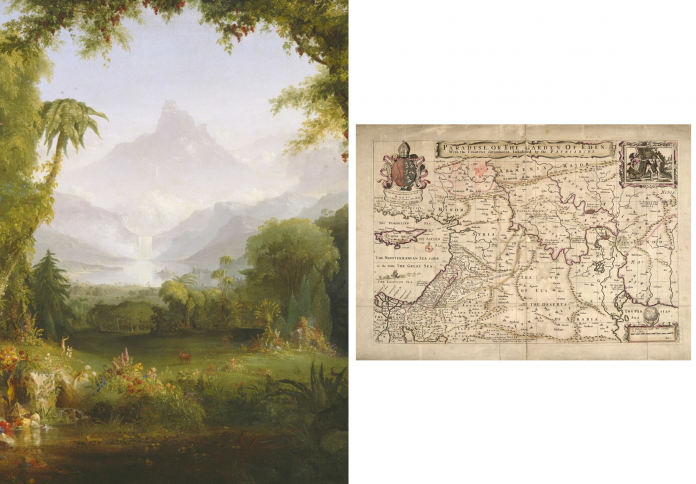
The biblical tale of the Garden of Eden, the idyllic sanctuary from which God banished Adam and Eve, remains one of the world’s most enduring and fascinating mysteries. Although most modern scholars and archaeologists regard the story as a potent myth created to explain the human condition and the harsh realities of the world, the surprisingly vivid geographical details provided in the Book of Genesis have long tantalized seekers. The text places Eden “in the east” and, crucially, describes it as the source of a river that divides into four tributaries, including the Tigris and Euphrates. This specific, rare level of detail has inspired centuries of theological, archaeological, and popular efforts to pinpoint the Garden’s supposed real-world location, focusing the search on the historically rich and fertile lands of ancient Mesopotamia.
The Enigma of the Four Rivers
The key to locating Eden, according to those who believe it was a real geographical space, lies within the verses of Genesis 2:10–14. This passage states that a single river flowed from Eden, dividing into four “tributaries”: the Tigris, the Euphrates, the Pishon, and the Gihon.
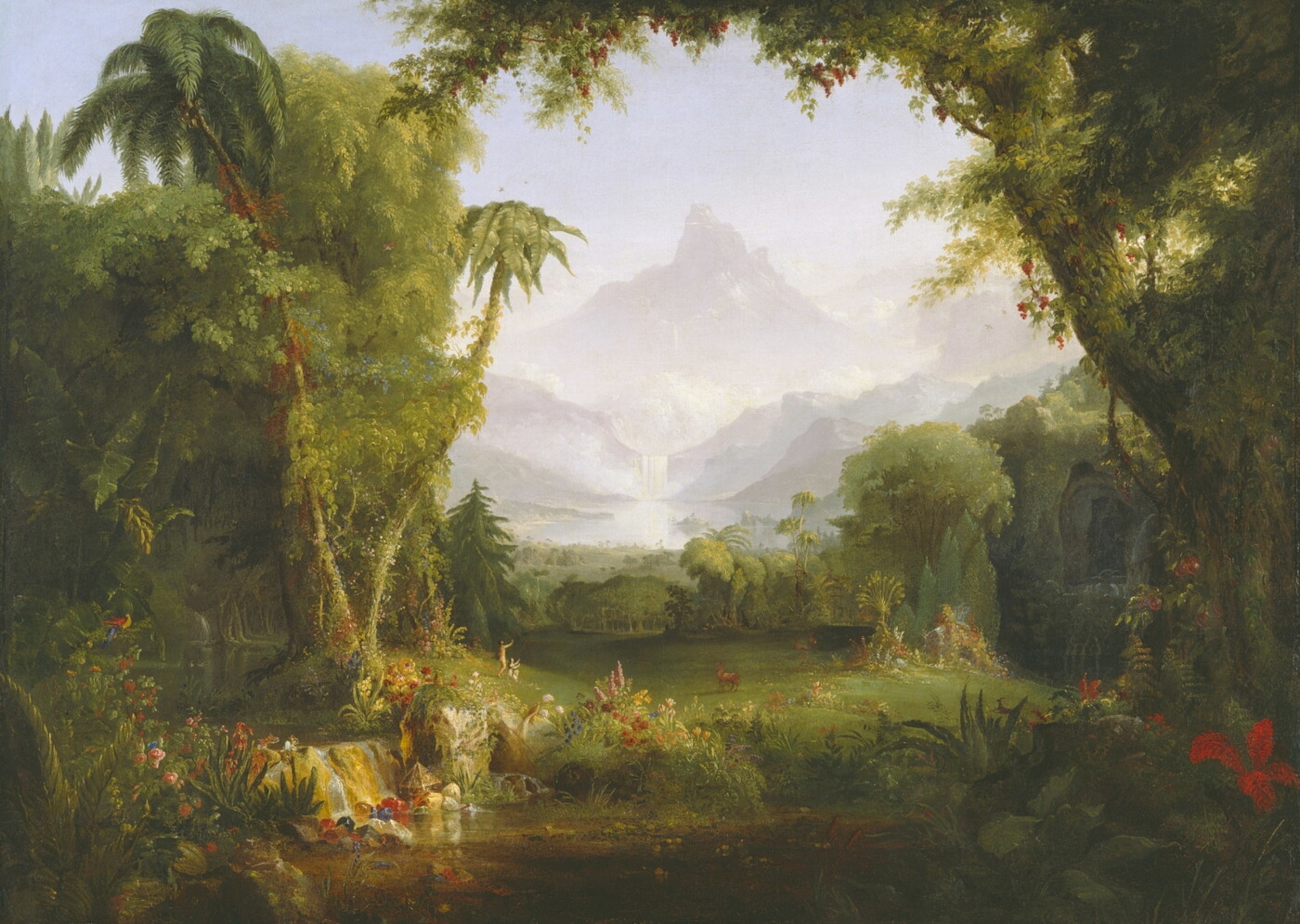
The Tigris-Euphrates system is easily identifiable today, anchoring the location squarely in Southwestern Asia, specifically the Fertile Crescent, which spans modern-day Iraq, Turkey, and Syria. This was the “Cradle of Civilization,” renowned for its fertile properties. However, the identification of the two remaining rivers, the Pishon and the Gihon, has proven far more elusive. The Pishon is described as flowing around the land of Havilah (a region associated with gold in South Arabia), while the Gihon flows around the land of Cush. Since the name “Cush” refers to two distinct regions in the Bible—one in Mesopotamia and one in Africa (Nubia/Ethiopia)—it has fueled numerous contradictory theories. Early, geographically impossible theories identified the Pishon and Gihon with the Nile and the Ganges rivers, but scholars have dismissed these because the rivers are not connected to the Tigris and Euphrates, as the biblical text requires.
Mesopotamia: The Cradle of Inspiration
Despite the general consensus that the Garden of Eden is a symbolic space, most scholars agree that the story itself was deeply influenced by the real-world culture and landscape of Mesopotamia. The richness and fertility of this region, particularly the marshes of southern Iraq where the Tigris and Euphrates conjoin before emptying into the Persian Gulf, were unique in the ancient world.

Mesopotamian society was famous for its wealth, complex agricultural systems, and its idyllic royal gardens, which may have served as the conceptual inspiration for the perfect, well-watered paradise described in Genesis. The Fertile Crescent’s stable climate and reliable water sources allowed ancient peoples to develop sophisticated systems of government and cities. Therefore, the region of southern Iraq—where the four rivers might have once converged—is considered the leading candidate for the setting that inspired the biblical authors. This theory positions the Garden not as a factual location, but as a mythical retelling of humanity’s origins, grounded in the most prosperous and ancient landscape known to the writers of Genesis.
The Submerged Paradise Theory
In the 1980s, German-born archaeologist Juris Zarins introduced a highly controversial, yet intriguing, geological hypothesis that the Garden of Eden might now be submerged beneath the Persian Gulf. Zarins employed modern technology, analyzing satellite images taken by NASA, which revealed the dry beds of two massive rivers that historically flowed from central and southern Arabia toward the southwest region of the Persian Gulf.

Zarins suggested that the Gihon corresponded to the Karun River in Iran, and the Pishon could be identified with the Wadi al-Batin river system, an intermittently dry channel running from Western Saudi Arabia to Kuwait. His theory integrates climate change elements, suggesting that at the end of the last Ice Age, melting snow and ice would have made these rivers major waterways. However, this theory faces significant opposition. Critics, including biblical archaeologists, point out that Zarins’ interpretation contradicts the Genesis text, which clearly states that the rivers proceeded from Eden, not to it. Furthermore, no definitive marine archaeology has been able to confirm his proposed location.
The Symbolic Garden
Ultimately, for many theologians and scholars, the search for a literal geographical location for the Garden of Eden is a pursuit based on a flawed premise. They argue the Garden of Eden was never intended to be located on any map but was, and remains, a purely symbolic space.

This viewpoint suggests the Garden represents the entire cultural world known to the ancient authors and their audiences—the west Asian world, stretching from the Mediterranean coast to the eastern frontiers of the Babylonian and Assyrian empires. The garden, in this context, symbolizes foundational ideas about humanity’s relationship with God, nature, and the struggle between good and evil. For example, some scholars conceptually locate the garden in Jerusalem itself, seeing it as a symbolic depiction of the royal, idealized temple garden. Though archaeologists continue to search for real-world clues, the endurance of the Garden of Eden story relies less on physical evidence and more on the profound, enduring power of its metaphor.