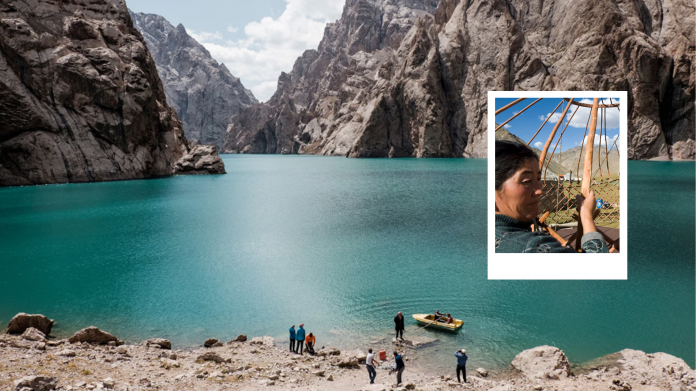
If you’re dreaming of trekking through breathtaking landscapes while discovering the heart of Central Asia, the Kyrgyz Nomad Trail (KNT) is now the ultimate challenge. Launched in June 2024, this sprawling network of trails extends 1,243 miles (2,000 kilometers) across northern and eastern Kyrgyzstan, making it the longest hiking trail in the region. Comprising 18 sections that wind through Jalal-Abad, Naryn, and Issyk-Kul oblasts, the KNT connects vibrant cultures, ancient history, and dramatic natural beauty—all far from the beaten path.

Expanding the Kyrgyz Nomad Trail: New routes and new opportunities
The Kyrgyz Nomad Trail is set to grow even longer. By the end of summer 2025, an additional 621 miles (1,000 kilometers) will be added, introducing nine new trail sections branching near the Arpa Valley in Naryn oblast, close to the Chinese border. This expansion will extend the trail into the Batken and Osh regions and through the majestic Tien Shan and Pamir mountain ranges.
This development promises to boost local mountain communities economically and culturally. Shepherd families who summer in these high-altitude pastures and villagers along the routes will likely benefit from increased tourism. As visitors arrive, more opportunities for locals to work as guides, porters, or hosts could emerge. Marc Foggin, director at Plateau Perspectives, emphasizes the importance of sustainable development: “The trail should serve local mountain communities by connecting different regions and fostering mutual learning and support.” This vision ensures that the Kyrgyz Nomad Trail brings lasting positive impact beyond its natural beauty.

Safety and diplomacy: Hiking amid a changing political landscape
While Kyrgyzstan shares borders with countries like Tajikistan and China that have experienced tensions, the Kyrgyz Nomad Trail is designed to keep hikers safe. Trail planners have carefully routed the path away from conflict zones, and they monitor geopolitical developments closely, ready to adjust routes if needed.
In March 2025, a landmark agreement between Kyrgyzstan and Tajikistan formally delineated their border, easing long standing disputes. This diplomatic progress opens the door for hikers to safely explore trail sections near the Tajik border and regions like Batken that were previously sensitive. Yuval Yellin, one of the trail’s creators, encourages visitors: “Kyrgyzstan is a land of magic, breathtaking landscapes, and incredible people. Hiking here is challenging but deeply rewarding—just be respectful, responsible, and think sustainable.”
Planning your trek on the Kyrgyz Nomad Trail
The Kyrgyz Nomad Trail is not a one-size-fits-all journey. With its vast network of 18 sections, hikers must decide how much time they want to spend and which parts to explore. No tour operators currently offer trips covering the entire trail, but local Kyrgyz companies like Nomad’s Land, Ak-Sai Travel, and Community-Based Tourism Kyrgyzstan provide customized hiking adventures along portions of the route.
Most travelers enter Kyrgyzstan through Manas International Airport in Bishkek, which connects to several major cities in Asia and the Middle East. Visitors from Europe or North America should prepare for at least one connecting flight. To reach the trailheads, hikers will generally need to hire private transportation from Bishkek or Talas to locations such as the Chatkal Valley.
The best time to hike the trail is from June to September, when weather conditions are optimal. Snow often blankets the high passes and mountain lakes until late June or early July, so starting too early in the season can be challenging.
Visas, permits, and other practical tips
Travelers from the European Union, United Kingdom, United States, and Canada enjoy visa-free entry to Kyrgyzstan for up to 60 days. More detailed visa information and the electronic visa application process are available on Kyrgyzstan’s official e-visa website.
Some parts of the Kyrgyz Nomad Trail skirt borders with Tajikistan, China, and Kazakhstan, requiring a special border permit from the State Border Guard Service. While hikers can apply independently, the process is complicated and time-consuming. Most reputable travel agencies in Kyrgyzstan will handle the permit application on your behalf for a fee of around $30 to $50.
Embarking on the Kyrgyz Nomad Trail offers an extraordinary adventure through Central Asia’s wildest and most beautiful regions. With careful planning, respect for local communities, and attention to safety, hikers can experience the magic of Kyrgyzstan’s mountains in a way few others have. Will you be one of the first to conquer this remarkable trail?