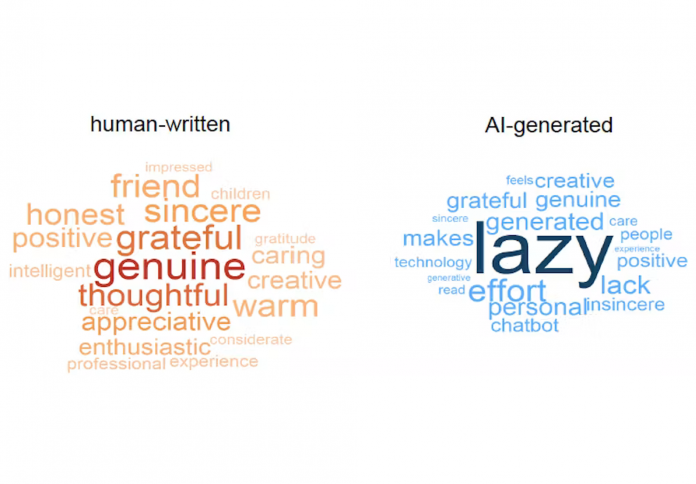
In an era where artificial intelligence has become a seamless component of our daily digital interactions, a growing body of research reveals a startling truth: we are significantly worse at detecting machine-generated content than we like to believe. A recent study underscores that when individuals receive personal messages—be it a note of gratitude, a formal response, or a check-in—they struggle to distinguish between prose crafted by a human mind and text generated by an algorithm. This realization challenges the fundamental assumptions we hold about digital authenticity and the perceived intimacy of our correspondence. As AI tools become more sophisticated, the line between human expression and synthetic imitation is blurring, forcing us to confront a future where the emotional weight we assign to digital messages may be based on a flawed perception of their origin.
The Deception of Digital Prose
The study highlights a psychological phenomenon where users consistently overestimate their ability to identify AI-generated text. Participants were presented with a series of personal messages and asked to categorize them as either human-written or AI-authored. The results were consistent: most respondents failed to identify the source with any meaningful accuracy, often attributing qualities like “warmth” and “sincerity” to messages that were entirely machine-produced. This suggests that AI, in its current iteration, has mastered the stylistic markers of human empathy.
This failure of detection is not due to a lack of intelligence among users, but rather because AI models are specifically designed to mimic the linguistic patterns, emotional range, and tone that we associate with human connection. When we receive a message that flows naturally and exhibits appropriate social conventions, our brain defaults to the heuristic that it must be human. The ease with which we are misled indicates that authenticity in digital communication is now largely a performance of syntax and vocabulary that machines can emulate with remarkable precision.
The Erosion of Intimacy
The implications of this finding extend far beyond simple misinformation; they threaten to erode the perceived intimacy of our relationships. Traditionally, the value of a personal message lies in the effort and cognitive labor invested by the sender. By outsourcing our responses to AI, we are essentially delegating the expression of our sentiments to a statistical model. If the recipient cannot tell the difference, the question arises: does the source of the message matter, or are we simply performing the social utility of maintaining contact?
If we accept that AI-written notes can satisfy social expectations just as well as human-written ones, we may be approaching a fundamental shift in how we value digital communication. The danger, however, lies in the potential for cynicism. If society realizes that a significant portion of our interpersonal digital dialogue is synthetic, the inherent trust we place in the messages we receive may diminish. The “human touch” in communication, once considered a given, is increasingly becoming a variable that we can no longer take for granted.
Cognitive Biases in Detection
Why are we so susceptible to this digital impersonation? The study points toward several cognitive biases that cloud our judgment. First, the “truth bias” leads us to assume that the messages we receive from acquaintances are honest and authentic by default. We rarely approach a personal note with the critical skepticism we might apply to a political advertisement or a news headline. Because we want to believe in the sincerity of our peers, we are cognitively predisposed to accept messages at face value.

Second, there is a lack of clear markers or “fingerprints” in AI-generated text that the average user is trained to recognize. While AI often exhibits certain repetitive patterns or overly formal phrasing, these traits are frequently interpreted by readers as a stylistic choice rather than a technological artifact. Our inability to identify AI content is a reflection of how well these models integrate into the landscape of human social norms, making the task of detection nearly impossible for the casual observer navigating a busy digital inbox.
The Future of Human Connection
As we move forward, the challenge for society will be to redefine what constitutes meaningful communication in a post-AI world. If AI tools continue to gain popularity for drafting emails, texts, and social media posts, we will likely need to develop new social protocols for disclosure. Should we label our AI-assisted messages to maintain transparency? Or, perhaps, will the “human error” inherent in our own writing become the new marker of authenticity?
The study serves as a necessary wake-up call, urging us to be more conscious of the digital signals we consume and send. While AI offers immense benefits in terms of efficiency and clarity, it also necessitates a more critical engagement with the tools that mediate our relationships. If we are to preserve the depth of human connection, we must learn to value the process of communication as much as the content itself. True intimacy, it seems, may soon require a return to the deliberate, imperfect, and distinctly human effort that an algorithm can never truly replicate.