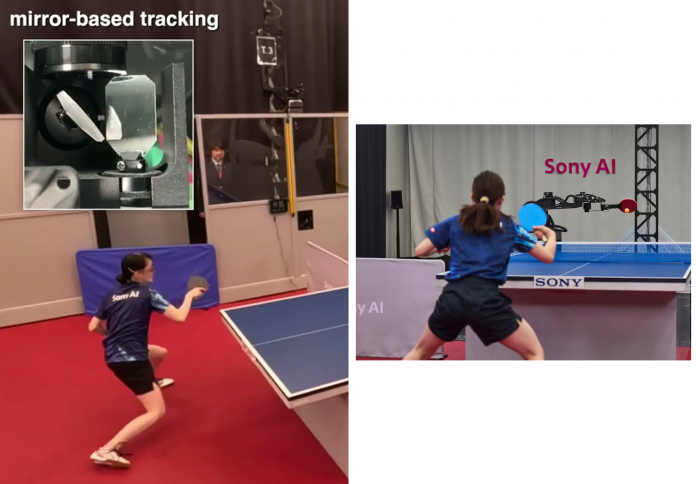
The boundary between human physical mastery and machine precision has officially shifted, marked by the arrival of an autonomous table tennis system capable of outperforming elite athletes. Developed by Sony AI and tested under official competitive regulations, a robotic platform known as Ace has won matches against seasoned players who dedicate decades to perfecting their craft. Long considered an insurmountable hurdle for robotics, table tennis requires a volatile synthesis of lightning-fast perception, split-second trajectory calculations, and complex physical actuation. This milestone extends far beyond the novelty of a mechanical sports competitor, offering a vital proving ground for artificial intelligence in fast-paced, unpredictable real-world environments. By mastering the physics of high-speed spin and real-time tactical adaptation, this breakthrough signals a transformative leap forward for how physical AI agents will interact, navigate, and respond within human-centric spaces.
Conquering the Chaos of High-Speed Kinematics
For decades, robotics engineers have viewed table tennis as the ultimate litmus test for machine agility. Unlike structured industrial settings where movements are meticulously pre-programmed, a ping-pong match presents an environment of unyielding chaos. The ball travels across the table at blistering speeds, rotating on various axes and altering its trajectory in milliseconds upon contact with the paddle, the table, or the net.
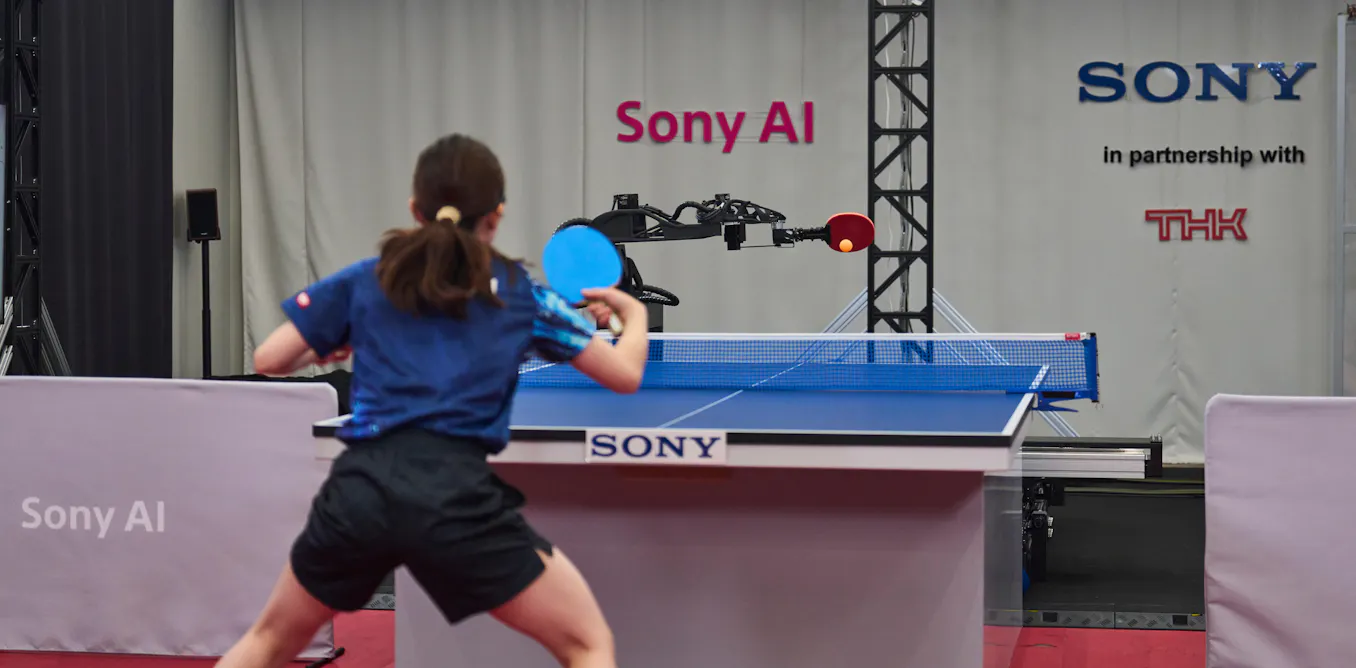
To overcome this sensory onslaught, the robotic system utilizes a sophisticated array of multi-angle cameras to track the ball’s position, velocity, and rotational spin in real time. By analyzing the physical cues of the incoming shot instantly, the machine bridges the gap between digital data processing and physical execution. This capability demonstrates that artificial intelligence can successfully transition from controlled computer simulations into dynamic, noisy physical environments where hesitation is measured in fractions of a millisecond.
The Physics of Spin and Tactical Anticipation
One of the most profound achievements of this robotic system is its mastery over complex aerodynamic variables, particularly ball spin. In competitive table tennis, spin dictates the game; a heavily curved or backspinned ball can easily deceive even the most experienced players. The robotic architecture manages these variables by combining thousands of hours of simulated gameplay with advanced state-estimation algorithms, allowing it to return aggressive shots and generate matching rotations.
Interestingly, matches against human professionals revealed distinct psychological and strategic interactions. While the machine lacks human facial expressions, body language, or emotional fatigue, its gameplay forces human opponents to rethink their tactical approach. Human players quickly realized that predictable, simple serves allowed the robot to easily dictate the pace, whereas utilizing varied strategies became essential to exploit minor mechanical limitations. This dynamic interaction highlights a new frontier in human-machine collaboration, where algorithms do not merely mimic human behavior, but adapt to it in adversarial settings.
Implications for Real-World Physical Intelligence
While a table tennis-playing robot makes for captivating headlines, its true significance lies in the underlying technology’s broad applicability. The same principles required to track a lightweight plastic sphere across a net—rapid sensor fusion, precise motor control, and instantaneous decision-making—are directly transferable to critical real-world domains.

Industries ranging from logistics and automated manufacturing to emergency response and autonomous navigation stand to benefit immensely from these advancements. Physical AI agents must learn to operate safely and effectively alongside humans in environments that change unpredictably. By proving that a machine can successfully master a high-speed, interactive physical sport, researchers have unlocked new pathways for developing robots that can handle the physical complexities of our daily lives with unprecedented dexterity.
Redefining the Limits of Automation
The success of the robotic system challenges traditional assumptions about what machines can achieve in the physical realm. While AI has long conquered abstract intellectual games like chess and Go, translating that cognitive power into physical dominance has proven exponentially more difficult. The kinetic demands of sports require an intricate harmony between software logic and hardware reliability.
As engineering continues to refine these systems, the line dividing organic skill from synthetic execution will continue to blur. This technological evolution invites a broader societal conversation about the future of automation. Far from rendering human effort obsolete, breakthroughs in physical AI challenge innovators to push the boundaries of what is possible, transforming complex theoretical models into tangible, responsive realities that reshape our understanding of machine capability.