The horror miniseries “Something Very Bad Is Going to Happen,” which premiered on Netflix on March 26, 2026, serves as a chilling, psychological exploration of fate and family trauma. Created by Haley Z. Boston and executive produced by the Duffer Brothers, the eight-episode series centers on Rachel, portrayed by Camila Morrone, and her fiancé, Nicky, played by Adam DiMarco. Their wedding week at a secluded family estate in Upstate New York descends into a nightmare as Rachel discovers a generations-old family curse tied to the concept of soulmates. Far from a standard slasher, the series builds tension through a slow-burn narrative that forces the protagonist to confront a bloodline plagued by paranoia and violence, questioning the very nature of love and the psychological weight of ancestral secrets.
A Stellar Ensemble Cast
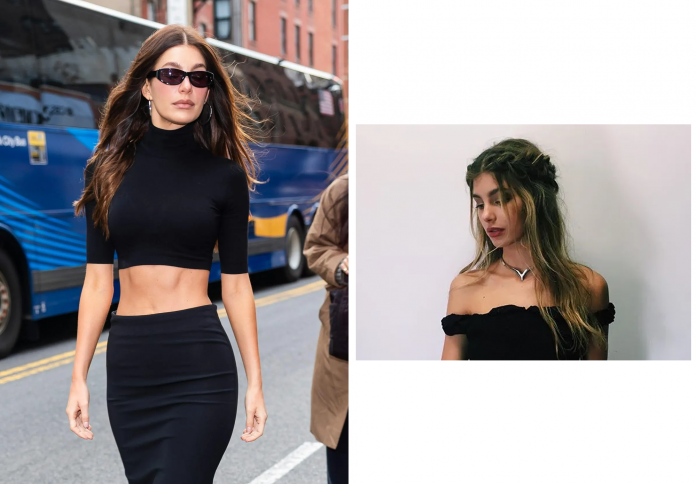
The series features an expansive cast that brings the fractured Cunningham family to life. Camila Morrone anchors the narrative as Rachel, a psychology graduate whose rational worldview is dismantled by the strange occurrences surrounding her wedding. Adam DiMarco stars as Nicky, whose family history hides darker truths than Rachel initially suspected. They are supported by a veteran ensemble, including Jennifer Jason Leigh as the formidable matriarch Victoria Cunningham and Ted Levine as the patriarch Dr. Boris Cunningham. The family dynamics are further complicated by Jeff Wilbusch as the older brother Dr. Julian Cunningham, alongside Gus Birney, Karla Crome, and Sawyer Fraser, who round out the complex interpersonal web that drives the tension of the wedding week.
Guest appearances also play a pivotal role in the series, notably Victoria Pedretti as Rachel’s mother, Alexandra Harkin. Her presence in flashback sequences is essential to revealing the origins of the family’s tragic past and the specific nature of the curse. The chemistry between the leads and the supporting cast has been lauded for grounding the supernatural elements in genuine human emotion. This grounded approach allows the audience to feel the weight of the Cunningham family’s history, turning what could have been a simple horror premise into a layered study of how past trauma inevitably shapes the future of those who marry into it.
Production and Narrative Scope
Each of the eight episodes corresponds to a single day in the week leading up to the ill-fated wedding, effectively ratcheting up the paranoia as Rachel realizes that her groom’s family may be hiding more than just eccentricities. Showrunner Haley Z. Boston has cited classic psychological horror—such as Rosemary’s Baby and Carrie—as major influences, emphasizing that the series prioritizes internal dread and atmospheric tension over gratuitous gore. The production is noted for its ambitious cinematography and the somatic experience of the actors, particularly Morrone, who spent months filming in the harsh, isolated winters of Canada to capture the necessary intensity for her role.
The series has received significant praise for its deliberate pacing and its ability to weave a complex, intergenerational mystery into a tight, eight-episode arc. By focusing on the psychological erosion of its main character, the show avoids the common pitfalls of the genre, instead opting for a narrative that feels both intimate and expansive. Having concluded its run, the series stands as a definitive entry in the 2026 horror landscape, inviting viewers to untangle the web of blood, betrayal, and doomed romance that defines the Cunningham estate. It remains a standout example of how modern horror can effectively utilize the traditional wedding narrative to explore deeper, more unsettling themes of identity and fate.
Thematic Resonance and Legacy
At its core, the series is an investigation into the concept of destiny and whether we have the agency to escape the patterns set by our predecessors. The use of a wedding as the primary setting is a deliberate choice, contrasting the traditional optimism of a new beginning with the inevitable decay of a haunted history. This duality is what gives the series its staying power; it asks the viewer to consider how much of our own lives is truly chosen and how much is merely the repetition of ancestral trauma. Through its meticulous world-building and character-driven focus, the show has sparked significant discourse regarding the intersection of romantic idealism and systemic violence.
As the series continues to find new audiences, its influence on the psychological horror genre is becoming increasingly evident. By blending the high-stakes drama of a wedding with the existential dread of a curse, the show provides a fresh template for future storytellers. It proves that the most effective horror is not that which is seen, but that which is felt in the subtle shifts of behavior and the growing isolation of its characters. Whether the ending offers a sense of closure or a lingering, ominous ambiguity, the series ensures that the audience remains captivated by the dark, intricate mechanics of the Cunningham family’s tragic and violent legacy.