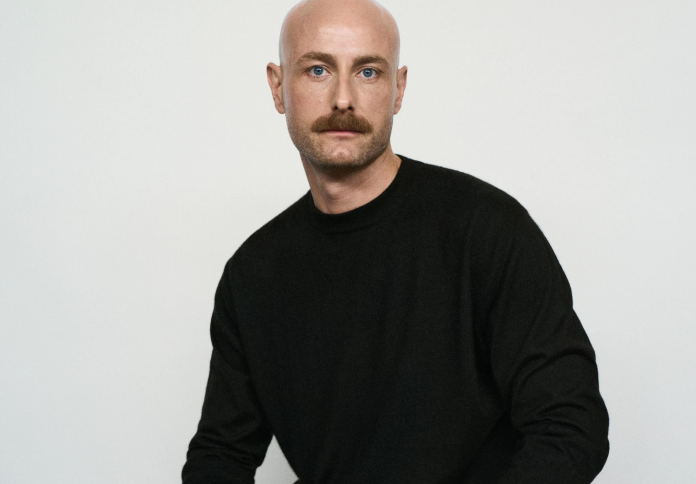
In a move that signals both continuity and a bold evolution for the iconic French house, Courrèges has officially appointed South African-born designer Drew Henry as its new Artistic Director. Announced in late March 2026, just days after the departure of his predecessor Nicolas Di Felice, Henry’s arrival marks a pivotal transition for the brand. Known for his technical precision and deep industry pedigree—honed through formative years at Celine under Phoebe Philo and as a senior design director at Burberry—Henry is tasked with steering the house through its next phase of international expansion. As he prepares to unveil his debut runway collection during Paris Fashion Week this September, the industry is watching closely, eager to see how his “modern, useful, and direct” vision will synthesize with the house’s futuristic, Space Age heritage.
A Pedigree of Modern Minimalism
Drew Henry’s appointment is widely viewed as a strategic “consolidation” move by the Pinault family’s holding company, Artémis. His resume is the quintessential roadmap of the modern luxury insider: a graduate of Central Saint Martins who cut his teeth in the orbit of Phoebe Philo’s “Old Céline” and later refined his leadership skills at JW Anderson and Burberry. This background makes him uniquely qualified to build upon the momentum established by Di Felice, who successfully repositioned Courrèges for a younger, digital-native generation. Henry’s focus on “clothes that make sense for how people live” suggests a move toward a more grounded, utilitarian aesthetic, one that prioritizes wearable modernity without abandoning the brand’s characteristic sharp, geometric lines.
The challenge ahead for Henry is significant. While Di Felice effectively revitalized the brand’s identity by reviving its signature use of vinyl, clean silhouettes, and gender-neutral sensuality, Henry’s mandate is to scale that success into a global powerhouse. His experience working across different design cultures—from the intense, detail-oriented environment of a high-fashion atelier to the larger-scale operations of a global luxury label—provides him with a toolkit designed for this specific level of growth. As the industry currently navigates a period of significant reshuffling, Henry’s arrival brings a sense of calm authority, reflecting a designer who understands that today’s fashion landscape demands a balance between strong, viral-ready imagery and the practical reality of commercial viability.
The September Debut: A Vision in the Making
The anticipation for Henry’s first collection for the Spring/Summer 2027 season is palpable. Since he officially assumed his position in May 2026, the industry has been speculating on how he will interpret the “Courrèges woman” for a new era. In various statements, Henry has emphasized that his vision for the house will be “optimistic, clear, and grounded,” a nod to the founder André Courrèges’ own belief in functional, forward-thinking design. By focusing on garments that offer ease of movement and structural integrity, he intends to honor the house’s past while stripping away the excesses of purely performative design, favoring instead an approach that feels both timeless and urgently relevant.
This debut is not just a showcase of clothing; it is a declaration of intent. The runway show in September will be the first opportunity for the public to see if Henry’s “useful and direct” design philosophy can coexist with the theatricality required of a Parisian runway spectacle. His ability to merge the technical complexities of pattern cutting—a discipline he focused on during his early training in Johannesburg—with the sophisticated minimalism that defined his time at Celine will likely be the cornerstone of his first collection. If his previous work is any indication, we can expect a collection that feels curated, controlled, and deeply considered, marking a confident step forward for one of the most storied names in French fashion.
Consolidation in a Volatile Landscape
The appointment of Drew Henry is emblematic of a broader “great reset” currently unfolding across the luxury sector. As major houses reorganize their creative leadership to better align with changing consumer behaviors and economic tightening, Courrèges’ decision to tap a talent with such deep, cross-industry experience is telling. The brand is betting on Henry to solidify its status as a permanent fixture in the modern wardrobe, moving beyond the “it-brand” status to become a pillar of contemporary style. His arrival is a recognition that the most successful luxury brands of the future will be those that can master the friction between heritage-based storytelling and the practical, daily needs of the consumer.
As we look toward the fall, the transition at Courrèges serves as a fascinating case study in creative succession. It highlights the importance of choosing a successor who not only understands the “vibe” of the moment but possesses the technical discipline to ensure long-term stability. With Marie Leblanc at the helm as CEO and Artémis’s continued backing, the house is well-positioned to leverage Henry’s vision. For those who have followed the brand’s revival under Di Felice, the prospect of Henry’s era is a thrilling “what if”—a transition from the electric, nightlife-infused energy of the past five years to a new, perhaps quieter, but no less profound chapter of refinement.