The 2026 horror-comedy “Forbidden Fruits,” the feature directorial debut of Meredith Alloway, arrives as a biting, blood-tinged commentary on the claustrophobic nature of performative sisterhood. Based on Lily Houghton’s 2019 play, the film transforms the sterile, fluorescent-lit landscape of a Dallas, Texas shopping mall into a site of supernatural reckoning. Starring Lili Reinhart, Lola Tung, Victoria Pedretti, and Alexandra Shipp, the movie functions as a “Mean Girls”-esque descent into the occult, where the hierarchies of retail dominance are challenged by a new hire, leading to a visceral confrontation with the group’s internal poisons. With Diablo Cody on board as producer, the film has quickly cemented itself as a defining entry in the “witchy slasher” subgenre, blending sharp, satirical humor with genuine, high-stakes dread.
The Geometry of Retail Occultism
At the heart of the narrative is the “Free Eden” clothing store, a temple of consumerist glamour that serves as the daytime base for a trio of employees: Apple (Reinhart), Cherry (Pedretti), and Fig (Shipp). By day, they are the mall’s elite saleswomen, expert at manipulating customers; by night, they retreat into the store’s basement to maintain a secret witchy femme cult. Their power structure is rigid, based on the performance of a perfect, unshakeable sisterhood. This delicate, curated existence is disrupted by the arrival of Pumpkin (Tung), a new hire from the food court whose presence acts as a catalyst for the coven’s unraveling.
The mall setting is not merely a backdrop; it is a character in itself, embodying the hollow, synthetic nature of the characters’ relationships. The film explores how “love” is often weaponized as a form of control, using the retail environment—a space of endless consumption and transition—to mirror the characters’ struggles with identity and agency. As the “fruits” are forced to confront the secrets they have buried, the mall ceases to be a playground and becomes a labyrinth of violence, where the only way out is to reconcile with the very traumas they sought to suppress through their dark, performative rituals.
A New Generation of Horror
The ensemble cast—which also features Emma Chamberlain in her acting debut and Gabrielle Union as the store’s enigmatic manager, Sharon Sullivan—brings a fresh, modern energy to the classic “coven” dynamic. The film’s tone is heavily influenced by the lineage of female-led dark comedies like Jennifer’s Body and Heathers, yet it maintains a distinct, contemporary edge. Lola Tung’s portrayal of Pumpkin offers a nuanced look at the “new girl” archetype, balancing sweetness with a hidden capacity for disruption that perfectly complements Reinhart’s cold, queen-bee performance as Apple.
The production’s commitment to capturing the visceral reality of mall culture—filmed largely overnight in a functioning shopping center—adds a layer of authenticity to the tension. The cinematography by Karim Hussain emphasizes the stark contrast between the store’s manicured displays and the dark, claustrophobic reality of the basement, creating a visual language that feels both polished and decayed. For the cast, the project was an exercise in chemistry, requiring them to portray a bond that is as emotionally resonant as it is terrifyingly volatile. The result is a film that balances character study with the pulse-pounding mechanics of the horror genre.
Reclaiming the Narrative: Performance and Public Perception
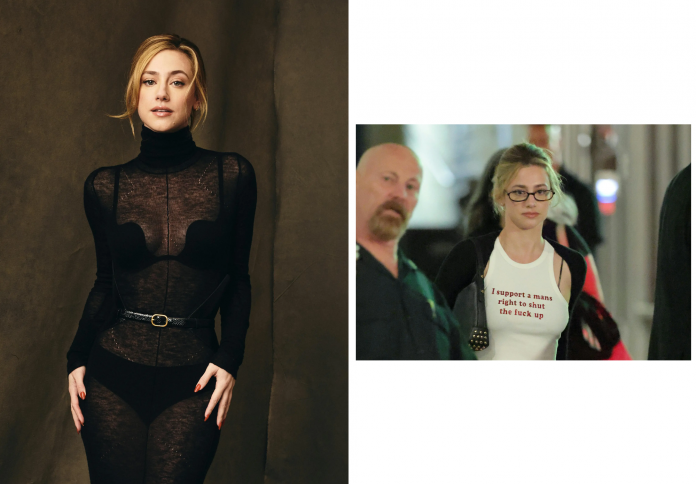
Beyond the screen, the project has also served as a moment of transition for Lili Reinhart’s own public persona. As she shifts toward more challenging, complex roles, her off-screen style has mirrored this evolution, moving away from the conventional “press tour” aesthetic toward a more direct, unfiltered presentation. In the lead-up to the film’s March 2026 premiere at SXSW, her stylistic choices—characterized by sharp tailoring and a rejection of performative softness—have been noted as a reflection of her growth as an artist. This alignment between her public image and her on-screen work signals a broader trend among the film’s stars: a refusal to be pigeonholed by their past successes, instead opting for projects that demand a higher level of creative and personal vulnerability.
As “Forbidden Fruits” finds its audience in theaters and on streaming platforms, it stands as a testament to the power of stories that refuse to sanitize the female experience. It is a film that acknowledges the darkness inherent in social hierarchies, especially those built on the pretense of “perfect” femininity. By leaning into the messiness of friendship and the reality of trauma, Meredith Alloway has crafted a film that feels both timely and timeless. Whether the characters are truly “wicked” or merely victims of their own performative environment is a question the film leaves for the audience, ensuring that the conversation—and the chaos—continues long after the credits roll.