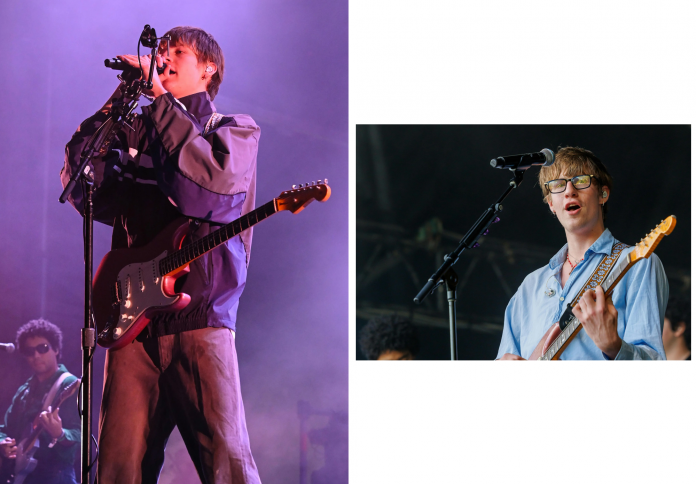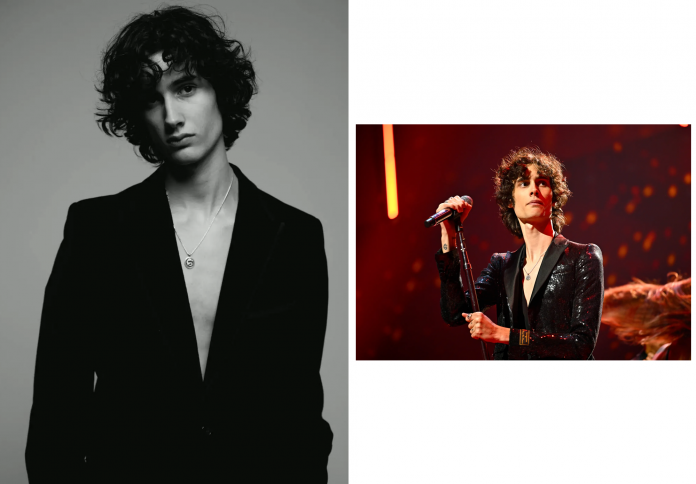
Sombr’s 2026 “You Are The Reason” tour is not simply another set of dates; it is a visible change in scale. After a rapid rise built on emotionally direct songs and rooms where closeness was part of the appeal, the singer is moving into arenas across North America, with a route that includes Red Rocks and a November finale at Madison Square Garden. The announcement followed a Coachella appearance that included a duet with Billy Corgan on “1979,” a symbolic meeting between a new generation of confessional alternative pop and one of the songs that helped define an earlier era. The tour’s rotating support—artists ranging from Interpol and The Last Dinner Party to Tom Odell, Dove Cameron, and King Princess—makes the package feel intentionally broad. The central question, though, belongs to Sombr alone: can vulnerability remain convincing when projected to the back row?
The Moment the Rooms Get Bigger
Every fast-rising artist eventually faces a venue problem. The music that first connected in bedrooms, headphones, clubs, and theaters has to be translated into architecture designed for thousands more people. Sombr is entering that stage in 2026. The “You Are The Reason” tour expands his North American footprint into arenas after a period of steep audience growth, turning what might have been a gradual progression into a much sharper jump.
The itinerary underlines the ambition. The run begins with summer dates that include Mexico City and Red Rocks before a larger fall stretch, eventually arriving at Madison Square Garden in November. Those names carry symbolic weight because they turn career growth into something physical. A streaming number can be enormous and still feel abstract. Filling a famous room is different. It asks whether listeners will travel, buy a ticket, and remain engaged through a full live set rather than a favorite song.

Coachella Offered a Useful Bridge
The tour announcement came after a Coachella appearance that linked Sombr’s current momentum to alternative-rock history. Billy Corgan joined him for “1979,” the Smashing Pumpkins song whose wistful drift has remained culturally durable across generations. The pairing was not only a celebrity cameo. It made visible the lineage in which Sombr increasingly operates: melodic, emotionally exposed songwriting designed to feel private even when the audience is huge.
“1979” is especially apt because its power has always depended on atmosphere rather than bombast. Sharing it on a festival stage offered a miniature version of the challenge Sombr now faces on tour. The emotional temperature cannot simply be raised because the crowd is larger. The song has to create its own gravity. If Sombr can make an arena feel attentive rather than merely loud, the scale-up will deepen his appeal instead of diluting it.
A Support Lineup That Refuses One Lane
The rotating opening acts make the tour unusually revealing. Interpol brings a connection to post-punk and New York rock history; The Last Dinner Party arrives with theatrical guitar music; Tom Odell carries piano-driven confession; King Princess bends indie rock through queer pop; Dove Cameron brings a different pop audience altogether. Other dates include Balu Brigada, The Hellp, and Hannah Jadagu.
Taken together, the lineup avoids defining Sombr through a single microgenre. That is smart for an artist whose audience has grown through platforms where listening habits are less rigid than radio formats once encouraged. A fan can move from indie rock to pop to singer-songwriter material in one playlist without considering the transition unusual. The tour reflects that behavior. It creates a shared emotional and aesthetic territory rather than insisting that every artist sound alike.
The Economics of Attention Become Physical
A viral song can create the impression that demand is unlimited. Touring reveals the limits more precisely. Each city asks for a real commitment from fans, and arenas introduce higher expectations around production, pacing, sightlines, and spectacle. That does not mean Sombr has to transform into a pyrotechnic performer. It means the show must give a crowd a reason to feel that the larger room adds something to the songs.
There are encouraging signs in his previous ticket sales. Earlier touring proved that he could draw substantial audiences in large theaters, and the 2026 routing appears designed to convert that momentum into a new tier. Still, a larger venue is not simply a reward for streaming success. It is a creative format. Artists who understand that distinction can use the room itself—silence, lighting, communal singing, carefully scaled arrangements—as part of the storytelling.
The Real Upgrade Is Emotional Control
Sombr’s advantage is that his songs already depend on recognizable feeling. The danger is that emotional directness can become generalized when a performer has to repeat it night after night for thousands of people. The task is not to reproduce the circumstances in which a song was written; it is to create a credible present-tense reason for singing it again.
That is what will determine whether the “You Are The Reason” tour feels like a victory lap or a genuine next chapter. The famous venues and ambitious support acts provide scale, but scale alone cannot make a performance memorable. Sombr’s rise has been powered by the perception that the person inside the song is reachable. If he can preserve that sensation while standing in the middle of an arena, the tour will prove something more valuable than popularity: that intimacy can be expanded without being emptied out.
Arenas Will Change the Scale, Not the Basic Contract
Sombr’s growth creates a practical artistic problem: songs that may have first reached listeners through headphones, bedrooms, and short clips now have to work inside rooms built for thousands of people. Arena touring demands larger gestures—lighting cues, transitions, stage geography, pacing—but the music loses something if scale becomes the only evidence of progress.
The strongest tour design will preserve the sense that a song is being addressed to one person even when the chorus is being sung by an entire crowd. That can come from arrangement choices, moments of visual restraint, or simply the confidence to let quieter sections remain quiet. Young artists sometimes respond to bigger venues by filling every second, as if empty space will expose inexperience. Sombr’s material benefits from the opposite instinct. Intimacy can become more dramatic when a large room is asked to focus. The You Are the Reason tour is therefore more than a marker of demand. It is a test of whether an internet-era breakthrough can develop the live architecture required for a longer career without losing the emotional directness that created the audience in the first place.