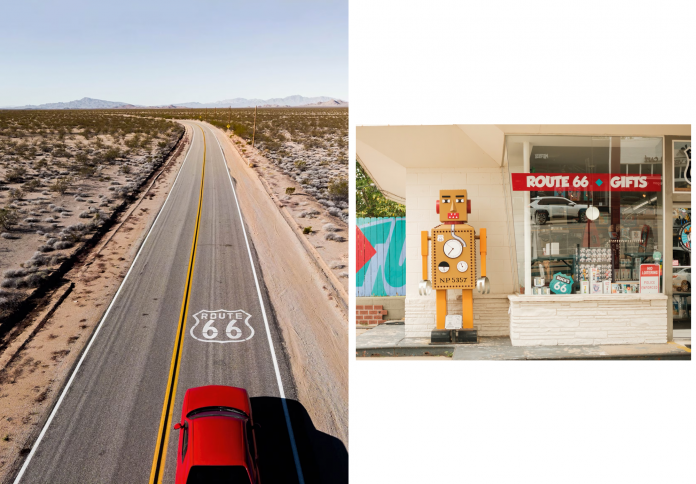
There is no stretch of pavement as deeply embedded in cultural mythology as Route 66. Stretching from the shores of Lake Michigan to the sun-drenched edge of the Pacific Ocean, this historic highway has long been the ultimate symbol of American wanderlust. Yet, the modern reality of driving this legendary route is far more complex than vintage postcards suggest. Decommissioned decades ago and fractured by the relentless expansion of the interstate system, the Mother Road is no longer a simple line on a map. Instead, it operates as an epic, interactive museum of roadside Americana, requiring deliberate navigation and a penchant for detours. To trace its path today is to embark on an archaeological journey through the twentieth-century American dream, discovering the fiercely preserved relics of a bygone era of travel.
The Anatomy of a Phantom Highway
When it was officially commissioned in the autumn of 1926, Route 66 was an ambitious patchwork of existing local roads designed to connect the rural, agricultural heartland with the burgeoning metropolises of the coast. Spanning roughly two thousand four hundred miles and crossing eight state lines, it became the country’s primary east-west artery. During the Great Depression, it earned its famous moniker, the "Mother Road," from author John Steinbeck, serving as a desperate path of migration for thousands fleeing the devastating Dust Bowl for the promised prosperity of California.
By the post-war era, the highway’s character shifted dramatically. An explosion of middle-class automotive travel transformed the route into a booming economic corridor. Eager to capture the attention of passing motorists, local entrepreneurs erected towering neon signs, kitschy diners, and extravagant motels. However, this golden age was fleeting. The passage of the Federal-Aid Highway Act initiated a nationwide network of multi-lane interstates that prioritized speed over scenery. By 1985, Route 66 was officially decommissioned, its iconic black-and-white shields removed, and its tarmac left to fracture under the desert sun.
Navigating the Pavement Puzzle
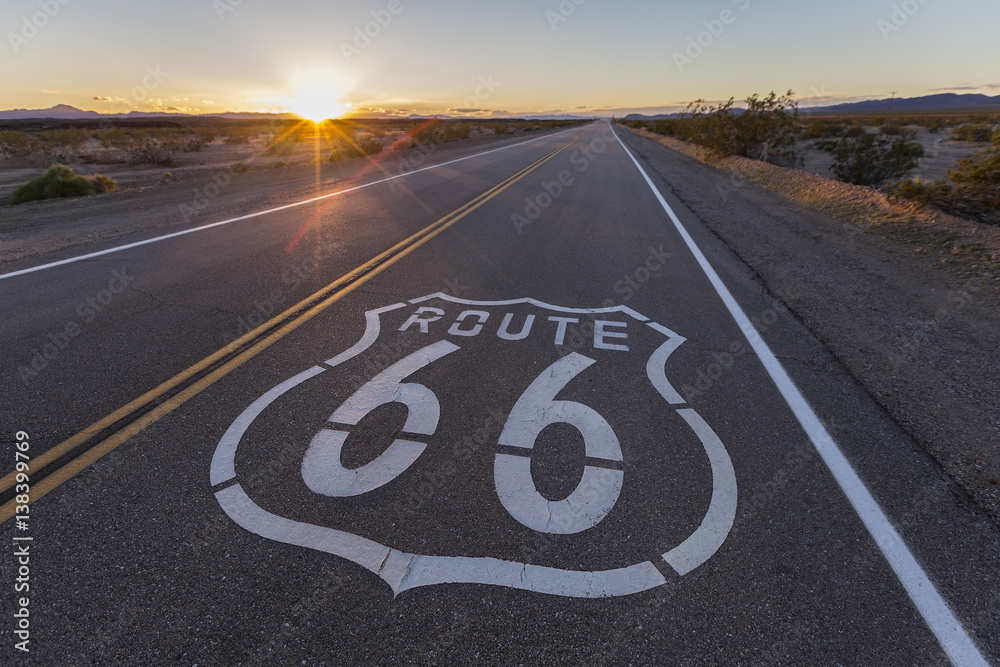
Embarking on a Route 66 road trip today requires a fundamental shift in how we approach navigation. Because the highway no longer officially exists in the federal registry, you cannot simply type its name into a digital mapping application and follow a standardized blue line. The original route was constantly realigned during its lifespan, meaning there are often multiple historic paths parallel to one another. Some alignments have been swallowed entirely by Interstate 40, while others abruptly dead-end at forgotten railroad crossings or private ranch fences.
Successfully navigating this geographic puzzle demands analog preparation. Purists and seasoned road trippers rely heavily on turn-by-turn physical guidebooks and specialized mobile applications created by historic preservation societies. These resources meticulously detail the countless frontage roads, obscure exits, and gravel detours required to stay as close to the original tarmac as possible.
This forced deceleration is ultimately the route’s greatest gift. It compels modern travelers to abandon the contemporary obsession with arrival times and embrace the unpredictable rhythm of getting beautifully, temporarily lost in the hinterlands of the American landscape.
Concrete Whales and Buried Cadillacs
The visual language of the Mother Road is defined by its wildly eccentric roadside architecture, a phenomenon born out of the fierce mid-century competition for tourist dollars. Before the homogenization of chain restaurants and standardized rest stops, business owners utilized massive, surreal sculptures and blinding neon displays to lure drivers off the pavement. Today, these surviving attractions form a bizarre and delightful outdoor gallery that stretches across the continent.
In Oklahoma, travelers are greeted by the Blue Whale of Catoosa, a grinning, eighty-foot-long concrete leviathan resting in a murky roadside pond that once served as a popular swimming hole. Further west, in the windswept Texas Panhandle, lies the legendary Cadillac Ranch. This iconic art installation features a row of vintage luxury cars buried nose-deep in the dirt, their tail fins angled toward the sky and their chassis heavily encrusted with decades of brightly colored spray paint applied by passing visitors.

Such eccentricities extend to historic accommodations as well. The Wigwam Motels, located in Arizona and California, allow guests to sleep inside towering, teepee-shaped concrete structures, perfectly encapsulating the fascinating architectural whimsy of the 1950s. These stops are not mere novelties; they are enduring testaments to the entrepreneurial spirit and the sheer, unbridled optimism of the early American road trip.
The Shifting Topography of the West
Beyond the neon and the novelty, driving Route 66 provides an unparalleled masterclass in the raw geographical diversity of the United States. The journey begins in the lush, agricultural flatness of the Midwest, tracing a path through the cornfields of Illinois and the rolling, oak-studded hills of Missouri. As the road crosses the Mississippi River and pushes into Oklahoma and Texas, the sky seemingly expands, and the air grows noticeably drier, signaling the transition into the formidable American West.
The most dramatic environmental shift occurs upon entering New Mexico and Arizona. Here, the historic tarmac weaves through high-altitude deserts, ancient volcanic fields, and the painted, stratified badlands. The route skirts the edge of the Petrified Forest National Park, a surreal landscape littered with the fossilized remains of Triassic-era trees that have turned entirely to solid, glittering quartz.
Navigating the final stretches of the Mojave Desert in California presents a harsh, beautiful isolation. The temperature extremes and the sheer emptiness of the basin serve as a humbling reminder of the physical challenges faced by early motorists. The rusted husks of abandoned service stations scattered along this arid stretch stand as quiet memorials to those who underestimated the desert’s unforgiving nature.
Arriving at the Pacific Edge
For nearly a century, the symbolic conclusion of this cross-country odyssey has been the Santa Monica Pier in Southern California. Rolling past the final designated marker, with the Pacific Ocean stretching out to the horizon, evokes a profound sense of geographical finality. Yet, reaching the water’s edge is merely the punctuation mark on a much larger narrative.
The true value of traversing Route 66 does not lie in arriving at the ocean, but in the thousands of miles of deliberate observation that precede it. The journey forces a reckoning with the shifting values of society, highlighting the devastating impact of the interstate bypass on small-town economies while simultaneously celebrating the resilient communities fighting to keep the neon buzzing.
Ultimately, driving the remnants of the Mother Road is an act of historical preservation in motion. By choosing the cracked asphalt over the smooth concrete of the modern highway, travelers ensure that this vital chapter of the cultural zeitgeist continues to be experienced, deeply felt, and remembered long into the future.