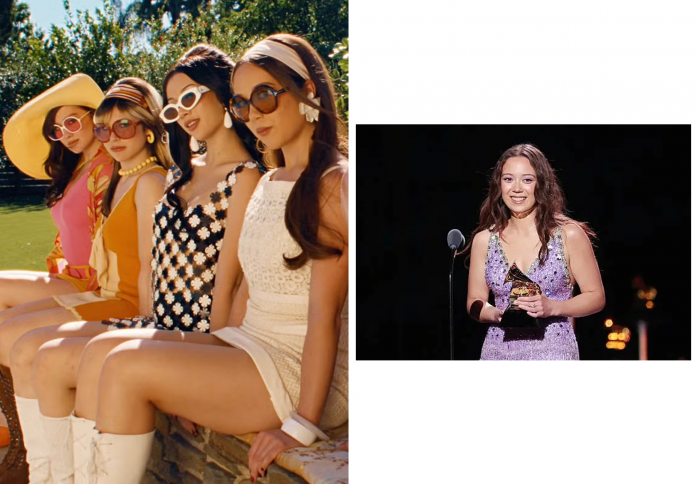
Laufey’s “Madwoman” video begins in the language of glossy 1970s domestic glamour and then steadily teaches the viewer not to trust it. Directed by Warren Fu and released after the song’s Coachella debut in April 2026, the film surrounds Laufey with a cast that includes Hudson Williams, Alysa Liu, Lola Tung, Megan Skiendiel, Havana Rose Liu, and Chase Sui Wonders. The visual world is immaculate—fashion, poolside seduction, magazine imagery, choreography—yet the narrative behaves like a dream that keeps revealing its seams. That makes the video an apt companion to “A Matter of Time: The Final Hour,” the deluxe expansion of Laufey’s third album. Her music has always been fluent in older forms. “Madwoman” shows how effectively she can use nostalgia not as refuge, but as a set whose perfection becomes increasingly unstable.
A Perfect House With Something Wrong Inside It
The first pleasure of “Madwoman” is visual certainty. The video knows exactly what kind of fantasy it wants to present: polished interiors, glamorous clothes, carefully arranged bodies, and a color-rich atmosphere that evokes the television and fashion imagery of the 1970s. Laufey is placed inside a world where every surface appears designed to reassure the viewer that order exists.
Then the order begins to misbehave. Domestic harmony gives way to jealousy, absurdity, and surreal escalation. Hudson Williams appears as the romantic partner at the center of the scenario, but the relationship is less a stable narrative than a mechanism for destabilizing the fantasy. The polished home becomes a psychological stage. The more beautiful the setting looks, the stranger its emotional logic becomes, until the viewer understands that perfection is not the point—it is the trap.

A Cast Built From Contemporary Pop Culture
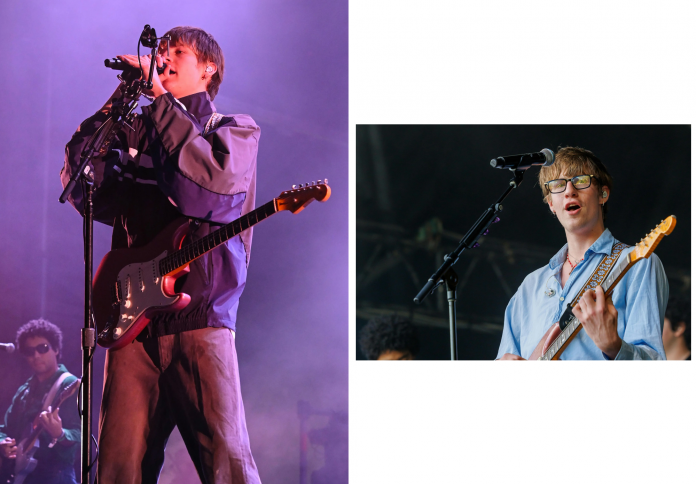
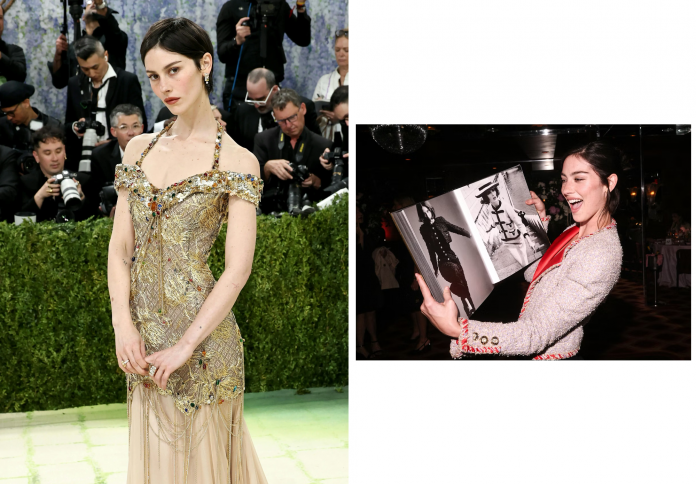
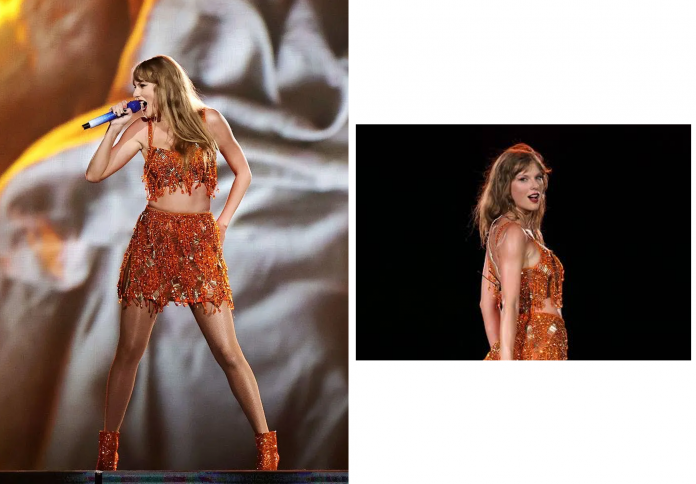
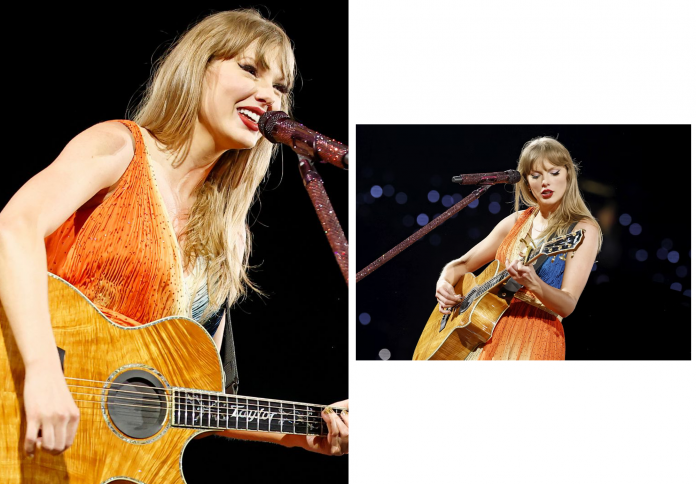
The ensemble gives the video another layer of pleasure. Olympic figure skater Alysa Liu appears alongside actors and performers including Lola Tung and Megan Skiendiel, while Havana Rose Liu and Chase Sui Wonders enter through magazine-cover imagery. The casting does not function like a conventional supporting cast whose job is to disappear into character. These are recognizable contemporary figures placed inside a deliberately stylized universe.
That choice suits Laufey’s relationship with nostalgia. She rarely tries to make the past look historically sealed. Instead, she brings old musical and visual vocabularies into contact with a very current audience. Casting people associated with present-day television, sport, fashion, and youth culture prevents the 1970s references from becoming pure period recreation. The video feels like a dream assembled in 2026 from pieces of media history rather than an attempt to reproduce one decade exactly.
Warren Fu Lets the Fantasy Fold Inward
Director Warren Fu has long worked in the space where music video, graphic design, and cinematic reference overlap. In “Madwoman,” that sensibility appears through transitions that make the story increasingly self-conscious. A magazine becomes part of the narrative. A dance sequence interrupts domestic tension. The swimming-pool imagery feels both romantic and artificial. A proposal lands inside a world already too unstable to support a conventional happy ending.
The most revealing gesture is the attempt to escape. Laufey’s character moves toward what appears to be an exit from the dream, only to confront a black void and be pulled back into the house’s logic. The image turns the set into something more than a location. It is an emotional loop. The fantasy cannot simply be walked away from because it has been built from expectations, roles, and stories that the character carries with her.
Old Forms, New Emotional Friction
Laufey’s music often draws on jazz, classical instrumentation, and older pop songwriting, but the attraction is not nostalgia for manners or certainty. Her songs frequently place very contemporary insecurity inside elegant forms. “Madwoman” extends that strategy visually. The refinement of the setting intensifies the messiness of the feelings rather than containing them.
That contrast is one reason her aesthetic has connected with younger listeners. An orchestral flourish or vintage silhouette can provide structure without requiring emotional neatness. The past becomes a language through which modern anxieties can be exaggerated and examined. In the video, the gap between the composed image and the unraveling relationship becomes the subject. The characters look as if they belong in an advertisement for an ideal life, while their behavior exposes how little that image guarantees.
The Deluxe Era Expands the Story
“Madwoman” arrived as part of the expanded world around “A Matter of Time,” Laufey’s third album, with “The Final Hour” deluxe edition giving the project additional material. Releasing the video around a Coachella performance helped move the song from private listening into a more theatrical cultural moment. The video then pushes that theatricality further, offering a miniature film that can stand apart from the live stage.
The result is a useful statement of where Laufey is in 2026. She is no longer interesting simply because she brings older musical references into modern pop. That description is too narrow for an artist increasingly confident in building entire visual systems around the songs. “Madwoman” treats nostalgia as architecture, celebrity casting as texture, and domestic glamour as a psychological device. The past is visible everywhere, but the instability belongs unmistakably to the present.
Laufey’s Visual World Is Strongest When Beauty Becomes Slightly Unstable
The appeal of the Madwoman video lies in how easily elegance can tip into unease. Laufey’s music has long been associated with romance, orchestration, old-Hollywood polish, and jazz-pop references, but those qualities become more interesting when the image does not simply illustrate them beautifully. A glamorous room can feel lonely. A perfect dress can become restrictive. A poised gesture can suggest someone trying very hard not to come apart.
That instability helps prevent her retro vocabulary from becoming decorative nostalgia. The point is not to recreate a specific decade with museum accuracy. It is to use familiar cinematic codes—soft light, formal clothing, controlled interiors, star-like posing—and let contemporary emotional mess leak through them. The cameos and fashion moments in Madwoman expand that world, but the video’s lasting image is the contradiction at its center: composure performing beside frustration. For an artist whose songs often make restraint sound emotionally enormous, that is an especially fitting visual strategy. The prettier the frame becomes, the more noticeable every fracture inside it can feel.