While the legendary origins of the coffee bean may trace back to the ancient highlands of Ethiopia and the bustling trading ports of Yemen, it was on the cobblestone streets of Europe that the beverage truly came of age. Across the continent, the simple act of brewing coffee evolved from an exotic novelty into a cornerstone of cultural identity. Over the centuries, ornate, caffeine-fueled salons became the incubators for revolutionary ideas, literary masterpieces, and profound philosophical debates. Today, the European coffee landscape is a fascinating juxtaposition of fiercely guarded historical traditions and cutting-edge roasting innovations. From the opulent, chandelier-lit palaces of the Austro-Hungarian empire to the minimalist, sun-drenched roasteries of the Nordic capitals, understanding a city's relationship with coffee is perhaps the most intimate way to decode its character. This is an exploration of the destinations where ordering a cup is an essential cultural immersion.
The Imperial Salons of Vienna
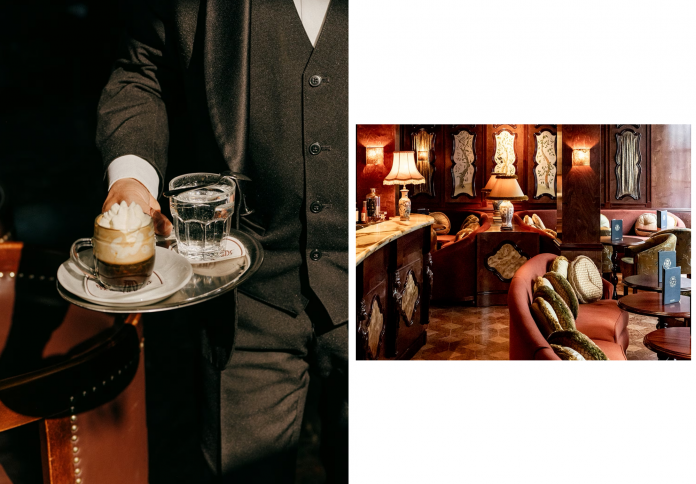
Vienna is widely considered the grande dame of the original European coffee scene, an accolade validated by the inclusion of its cafe culture on the UNESCO Intangible Cultural Heritage list. Here, stepping out for a cup is not a hurried transaction on the way to the office. It is a deliberate social ritual meant to be savored in opulent, nineteenth-century establishments. Characterized by soaring vaulted ceilings, neo-Renaissance details, and grand marble columns, these historic coffeehouses are architectural time capsules that demand a slower, more contemplative pace of life.

To understand this legacy, one must visit institutions like Cafe Frauenhuber, recognized as the oldest continuously operating coffeehouse in the Austrian capital. It is the perfect setting to order a wiener melange, a luxurious, cream-enriched interpretation of the cappuccino. A short stroll away, the famous Cafe Central serves its signature frothy einspänner, essentially an espresso crowned with a generous dollop of whipped cream. For those with a sweet tooth, Cafe Landtmann—once the preferred haunt of psychoanalyst Sigmund Freud—pairs classic apple strudel perfectly with a brauner, an espresso served with a small jug of milk on the side.
Despite this heavy reverence for the past, the city is not entirely frozen in time. A new generation of baristas is quietly reshaping the local landscape. Establishments such as GOTA Coffee Experts act as the vanguard for the modern specialty scene. By offering hands-on workshops and serving meticulously poured flat whites, nitro cold brews, and innovative coffee cocktails, they are proving that Vienna’s coffee culture remains a vibrant, evolving entity rather than a mere museum piece.
The Literary Legacy of Paris
A Parisian boulevard devoid of its woven outdoor chairs and tiny round tables is an almost unimaginable concept. In the French capital, the cafe has long functioned as an extension of the living room, serving as the social and intellectual heartbeat of the city. During the twentieth century, Left Bank landmarks like Les Deux Magots and Cafe de Flore became the de facto headquarters for the Lost Generation and existentialist thinkers. Luminaries ranging from Ernest Hemingway to Simone de Beauvoir spent countless hours here, fueling their literary masterpieces with strong tobacco and endless conversation.
For a glimpse even further back into Parisian history, one must seek out Le Procope. Founded in 1686, it lays claim to being the oldest cafe in the city, reportedly the first establishment to elevate the experience by offering table service with delicate porcelain cups. Surrounded by glossy red walls, gilded portraits, and ornate chandeliers, patrons can easily conjure the era of Enlightenment figures like Voltaire and Rousseau. In these historic haunts, the classic order remains the cafe au lait—a deeply comforting concoction made with brewed coffee rather than an espresso base, designed for leisurely sipping.
Yet, modern Paris is no longer resting solely on the laurels of its literary ghosts. A dynamic new wave of specialty roasters is rapidly transforming the local palate. Contemporary, aesthetically driven spaces such as Tanat and Substance Cafe cater to a highly educated demographic of modern connoisseurs. By focusing on ethically sourced, single-origin beans and roasting them meticulously on-site, these new establishments are injecting a fresh, artisanal vitality into a city that already considers café culture a fundamental human right.
The Nordic Light Roast in Copenhagen
Heading north to Scandinavia, both the interior aesthetics and the fundamental approach to brewing undergo a dramatic transformation. Denmark has become globally synonymous with the Nordic light roast, a technique that challenges traditional, darker roasting methods. By carefully heating the beans at lower temperatures for significantly shorter durations, local roasters are able to preserve the raw, bright, and fruity notes of the coffee. It is an unapologetically purist approach that highlights natural acidity, perfectly mirroring the broader Scandinavian design ethos of minimalism and clean, natural materials.

Copenhagen sits at the undisputed epicenter of this modern movement, treating its roasteries with the kind of reverence usually reserved for fine wine cellars. Venues like the Nordic Roasting Co serve as educational hubs, hosting tasting workshops where enthusiasts learn to discern the subtle flavor variations caused by different degrees of roasting. Across the Danish capital, trailblazing establishments such as Coffee Collective, Prolog Coffee, and Darcy's Kaffe consistently draw crowds of discerning locals, pouring impeccably extracted brews that showcase a rotating selection of seasonal, single-origin beans.
Naturally, the Danish coffee experience would be incomplete without an acknowledgement of their legendary baking traditions. At hybrid spaces like the immensely popular Andersen & Maillard, the pastry display commands just as much respect as the high-end espresso machines. The modern Copenhagen ritual often involves pairing an effervescent espresso tonic or a velvety nitro cold brew with a flawlessly laminated almond croissant, or perhaps a traditional spandauer filled with rich vanilla custard. It is a masterclass in culinary balance, elevating the daily caffeine fix into an essential gastronomic event.
The Adriatic Eccentricity of Trieste
While the industrial heartland of Turin may hold the patent for the first espresso machine, it is the northeastern port city of Trieste that truly pulses as Italy’s historical coffee capital. Throughout the eighteenth century, as a crucial seaport for the sprawling Austro-Hungarian empire, Trieste benefited from the abolition of taxes on coffee. This strategic economic move triggered an explosion of cafe culture across the city. Today, as the proud hometown of the global roasting giant Illy Caffè, the local economy and social life remain deeply intertwined with the international coffee trade.
The historic cafes scattered throughout Trieste are breathtaking architectural marvels that rival the grandeur of any European palace. Establishments like Antico Tommaseo, which first opened its doors in 1830, feature ceilings intricately carved with classical cherubs. Meanwhile, the dark boiserie paneling and Venetian mask motifs of Caffe San Marco provide a moody, maximalist retreat for intellectuals and artists. Visitors can channel the ghost of James Joyce in the library-like calm of Caffe Pirona, or indulge in spectacular people-watching at Caffe degli Specchi, a glittering hall of mirrors situated directly on the city's main square.
What truly sets Trieste apart, however, is its fiercely independent, highly localized coffee vernacular. In a country famous for strict espresso rules, Triestinos proudly refuse to conform. Here, a standard shot of espresso is simply ordered as a "nero." However, the undisputed king of the local menu is the "capo in B"—an espresso topped with a delicate layer of foamed milk, served specifically in a small glass rather than a ceramic cup. Accompanied by a slice of spiral, nut-filled presnitz pastry, participating in this unique ordering ritual is the ultimate way to experience the true flavor of the city.