Long before Florida was defined by coastal mega-resorts and sprawling theme parks, a fierce grassroots preservation movement fought to protect a dense, primeval sanctuary hidden in the state’s interior. Highlands Hammock State Park, sitting just west of Sebring, stands as a testament to that early vision—a sprawling 9,000-acre ecosystem that narrowly missed out on national park designation before becoming a cornerstone of Florida’s state park system. Home to towering ancient oaks, rare endemic species, and mystical hydric hammocks reminiscent of the distant Everglades, this protected refuge offers an intimate look at a vanishing wilderness. Blending rich history from its New Deal-era caretakers with a constellation of distinct habitats, Highlands Hammock remains an enduring love letter to Florida’s wild, untamed interior.
The Roots of Grassroots Preservation
The story of Highlands Hammock is one of remarkable civic determination against the tides of commercial development. In the early 20th century, local conservationists and nature enthusiasts recognized that the magnificent old-growth forest—featuring massive live oaks with a girth of over 36 feet and bald cypress trees standing for centuries—was uniquely vulnerable to being cleared for farmland. Driven by a passionate coalition, advocates championed the pristine landscape as a prime candidate for federal protection.
Although federal officials ultimately rejected the bid, deeming the area too small for a national park, the grassroots effort succeeded in keeping the bulldozer at bay. When the Florida Park Service officially established its initial tier of state parks in 1935, Highlands Hammock was the crown jewel ready to open its gates. This historical rejection transformed into a local triumph, securing an ecological anchor that protects countless threatened species and preserves a vital window into ancient Florida.
The Legacy of the Civilian Conservation Corps
Much of the physical infrastructure that allows visitors to explore this dense wilderness today is a direct gift from the Great Depression era. During the 1930s, the Civilian Conservation Corps (CCC) established a camp on the grounds, deploying young men to carve out trails, build elevated boardwalks, and lay down the foundational access routes that traverse the park’s diverse ecosystems.
Today, that pivotal chapter of history is meticulously preserved within the park’s dedicated Civilian Conservation Corps Museum. Housed in an original structure built by the corps, the museum offers interactive exhibits detailing the monumental labor and New Deal initiatives that shaped early park development. Walking along the wooden boardwalks constructed above the cypress swamps, visitors are constantly reminded of the human hands that tamed the mud and water to make these hidden landscapes accessible to generations of travelers.
A Constellation of Distinct Ecosystems
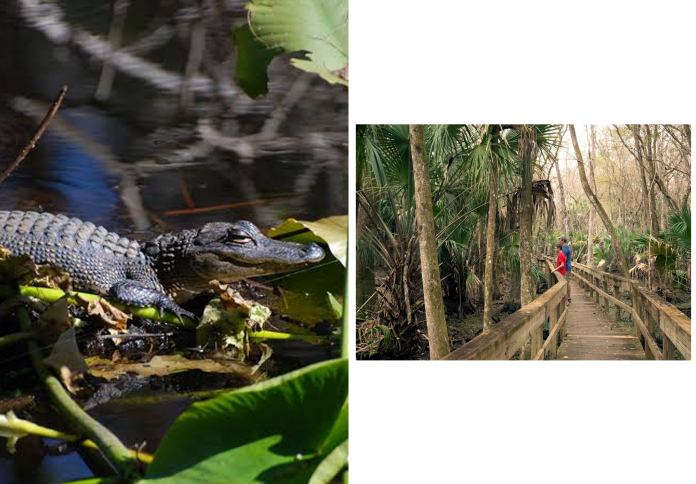
What makes Highlands Hammock ecologically extraordinary is its dense concentration of varied habitats within a relatively compact geographical footprint. Situated along the ancient Lake Wales Ridge, the park encompasses four distinct ecosystems, ranging from dry sandy scrublands to deep, flooded cypress swamps. Visitors can transition from walking beneath an arid canopy of air plants and sabal palms to peering over elevated boardwalks where alligators float quietly through submerged forest floors.
This rare convergence of habitats creates a sanctuary for extraordinary biodiversity. Rare Florida panthers, black bears, gopher tortoises, and Sherman’s fox squirrels share the landscape with an astonishing array of birdlife, making it a premier destination for wildlife viewing and botanical study. Every trail reveals a different facet of Florida’s complex natural history, proving that immense ecological diversity can thrive away from the coastal tide lines.
Embracing the Slow Rhythm of Florida’s Interior
In a modern travel landscape dominated by high-speed thrills and crowded tourist destinations, Highlands Hammock offers a radical alternative: stillness. Whether traversing the 3-mile loop road by bicycle, embarking on a ranger-guided tram tour through remote wetlands, or simply listening to the rustle of palmetto fronds along the Ancient Hammock Trail, the park invites visitors to slow down and attune themselves to the rhythms of the natural world.
Preserving this delicate balance requires ongoing vigilance and respect from every traveler who passes beneath its grand, moss-draped canopies. As one of Florida’s oldest and most treasured natural sanctuaries, Highlands Hammock stands as an urgent reminder of what is lost when we neglect our wild spaces—and what can be saved when communities rise up to defend them.