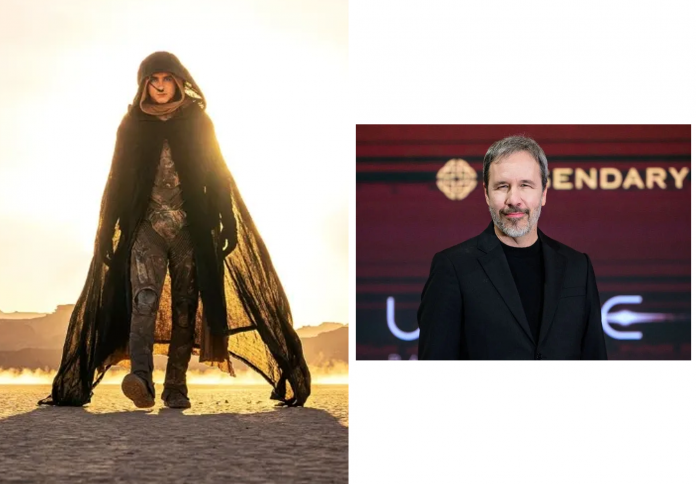
The cinematic horizon of 2026 is dominated by the monumental unveiling of “Dune: Part Three,” officially titled “Dune: Messiah,” which is slated for a worldwide theatrical release on December 18, 2026. Directed once again by the visionary Denis Villeneuve, this final chapter in his trilogy promises to be the most ambitious installment yet, adapting Frank Herbert’s seminal work to explore the grim, inevitable consequences of Paul Atreides’ rise to power. Following the apocalyptic stakes of “Part Two,” the new teaser trailer has provided a haunting, visually arresting glimpse into a galaxy transformed by holy war. It signals a shift from the scale of planetary conquest to the more intimate, psychological devastation of a leader grappling with the monster he has become.
A New Power Dynamic and Cast Expansion
The central tension of “Dune: Messiah” rests on the fractured psyche of Emperor Paul Atreides (Timothée Chalamet) as he struggles to maintain control over the Fremen fundamentalists who view him as a deity. Returning alongside Chalamet are Zendaya as Chani, whose perspective serves as the moral anchor of the film, and Florence Pugh as Princess Irulan, whose political maneuvering within the imperial court introduces a new level of strategic complexity. The narrative picks up twelve years after the events of the previous film, allowing for a more mature, cynical exploration of the characters as they navigate the fallout of the jihad that has swept across the known universe in Paul’s name.
The most electrifying addition to the cast is Robert Pattinson, who joins the saga in the role of the enigmatic Hayt—a ghola (clone) of the deceased Duncan Idaho, resurrected by the Tleilaxu with a mission that is as sinister as it is mysterious. Pattinson’s inclusion has sparked intense speculation, as his character is instrumental in the complex political webs of the third novel. His presence, alongside established powerhouses like Javier Bardem and Rebecca Ferguson, rounds out an ensemble that is tasked with grounding the increasingly surreal, metaphysical stakes of the story in genuine human conflict and existential dread.
Technological Mastery and Narrative Weight
Denis Villeneuve’s commitment to “tactile” science fiction remains the cornerstone of the production. Shot on location in the deepest stretches of the Namib and Jordanian deserts, the film employs advanced, large-format cinematography to capture the scale of Arrakis, which has now transitioned into a site of immense geopolitical and religious influence. The visual language of the teaser—marked by stark contrasts of shadow and light, and the encroaching presence of the “Holy War”—suggests that this chapter will be less about the spectacle of battle and more about the suffocating atmosphere of inevitable tragedy. The score, once again composed by Hans Zimmer, is reported to incorporate entirely new, haunting vocal motifs to represent the terrifying scope of Paul’s prescience.
The script, co-written by Villeneuve, Jon Spaihts, and Eric Roth, leans heavily into the dark, subversive nature of Herbert’s writing, challenging the audience to re-evaluate the “hero’s journey” of the previous films. Where “Part One” and “Part Two” focused on the making of a messiah, “Part Three” is an autopsy of that very concept. It is a bold, challenging conclusion that refuses to provide easy catharsis, instead forcing the characters—and the audience—to confront the ruin left behind by absolute power. As the release date approaches, anticipation is at an all-time high, with the film poised to redefine the limits of the space-opera genre one final time.
The Legacy of the Dune Trilogy
As the trilogy prepares for its definitive close, “Dune: Messiah” is already being discussed as a benchmark for contemporary adaptation. By successfully navigating the dense, often difficult politics of Herbert’s source material, Villeneuve has created a rare cinematic entity: a blockbuster that is as intellectually challenging as it is visually breathtaking. The film’s focus on the cyclical nature of history, the corruption of religious fervor, and the loneliness of prophecy ensures that its themes will resonate far beyond its theatrical run. It serves as a stark reminder that the most impactful stories are those that dare to interrogate the myths we build around ourselves.
For fans of the saga, the final chapter represents the resolution of a journey that has spanned nearly a decade of production. From the first whispers of the project to this impending conclusion, the Dune trilogy has consistently pushed the boundaries of what is possible in large-scale cinema. As the sands of Arrakis settle on this final act, it is clear that Villeneuve has achieved the impossible: translating the untranslatable and creating an epic that is both grand in scope and devastatingly human in its execution. The galaxy, and the cinematic landscape, will be forever changed by the arrival of the final Messiah.