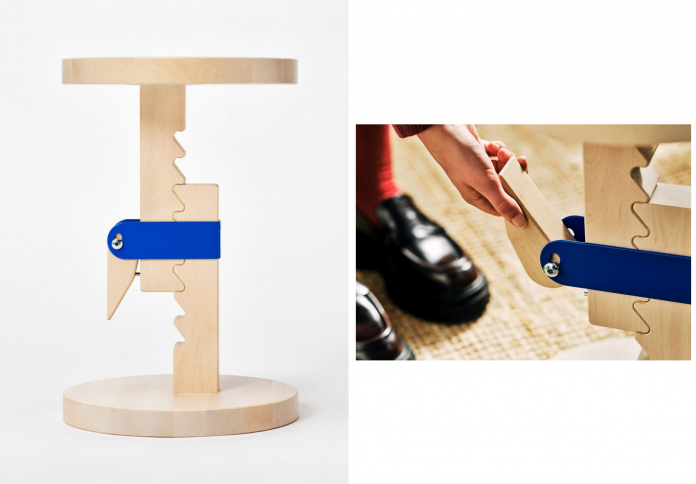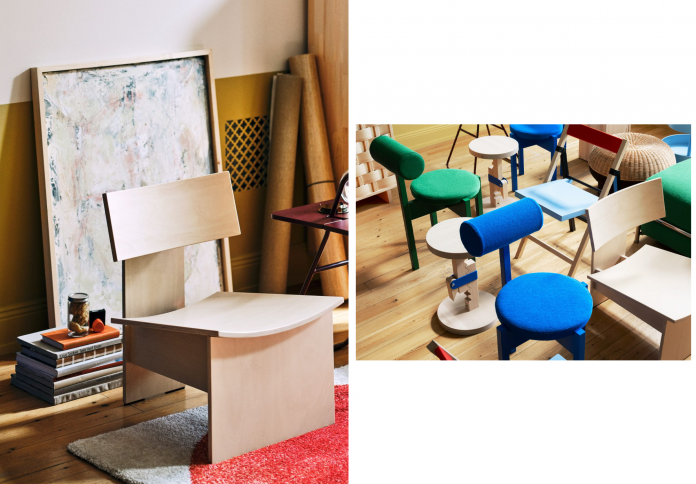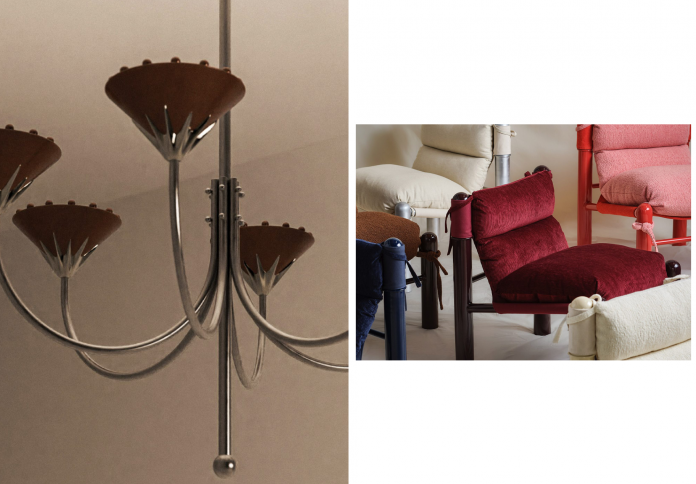
A growing group of products is challenging one of contemporary consumption’s most frustrating assumptions: that the person who buys an object should remain locked out of its inner workings. From Kibu headphones designed for children to assemble, to a Takt sofa with accessible mechanical joints, a flat-pack toaster by designer Kasey Hou, a modular Framework laptop, and a repair-minded concept car from Eindhoven University of Technology, repair is being treated as a design feature rather than an afterthought. These projects vary widely in maturity and market scale, but they share an important principle. A product becomes easier to keep when its construction can be understood. That matters environmentally, but it also changes the relationship between user and object. Repairability replaces a little of the mystery around manufactured goods with agency, asking designers to make disassembly, replacement, and maintenance as intentional as first use.
Repair Begins With Legibility
The most radical thing about many repairable products is not a new material or a complex technology. It is that the construction makes sense when a user looks at it. Fasteners can be found. Parts can be separated. Instructions explain the sequence. Replacement components are conceived as normal rather than exceptional. These choices turn repair from a specialist emergency into a possible part of ownership.
That shift requires designers to reconsider the prestige of seamlessness. Consumer products have long been celebrated when joints disappear and surfaces look uninterrupted. But a perfectly sealed object can become an environmental and economic problem the moment one inexpensive component fails. Legibility asks a different question: can a product remain elegant while still telling the user how it comes apart? The answer increasingly appears to be yes.

Children’s Headphones Make the Lesson Literal
Kibu headphones, developed by Morrama with Batch.Works, turn assembly into part of the experience. The design uses a small number of components that snap together without glue, hidden fixings, or complicated tools. Parts are 3D-printed from recycled bioplastic, and damaged pieces can be replaced rather than forcing the entire product to be discarded.
Designing the system for children adds a pedagogical dimension. When a young user assembles a product, the object stops appearing magically complete. It becomes a set of decisions and parts. That knowledge may make future repair less intimidating. The headphones therefore teach something larger than maintenance: products are made, not conjured, and what has been made can often be opened, understood, and changed.
Furniture and Appliances Need the Same Honesty
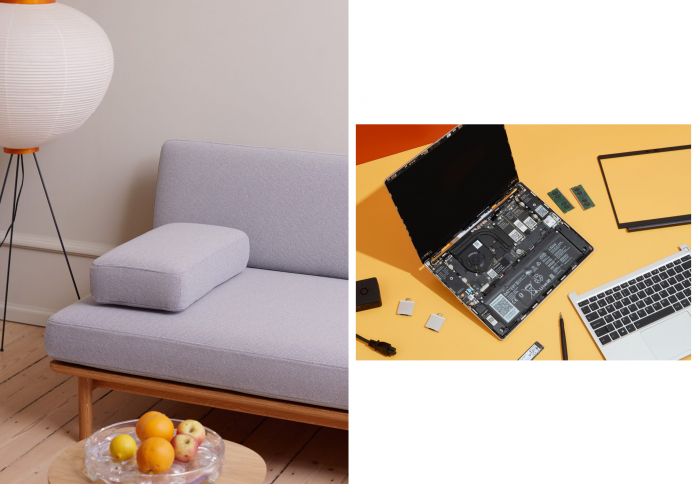
The Spoke sofa by Anderssen & Voll for Takt applies similar thinking at furniture scale. Mechanical joints are accessible, upholstery can be removed, and replacement parts are available. These details acknowledge the obvious mismatch between a sofa’s expected lifespan and the much shorter life of a stained cover, damaged component, or changing aesthetic preference. Repairability lets the long-lived parts remain in service while the vulnerable parts change.
Kasey Hou’s flat-pack toaster pushes the logic into a small appliance category notorious for being cheap to replace and frustrating to open. Designed as a self-assembly project with clear instructions, it aims to give users confidence before anything goes wrong. That reversal is clever. Instead of introducing the internal structure only at the moment of failure, the product makes construction knowledge part of the first encounter.
Electronics Show Why Ecosystems Matter
Framework’s modular laptops demonstrate that repairability is not only a physical design problem. The company uses accessible screws, replaceable modules, QR-linked guidance, and a marketplace for components. A laptop can be easy to open but still impossible to maintain if replacement parts disappear. Repair therefore depends on an ecosystem of documentation, inventory, software support, and long-term commitment.
The same principle appears in more speculative form in ARIA, a concept car developed by TU/ecomotive at Eindhoven University of Technology. The project imagines standardized components, diagnostic assistance, a manual, and even an onboard toolbox so owners can handle more repairs themselves. Cars are far more regulated and complex than headphones or laptops, but the concept exposes a useful ambition: design systems can treat the owner as a participant rather than merely a customer waiting for service.
Repair Is a Cultural Design Problem
Europe’s expanding right-to-repair policies are giving the topic regulatory momentum, but legislation alone cannot make products emotionally easy to repair. People also need confidence, access, time, and a reason to value maintenance. Design can support those habits by making repair visible, rewarding, and less intimidating. Clear instructions and replaceable parts are as much about psychology as engineering.
The projects leading this shift do not offer one universal solution. A sofa, toaster, laptop, car, and pair of children’s headphones fail in different ways. Their common contribution is a change of attitude. They treat breakdown as an expected stage in a product’s life rather than the end of the story. Once failure is anticipated during design, repair stops looking like damage control and starts looking like continuity. That may be the most important upgrade an object can receive.
Repair Changes the Relationship Between Designer and Owner
A repairable object gives up a degree of control. Once screws can be reached, parts replaced, covers removed, or components understood, the owner is no longer dependent on the original manufacturer for every future decision. That shift may sound minor, but it challenges a business culture built around sealed products and accelerated replacement.
Designing for repair also changes aesthetics. Fasteners may need to remain visible. Components must tolerate disassembly. Materials and interfaces have to age without becoming impossible to match. The result can be less visually “perfect” at first encounter and more useful over a longer life. This is where repair becomes a design value rather than only an environmental one. It rewards legibility, patience, and a willingness to let objects accumulate evidence of use. The most promising examples do not romanticize fixing as effortless; they reduce the unnecessary barriers that make it difficult. A product that can be opened, understood, and maintained invites a different form of ownership—less like consuming a finished image and more like entering a long-term relationship with a thing.