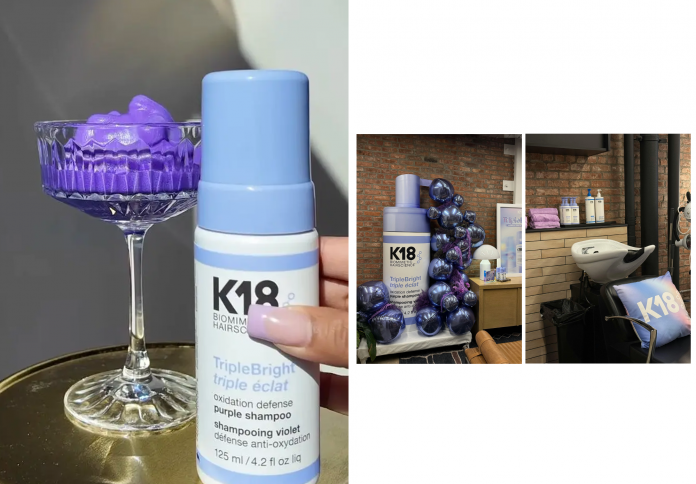
K18's TripleBright purple shampoo foam is less interesting as a standalone headline than as a window onto how a familiar toning category is being reformatted to improve distribution and control. K18 introduced the TripleBright Oxidation Defense Purple Shampoo Foam in 2026 as a new format within the established purple-shampoo category. Purple toning products are commonly used to visually counter yellow or brassy tones in lightened, blonde, gray, or highlighted hair. The interesting innovation is not the color purple itself but the attempt to make toning easier to spread through hair that can otherwise take pigment unevenly. Rather than treating the moment as a checklist of products, names, or announcements, the more useful approach is to ask what changes for the people who actually use, watch, enter, or live with it. Trend cycles move quickly in beauty, but the strongest ideas usually have
The Idea Behind the Launch
K18 introduced the TripleBright Oxidation Defense Purple Shampoo Foam in 2026 as a new format within the established purple-shampoo category. Purple toning products are commonly used to visually counter yellow or brassy tones in lightened, blonde, gray, or highlighted hair. For anyone maintaining blonde on a naturally dark base, the ritual is less about chasing an abstract cool tone than managing how warmth returns between salon visits. The important point is not simply that these details exist, but that together they define the conditions of the story: who is making the decision, what has changed, and why the moment now feels different from an ordinary product release, workplace adjustment, episode recap, or interior refresh.
Trend cycles move quickly in beauty, but the strongest ideas usually have a practical core. A color story may begin on social media and a hair technique may spread through tutorials, yet repeat use depends on whether the idea fits real mornings, real budgets, and real skin or hair needs. In this case, that context sharpens the value of format innovation in a category consumers already understand. It also keeps the article from mistaking visibility for significance; the most photographed or repeated detail may open the story, but it is the relationship among the details that gives the subject its editorial weight.
Where Formula Meets Routine
The product drew attention from an editor with naturally dark hair that had been dyed blonde, a use case in which brassiness can be especially visible as color changes over time. A foam format changes how the product is dispensed and distributed compared with a conventional liquid shampoo. Those facts create a more useful frame than hype alone. They show how the subject works at the level of format, process, casting, policy, material, or service rather than leaving it as an abstract trend. A foam can be judged by spreadability, rinse experience, toning consistency, and how it fits into an existing wash routine.
Beauty editorial works best when it separates aesthetic excitement from certainty. A new shade or ritual can be fun without becoming a universal rule, and a product can be interesting without being necessary for everyone. That makes comparison important. The relevant question is not whether every consumer, institution, viewer, or visitor should respond in the same way, but which conditions make the idea work and which conditions expose its limits.
How the Trend Travels
Even coverage matters with highly pigmented toning products because concentrated deposits can affect how the color reads from section to section. Purple shampoo is not limited to natural blondes; it is also used by people with bleached or highlighted dark hair when unwanted warm tones appear. This is where the story moves from announcement to experience. The subject is interpreted through repeated choices: what gets emphasized, what becomes optional, what is standardized, and what remains dependent on individual judgment. Color-maintenance products are often most useful when used selectively, with results assessed in natural light rather than only under bathroom lighting.
That distinction is especially important when marketing language drifts toward treatment language. Cosmetics can change appearance and support a routine, but individual results vary, and persistent skin or scalp concerns belong in a more careful conversation with qualified professionals. For K18's TripleBright purple shampoo foam, the tension is particularly visible in the temptation to treat stronger toning as automatically better. That tension is productive when it leads to better choices and clearer expectations rather than simply producing another layer of marketing language or speculation.
The Limits of the Promise
Toning is temporary color maintenance rather than a substitute for professional lightening or color correction. Frequency depends on the hair and the product because overuse can leave some hair looking dull, dry, or overly cool. Those details also define the boundary of what can responsibly be claimed. Pigmented shampoos alter appearance temporarily; they do not repair all forms of chemical damage or replace individualized color services. An editorial reading can still be enthusiastic, skeptical, or aesthetically engaged without turning uncertainty into certainty.
The question, then, is not whether the trend is objectively good or bad. It is whether the idea gives consumers a clearer way to choose: a shade that works with undertone, a format that makes application easier, or a routine that can be adjusted without becoming an obligation. The point is not to remove pleasure from the story. It is to make the pleasure more durable by separating what has been demonstrated from what is merely possible, and by recognizing that users and audiences bring different needs, tastes, and tolerances to the same idea.

What Deserves to Last
The 2026 launch shows how mature beauty categories can still evolve through delivery system and user experience rather than a wholly new ingredient story. Future toning launches will likely keep competing through gentler cleansing systems, targeted pigment delivery, and formats that reduce mess. Seen this way, the subject is not a finished verdict but a snapshot of a system in motion. Products will be reformulated, software will be updated, series will continue, stores will age, and cultural labels will change; the useful editorial task is to identify which underlying choices are likely to remain meaningful when that happens.
The lasting value of the moment will be measured after the launch cycle moves on. If the idea still makes sense when the campaign imagery disappears, it has probably earned a place beyond trend status. The category's next chapter is not more purple for its own sake, but better control over where and how that purple works. The strongest takeaway is therefore not a command to buy, believe, visit, or predict. It is a clearer understanding of why this moment matters now and what evidence will matter next.