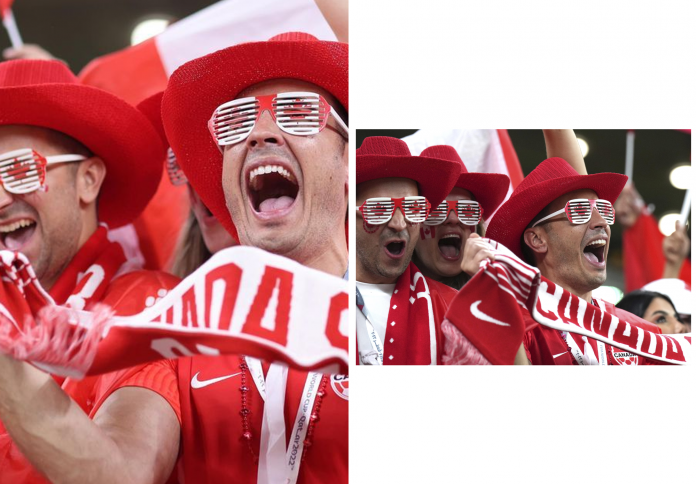
Canada’s sports minister Adam van Koeverden has attached an unusually political hope to the 2026 World Cup: that co-hosting the tournament with the United States and Mexico can help rebuild the atmosphere around North American trade negotiations. The three countries face a July 1 review deadline for the USMCA trade agreement after a period of strained discussions. With the United States having previously suspended formal talks with Canada, the tournament offers one of the few major projects in which all three governments remain visibly invested in a shared outcome. Football cannot resolve tariff disputes, but mega-events can create political space in which cooperation becomes easier to demonstrate.
A Tournament Built on Shared Logistics
The 2026 World Cup is structurally different from most major sporting events because it depends on three sovereign countries functioning as one host region. Teams, supporters, broadcasters and sponsors will move across borders, while security, transport, visas and commercial planning require coordination. That practical interdependence creates a temporary political fact: Canada, the United States and Mexico have a strong incentive to make each other look competent. Van Koeverden’s hope that this atmosphere could spill into trade talks is therefore not entirely symbolic. Successful co-hosting requires officials to solve problems together in public view, which can soften relationships even when formal negotiations remain difficult. The tournament cannot change the legal terms of USMCA by itself, but it can create repeated moments in which trilateral cooperation is rewarded rather than treated as a concession.
Trade Talks Carry a Hard Deadline
The political timing adds urgency. The three governments face a mandatory review of the USMCA on July 1, close to the heart of the tournament. Relations have been uneven, with the United States previously suspending formal discussions with Canada and President Donald Trump floating the idea of separate bilateral deals rather than maintaining the current trilateral framework. Canada and Mexico, by contrast, have strong reasons to preserve the existing agreement, under which a large majority of trade with neighboring partners remains tariff free. Against that backdrop, the World Cup becomes a highly visible reminder of the economic geography the agreement is designed to manage. Borders may be politically contested, but supply chains, tourism flows and major events already operate across them.
Sport as a Diplomatic Setting
Governments often use major sporting events as opportunities for informal diplomacy because the setting lowers the temperature around official contact. Leaders can meet around matches, host delegations and discuss issues without every conversation being framed as a negotiating session. That does not mean sport produces agreements; entrenched disputes over tariffs, industrial policy and sovereignty require technical bargaining. What sport can do is alter the emotional context. A successful joint project gives political actors evidence that cooperation can generate public benefits. For Canada, encouraging European supporters to attend matches north of the border also serves a soft-power function, presenting the country as an attractive destination within a tournament many international visitors may otherwise associate mainly with the United States.
The Limits of World Cup Optimism
It would be a mistake to overstate the diplomatic power of football. Trade agreements affect sectors worth hundreds of billions of dollars, and governments make decisions based on domestic politics, employment and strategic interests rather than tournament goodwill. A match between national teams cannot resolve disagreements over market access or tariffs. The World Cup may even create new friction around border processing, security or visitor rules. Still, political relationships are not built only in negotiation rooms. Repeated working contact among agencies and ministers can rebuild trust after periods of confrontation. Van Koeverden’s argument is best understood in that narrower sense: the event is an opportunity to demonstrate that the three countries are capable of acting as partners at a moment when the architecture of that partnership is under review.

A North American Story Beyond Football
The tournament will be judged by goals, crowds and the ability of host cities to manage extraordinary demand. Yet its wider legacy may include a clearer picture of how interconnected North America has become. Supporters will cross borders, companies will move equipment and personnel, and governments will coordinate on issues that are usually discussed through the language of national interest. Whether that creates momentum for USMCA renewal remains uncertain. But the symbolism is unusually direct: three countries arguing about the future of their economic relationship will simultaneously stage the world’s largest football tournament together. If the event works smoothly, it will offer a practical argument for cooperation. If it does not, the political lesson could be just as powerful in the opposite direction.
The Tournament Will Expose the Relationship in Public
Whatever happens in the trade review, the World Cup will make the state of North American cooperation unusually visible. Border waits, visa processing, transport coordination and security arrangements will be experienced directly by millions of visitors. Smooth systems will not prove that the three governments agree on trade, but they will demonstrate an ability to coordinate under pressure. Failures will be equally revealing. That public dimension gives ministers an incentive to resolve practical disputes quickly, even when broader political rhetoric remains confrontational. Sport often creates temporary zones of cooperation because no government wants to be blamed for disrupting a globally watched event. Van Koeverden’s optimism may therefore be most realistic at the operational level. If officials develop better working relationships while solving World Cup problems, those relationships can later support harder negotiations. The tournament cannot write a trade agreement, but it can change who is talking to whom and under what conditions.