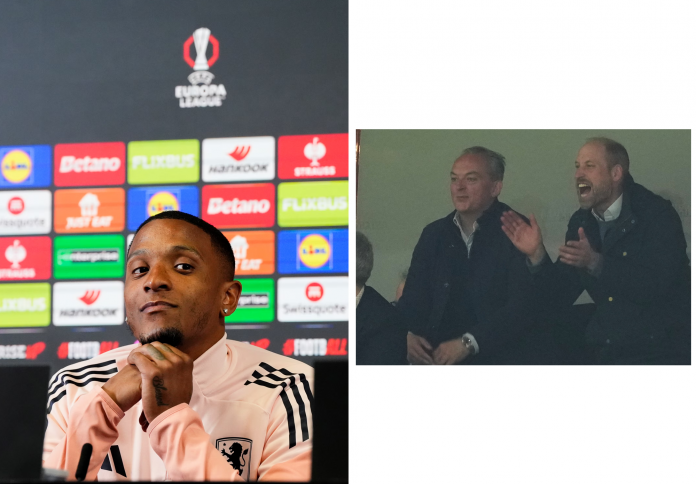
Aston Villa’s return to a major European final has brought together two very different forms of club identity: the modern elite defender Ezri Konsa and the very public support of Prince William. The Prince of Wales, a prominent Villa supporter and patron of the Football Association, is expected in Istanbul as Unai Emery’s side faces Freiburg in the Europa League final. Konsa says one of the greatest compliments of his career came when William described him as a Rolls-Royce. The anecdote is light, but the moment is serious. Villa are seeking their first major trophy since the 1996 League Cup and their first major European final since 1982.
A Club Rediscovers the European Stage
Aston Villa’s route to Istanbul carries historical weight because the club’s relationship with European competition is deep but discontinuous. Their greatest continental triumph came in 1982, when they won the European Cup, yet modern supporters have spent long periods watching Europe’s richest stages from a distance. Reaching the Europa League final represents the clearest evidence yet that the current project has moved beyond revival into genuine continental relevance. The opponent, Freiburg, ensures the match will demand tactical discipline rather than nostalgia. Villa cannot win by invoking history. But history changes how the night will be felt. For a club trying to re-establish itself among England’s leading sides, lifting a European trophy would make the transformation tangible in a way that league position alone cannot.
Konsa’s Rise Mirrors Villa’s
Ezri Konsa has become one of the players who best represents Villa’s climb. A regular for both club and England, he offers the qualities elite teams increasingly demand from central defenders: composure in possession, recovery pace, tactical intelligence and the ability to defend large spaces. The Prince of Wales’s description of him as a Rolls-Royce is memorable because it compresses those traits into a familiar image of smoothness and reliability. Konsa has treated the remark as an extraordinary compliment, but his importance to Villa is better measured by the trust placed in him during decisive matches. European knockout football exposes defenders to different rhythms and opponents, and Villa’s progress suggests that their back line has been capable of adapting rather than simply surviving.
Royal Support, Without Losing the Football
Prince William’s Villa support is unusual because it is both authentic and institutionally visible. As heir to the throne and patron of the FA, his presence at matches inevitably becomes part of the spectacle. Konsa has described the surreal experience of receiving his support around game day, when players are focused enough that the significance can temporarily disappear. William attended Villa’s 4–0 semi-final second-leg victory over Nottingham Forest, which confirmed their place in the final, and his expected trip to Istanbul adds another layer of attention. Yet the healthiest version of that relationship is the simplest one: a famous supporter participating in the emotional life of the club without becoming the story itself. Villa’s achievement belongs to the players, staff and supporters who have carried the season.
The Trophy Drought Raises the Stakes
Villa have not won a major trophy since the League Cup in 1996. Three decades is long enough for a club’s supporters to inherit memories rather than possess their own. A Europa League victory would create a new reference point for a generation that has lived through relegation, promotion, ownership changes and gradual recovery. It would also validate the club’s investment in competing on multiple fronts. European success can strengthen recruitment, increase commercial stature and help persuade current players that Villa’s ambitions are credible. The danger is that the scale of the occasion can encourage teams to play the event rather than the match. Emery’s experience in European knockout competition should help keep attention on the tactical details that decide finals: rest defense, set pieces, transitions and emotional control.

A Night That Could Redefine the Present
The most compelling part of Villa’s final is that it allows the club to connect its famous past with a modern identity that is still being built. Konsa’s royal compliment will probably remain a charming footnote, but it captures the confidence surrounding a defender and team that increasingly look comfortable in significant environments. Istanbul offers a harder test than symbolism. Freiburg will not care about Villa’s history, Prince William’s attendance or the club’s long trophy wait. That is precisely why the final matters. If Villa can win in a neutral stadium under maximum pressure, the achievement becomes evidence rather than aspiration. The club will still have work to do in the league and transfer market, but a European trophy would change the way both supporters and rivals understand the scale of the current era.
For Villa, Winning Would Change the Reference Point
A trophy has the power to reorder a club’s recent history. Villa supporters currently measure the modern revival against promotion, Premier League improvement and the return of European nights. Winning in Istanbul would give those milestones a destination. It would also create a new standard for the squad: players who have experienced a continental final as winners approach future knockout matches differently from teams still imagining what that level feels like. The club should not overstate what one cup can guarantee; league consistency remains the more reliable measure of long-term strength. But symbolic moments matter because football is an emotional institution as well as a competitive one. If Konsa and his teammates lift the trophy, future Villa sides will no longer need to borrow their primary European story from 1982. They will have a modern memory of their own.