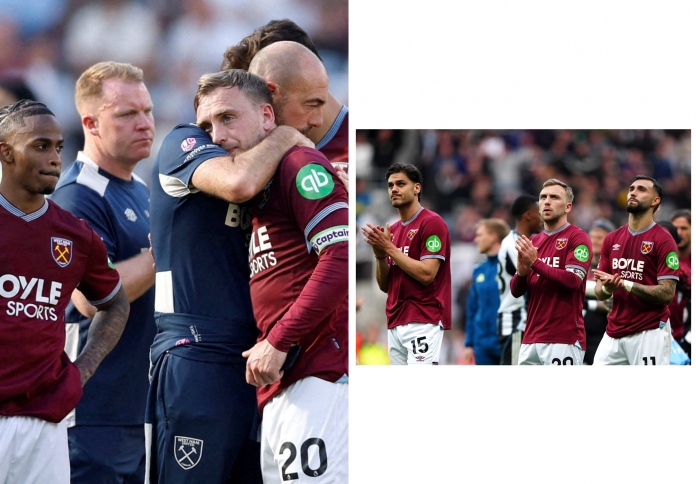
West Ham’s fight for Premier League survival carries a balance-sheet consequence as severe as the sporting one. The club’s latest accounts showed a £104.2 million loss, and relegation could force more than £100 million in player sales as revenue contracts and financial regulations remain binding. Jarrod Bowen, Mateus Fernandes and Crysencio Summerville are among the assets likely to attract interest. The club has already warned of a potential liquidity shortfall in summer 2026, with relegation described in its accounts as a severe but plausible scenario. The result is a familiar but brutal football problem: the players most capable of helping a club recover are often the ones it must sell first.
The Cost of Falling Out of the Premier League
Premier League membership is one of the most valuable recurring assets in world football. Broadcast distributions, commercial exposure and matchday demand create a revenue level that is difficult to replicate in the Championship. For West Ham, relegation would arrive at a particularly vulnerable moment because the club is already carrying a substantial reported loss. The financial consequences are not limited to lower income next season; they immediately affect how the squad must be valued and managed this summer. Clubs dropping divisions often receive parachute payments, but those mechanisms do not preserve the economics of staying up. West Ham’s own accounts forecast a liquidity shortfall and acknowledge that relegation could intensify the strain. That turns the final league matches into events with direct implications for staffing, transfers and the club’s capacity to operate without emergency sales.
Why the Best Players Become the Exit Route
The obvious response to a cash and compliance problem is to sell assets with strong market value. In football, that means players. Bowen, Fernandes and Summerville are attractive precisely because they have qualities that other Premier League clubs want and because their sales could generate substantial fees. Yet this is where relegation becomes self-reinforcing. A club that loses its most productive or valuable players weakens the squad it needs to win promotion back. Retaining everyone may be financially impossible; selling too aggressively can turn a one-year absence into a longer decline. West Ham will therefore need to distinguish between transfers required for liquidity, sales needed for regulatory compliance and departures driven by players unwilling to compete in the Championship. Those are different pressures, even if they arrive at the same time.

Financial Rules Do Not Pause for Sporting Pain
West Ham are conscious of both Premier League and EFL financial regulations, and relegation can complicate the transition between the two systems. Clubs cannot simply spend through a crisis in the hope that promotion later repairs the accounts. Loss limits, sustainability rules and cash obligations continue to shape decisions. That is why the club’s reported £104.2 million loss matters so much. It narrows the room for a patient response and increases the importance of transfer timing. A well-run sale early in the window can fund recruitment and reduce uncertainty; a distressed sale late in the summer can leave the squad thinner and the negotiating position weaker. The sporting department and finance team therefore have to operate as one unit, because every transfer now affects both competitiveness and solvency.
Relegation Changes Player Loyalty Too
The emotional bond between supporters and senior players is strongest when a club is in danger, but contracts and careers create their own logic. Bowen, in particular, would face a difficult choice if West Ham go down. Staying could make him a symbol of loyalty and central to the promotion effort, yet elite players have limited career windows and may not want to spend a season outside the top flight. Similar calculations apply to teammates with international ambitions or interest from stronger clubs. West Ham cannot assume that attachment to the club will outweigh professional opportunity. The best way to retain key figures may be to present a credible promotion plan with a stable manager, a balanced squad and financial clarity. If the summer feels chaotic, even players initially willing to stay may reconsider.

The Rebuild Must Begin Before the Drop Is Official
West Ham’s defeat at Newcastle left relegation close to confirmation, with Tottenham’s result at Chelsea capable of effectively deciding their fate. Waiting for the mathematics would be understandable emotionally but dangerous operationally. The club needs parallel plans for both divisions, including lists of players to sell, targets suitable for the Championship and decisions about wage structure. Relegation need not become collapse; many clubs have used the drop to reset recruitment and return quickly. But the financial warning signs mean West Ham have little room for improvisation. The central challenge is to raise enough money without stripping away the competitive core. That balance will determine whether relegation is remembered as a one-season shock or the beginning of a deeper institutional problem.
Promotion Planning Starts With the Sales Strategy
If relegation is confirmed, West Ham’s ability to return quickly will depend on sequencing. The club cannot sell every valuable player first and then begin searching for replacements in a weaker negotiating position. It needs a clear core, a list of assets whose departures are financially necessary and a recruitment plan tailored to the Championship’s physical and scheduling demands. Some Premier League-quality players may be worth retaining even at a short-term cost because promotion itself has enormous value. Others can be sold at strong prices to stabilize the accounts. The danger is improvisation: one unexpected offer leads to another departure, and the squad becomes whatever remains at the end of August. West Ham’s financial position makes discipline essential. A relegation rebuild is successful when sales are part of a design, not merely a reaction to the market.