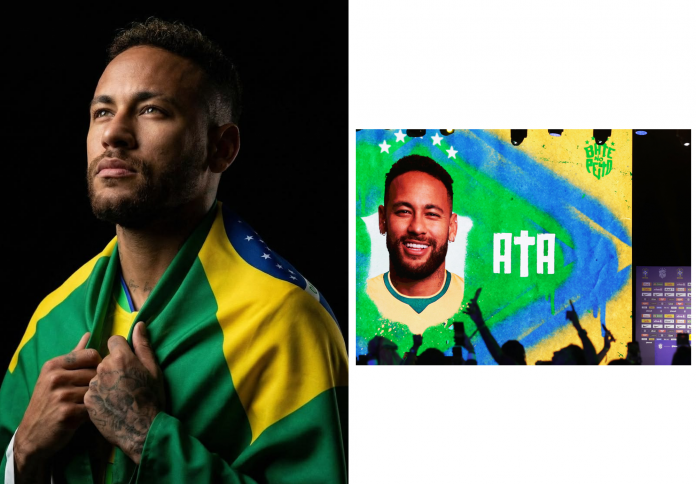
Brazil’s decision to take Neymar to the 2026 World Cup is both nostalgic and pragmatic. At 34, more than two years removed from an anterior cruciate ligament tear, the country’s all-time leading scorer has been selected for a fourth tournament after improving his fitness at Santos. Carlo Ancelotti’s 26-man squad also includes Vinícius Júnior, Rayan and Igor Thiago, while João Pedro misses out. The selection turns Brazil’s familiar tension into a roster decision: how much should a team built for the future still depend on one of the defining players of its recent past? Neymar’s talent is not in question. The uncertainty is whether his body and role can still meet the demands of a World Cup.
The Weight of a Famous Name
Few selections in international football carry as much symbolic weight as Neymar’s. He is Brazil’s record scorer with 79 goals and has already appeared at the 2014, 2018 and 2022 World Cups, scoring eight times across those tournaments. Yet his inclusion for 2026 was not automatic. The ACL injury he suffered more than two years earlier disrupted his career and raised reasonable questions about whether he could handle the compressed intensity of another tournament. His return to Santos, the club where he first became a global star, added an emotional layer to the comeback but did not remove the physical uncertainty. Ancelotti’s decision therefore represents more than respect for a veteran. It is a judgment that Neymar’s recent conditioning has crossed the threshold from sentimental possibility to competitive usefulness.
Ancelotti Chooses Experience Without Freezing the Future
Brazil’s squad reflects a broader balance. Vinícius Júnior arrives as one of the most established attacking figures in world football, while players such as Rayan and Igor Thiago represent newer options. João Pedro’s omission shows that reputation and recent club visibility do not guarantee a place in a 26-man group. Within that mixture, Neymar does not need to perform the same role he carried in earlier tournaments. A veteran can influence matches through set pieces, passing quality, game management and moments of technical precision without being asked to dominate every transition. The question for Ancelotti is whether Brazil can use Neymar selectively rather than organizing the whole attack around him. That distinction may determine whether the selection feels progressive or like a return to old dependency.
Brazil’s Long Search for a Sixth Title
The national context remains unforgiving. Brazil have not won the World Cup since 2002, a drought that turns every generation into a referendum on whether the Seleção have lost something essential. Neymar has lived with that expectation for most of his senior career. He was injured during the 2014 tournament on home soil, was part of the 2018 quarter-final exit and scored in the 2022 quarter-final before Croatia advanced on penalties. A fourth appearance gives him another chance to shape his international legacy, but it also shifts the emotional burden. Earlier tournaments asked whether Neymar could become the player to lead Brazil back to the summit. This one may ask whether he can contribute wisely inside a team no longer built around his primacy.
Fitness Will Define the Role
Tournament football punishes half-readiness. Matches arrive quickly, recovery windows shrink and opponents target any weakness in pressing or defensive transition. Ancelotti’s public emphasis on Neymar’s improved fitness is therefore central to the selection. Brazil can carry a veteran who needs managed minutes if the rest of the squad offers enough athletic cover; it is harder to carry a player whose availability is unpredictable. Santos will have provided the staff with evidence from training and match exposure, but international tournament demands remain different. The coaching challenge will be to resist the temptation to use Neymar’s status as a reason to overextend him. If he is most effective for sixty minutes, as a substitute, or in specific tactical situations, that role should be treated as strategic rather than diminished.
_04.jpg)
A Final Chance Without the Old Script
Neymar’s fourth World Cup can be meaningful without becoming a fairy tale. Brazil do not need to pretend he is unchanged, and he does not need to reproduce the explosive player who first arrived at the tournament in 2014. The more compelling story is whether experience can be integrated without suffocating renewal. Ancelotti has selected a footballer whose creative instincts, technical courage and knowledge of pressure remain rare. The gamble is physical, but also cultural: Brazil must honor a major figure without becoming captive to his history. If Neymar accepts a role shaped by the needs of the current team, the selection could add depth and imagination. If the tournament becomes centered on proving that the past can be recreated, the same decision could become a burden.
A Different Kind of Neymar Tournament
The most realistic measure of success for Neymar may be smaller than the old expectation that he should carry Brazil. He can still change matches with a pass, a set piece or a sequence of combination play, but the squad should be designed to function when he is absent as well as when he is present. That flexibility would protect both player and team. It would also allow Neymar to enter games at moments when technique and experience matter most, rather than asking him to absorb every physical demand from kickoff. A fourth World Cup is rare territory, and the temptation to turn it into a referendum on his entire career will be strong. Brazil would be better served by treating it as a tactical resource. The national team’s history is full of great individuals, but its titles have come from groups that understood how to distribute responsibility.