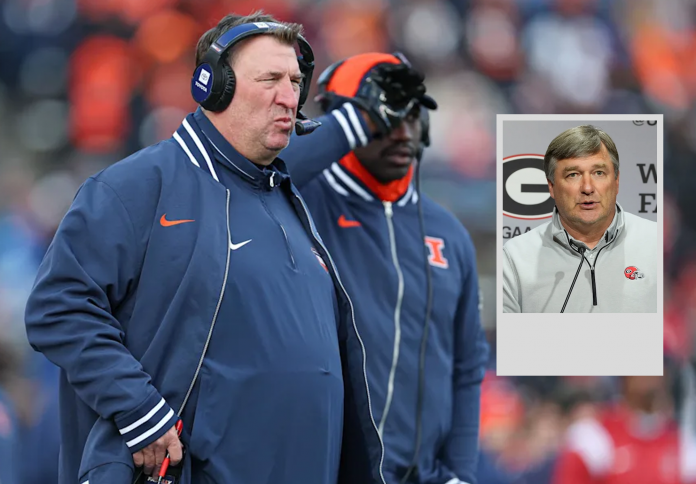
With Name, Image, and Likeness (NIL) spending reaching unprecedented levels in college football, Illinois head coach Bret Bielema sounds the alarm—and the opportunity. As top-tier programs inch toward $40 million rosters, questions of fairness, sustainability, and the future of the sport loom larger than ever.
The NIL Boom: From Promise to Power Shift
The NIL era was once hailed as a long-overdue correction in college athletics—an avenue for student-athletes to finally profit from their talent, image, and influence. Yet as the dollars continue to climb, the sport finds itself at a crossroads.

NIL expenditures have surged dramatically over the past few seasons, particularly in college football, where competition off the field now matches the intensity on it. What began as modest endorsement deals has ballooned into million-dollar negotiations, with some programs leveraging donor collectives and sponsorships to build out war chests that rival those of professional franchises.
But with that growth comes growing concern. While few argue against the right of athletes to be compensated, many believe the system lacks the structure needed to ensure equity across schools and conferences. The result? A widening chasm between elite programs and the rest—a dynamic that some fear could permanently fracture the competitive landscape.
Bielema’s Bold Prediction: $40 Million Is Only the Beginning
Speaking recently with 247Sports’ Carter Spahn, Illinois Fighting Illini head coach Bret Bielema gave voice to a reality many insiders already suspect—and one that may shock casual fans. According to Bielema, the biggest players in college football are inching toward unprecedented levels of NIL spending.
“You’re going to see teams this year in college football — just because I know the landscape that I’m dealing with — that are probably in the neighborhood of 30-35 [million],” Bielema said. “Maybe even some of them close to $40 million rosters, which is insanity at its best, but it’s also awesome for our kids.”
Bielema’s tone blends awe with apprehension. He has long been a vocal supporter of NIL rights, but his comments reveal the stark disparity between top programs and middle-tier ones like Illinois. As it stands, the Illini simply can’t compete dollar-for-dollar with football behemoths like Ohio State or Alabama.
A Disparity Decades in the Making
Inequality in college football is nothing new. For decades, the sport has been dominated by the “haves”—blue-chip programs with deep pockets, massive alumni bases, and national brand recognition. The introduction of NIL has only intensified those divides.
“Last year, we finished fifth in our 18-team conference,” Bielema noted. “We had about a $5 million pool that we were working off of, but the four teams ahead of us, I think, were north of $20 million. You can pull that off once in a while, but to pull that off year in and year out is just not in the deck of cards that we’re dealt.”
For schools like Illinois, the path forward is murky. Competing with financial giants means becoming smarter with limited resources, focusing on development, culture, and long-term relationships. But even the savviest strategies may not be enough in a marketplace increasingly defined by sheer economic muscle.
Legal Reform on the Horizon?
The accelerating nature of NIL spending has prompted calls for regulation from across the college sports landscape. Coaches, athletic directors, and conference leaders alike have voiced support for some level of federal oversight—whether through caps, transparency requirements, or guidelines to standardize athlete compensation.
One possible inflection point could come in the form of the House vs. NCAA settlement, a landmark legal case that may force systemic changes to how NIL operates nationwide. If approved, the settlement could lay the groundwork for a more structured marketplace—one that preserves athletes’ rights while reigning in runaway spending. Until then, however, the NIL arms race shows no signs of slowing down.
What’s at Stake?
The future of college football may hinge on what happens in the next few years. On one hand, NIL has empowered student-athletes and created new opportunities for families, communities, and local businesses. On the other, it has tilted the playing field more drastically than ever before.
A $40 million roster may sound like an outlier today, but Bielema and others believe that could soon be the norm. And if left unchecked, that figure could double by the end of the decade—creating a two-tiered system where only the richest programs remain competitive. What’s clear is that the sport is undergoing a historic transformation. Whether it results in a stronger, fairer NCAA—or a fragmented free-for-all—will depend on how leaders choose to navigate the storm.
Bret Bielema’s warning isn’t just about money—it’s a mirror held up to the soul of college football. As the dollars soar, so must the dialogue. Without thoughtful reform, the gap between power and parity may grow too wide to close.