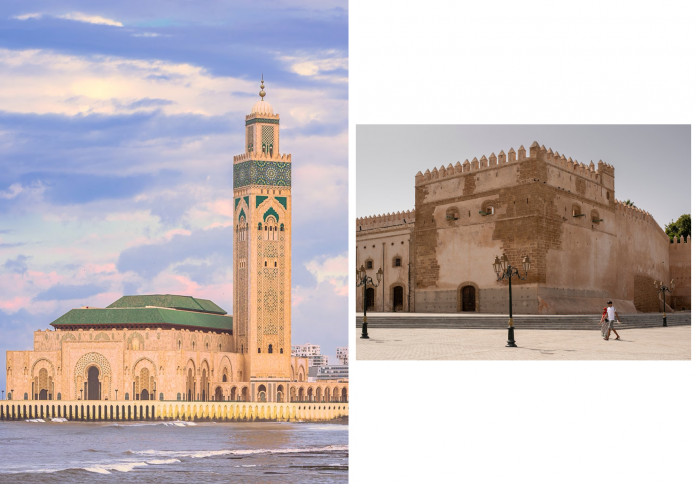
For years, Morocco’s coastal capital, Rabat, has quietly occupied the periphery of the international tourist map, frequently overshadowed by the frenetic energy of Marrakech and the commercial bustle of Casablanca. Yet, in 2026, the city finds itself in a long-overdue spotlight, named by National Geographic as one of the top five global destinations to discover this year. More than just a seat of government, Rabat has blossomed into a sophisticated cultural powerhouse, offering a compelling dialogue between 12th-century imperial grandeur and the daring, neo-futuristic architecture of the 21st century. As it assumes the mantle of UNESCO World Book Capital for 2026, Rabat invites the discerning traveler to experience a Moroccan metropolis defined by its relaxed elegance, intellectual depth, and an evolving, cosmopolitan soul that feels entirely its own.
A City of Layered History
Rabat’s unique identity is forged from centuries of architectural layering. The city is a UNESCO World Heritage site, and a stroll through its districts reveals a timeline of human ambition. The 12th-century Kasbah des Oudayas, perched on a clifftop overlooking the Atlantic, serves as a white-washed, blue-trimmed threshold where modern Rabat began. Its winding alleyways, peaceful Andalusian Gardens, and monumental gates offer a serene, timeless atmosphere that feels a world away from the chaotic souks found elsewhere in the country.
Further inland, the Chellah necropolis—a recently restored archaeological treasure—stands as perhaps the city’s most evocative site. Here, the ruins of a 14th-century Islamic complex rest atop the remnants of an ancient Roman settlement, creating a unique historical synthesis that is both haunting and beautiful. Nearby, the incomplete Hassan Tower remains a city icon; its forest of shattered stone pillars and the adjacent Mausoleum of Mohammed V provide a poignant, architectural link to the city’s imperial aspirations and its reverence for Moroccan heritage.
The Architecture of the Future
While history grounds the city, Rabat’s skyline is increasingly defined by a bold, modern vision. The city’s cultural renewal is anchored by the late Zaha Hadid’s Grand Theatre of Rabat, a sculptural masterpiece that mirrors the fluid motion of the Bouregreg River. As one of the largest performing arts complexes in Africa, its futuristic design and high-tech interior—inspired by traditional Moroccan geometric patterns—serve as a symbolic bridge to the country’s creative future.
Across the water, the Mohammed VI Tower further emphasizes this shift. As the tallest building in Africa, its sleek, piercing silhouette offers panoramic views of the entire region, signaling Rabat’s emergence as a modern international hub. This juxtaposition of ancient walls with cutting-edge engineering is not merely aesthetic; it reflects a city that is consciously defining a new chapter, balancing the preservation of its past with the demands of a high-tech, globalized era.
Intellectual Life and the ‘World Book Capital’
The recognition of Rabat as the UNESCO World Book Capital for 2026 cements its status as a city of ideas. With 54 publishing houses, an internationally acclaimed book fair, and a robust network of libraries and literary events, the capital acts as the intellectual heart of Morocco. This literary spirit is complemented by a thriving art scene, most notably at the Mohammed VI Museum of Modern and Contemporary Art. Featuring over 500 works, the museum celebrates the eclectic vibrancy of Moroccan and African artists, ranging from the abstract to the avant-garde.
The city’s culture of expression extends to the streets themselves, particularly during the annual Jidar Street Art Festival, which leaves behind monumental murals that transform ordinary urban corridors into open-air galleries. Whether one is wandering the sophisticated boulevards of the Ville Nouvelle, enjoying the Atlantic breeze at an upscale coastal hotel, or exploring the intimate galleries of the medina, Rabat provides a sensory experience that is rich, thoughtful, and remarkably free from the pressures of over-touristed circuits.
The Art of Slow Discovery
Rabat’s greatest strength is its pace. It is a capital that moves with an Atlantic rhythm—calm, breezy, and endlessly charming. It is a destination for the traveler who prefers to linger over mint tea at Café Maure, to wander through meticulously maintained public spaces, and to engage with a city that doesn’t demand, but invites. By blending imperial heritage with cosmopolitan refinement, Rabat has secured its place as Morocco’s most understated, yet essential, destination for 2026.