In the ongoing discourse surrounding urban development, the intersection of technology and human lived experience has historically been a point of friction. Recent research led by scholars at Drexel University and Temple University, however, offers a compelling new paradigm: the integration of machine learning with the nuanced observations of longtime residents. By training a computer vision model to recognize the specific architectural “visual cues” of gentrification identified by Philadelphia’s community members, researchers have created a sophisticated tool that bridges the gap between cold, census-based data and the lived reality of neighborhood transformation. This mixed-methods approach not only validates the insights of those who witness urban change firsthand but also provides municipal leaders and urban planners with a powerful, locally-specific diagnostic tool to monitor development impacts in real time.
Grounding Data in Resident Experience
Traditional methods for tracking gentrification often rely on lag-heavy economic datasets, such as shifting median household incomes or housing price indexes, which often only capture change after it has become entrenched. This research took a distinct path by starting with the community. Through focus groups in three Philadelphia neighborhoods undergoing socioeconomic shifts, researchers learned how residents identify the early stages of “new-build” gentrification—a process led by developers rather than individual homeowners.
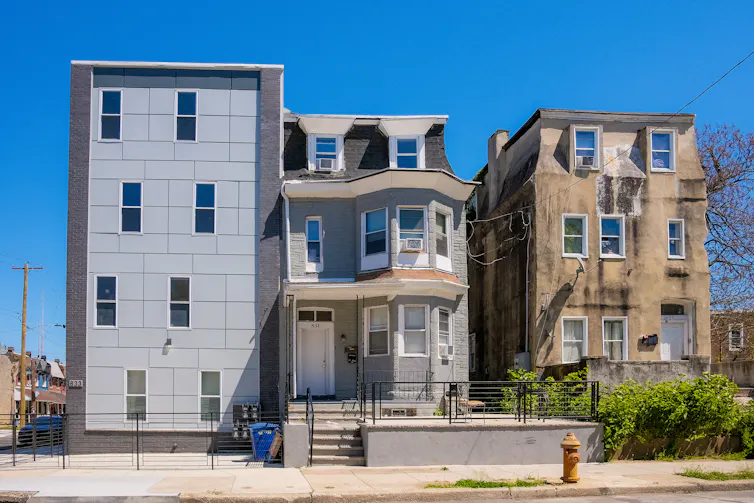
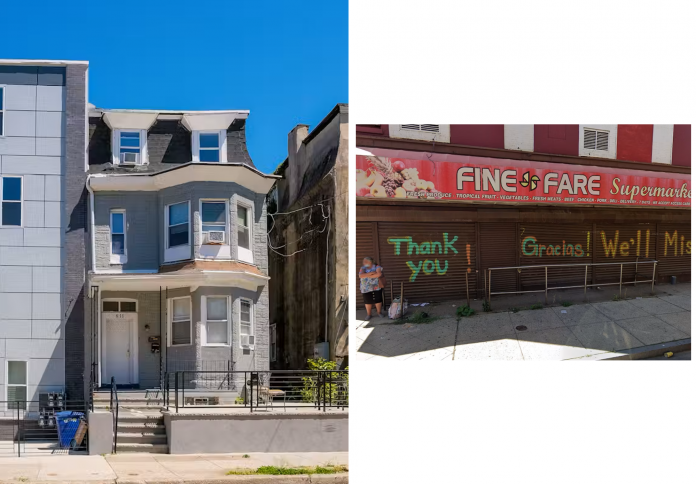
Residents pointed to specific visual hallmarks: “boxy” building designs that clash with traditional row homes, the use of industrial-style materials, specific privacy fencing, and homogenized aesthetic features that feel disconnected from the neighborhood’s architectural heritage. These insights were formalized into a list of 16 distinct architectural traits. By centering these observations, the researchers ensured that the machine learning model was not searching for abstract economic markers, but for the tangible, built-environment changes that define the neighborhood’s evolving character.
The Machine Learning Architecture
To operationalize these observations, the team utilized a convolutional neural network known as ResNet-50. They fed the model more than 17,000 paired images of Philadelphia streetscapes—capturing the city from 2009–2013 and again from 2017–2024. These images were manually labeled as “gentrified” or “not gentrified” based on the residents’ defined traits.
The resulting model demonstrated a remarkable 84% accuracy in identifying new-build gentrification across the city. By “learning” the subtle patterns of urban design that signal developer-led growth, the AI acts as a high-speed auditor, capable of processing massive quantities of visual data that would be impossible for human teams to review manually. When the researchers compared the model’s findings with municipal building permit records, they found a strong correlation, further verifying that visual changes in the streetscape are a highly reliable—and earlier—indicator of gentrification than many traditional financial metrics.
Transparency and the “Black Box” Challenge
A central goal of this research was to move beyond the “black box” nature of typical AI applications. Machine learning models are often criticized for their opacity, as researchers frequently struggle to understand why the AI produces specific predictions. In this study, the explicit link between resident-defined cues and the AI’s training labels creates a level of transparency that is essential for public policy.

By deconstructing the “why” behind the identification—that is, the specific architectural features the AI is flagging—the tool provides municipal leaders and community advocates with a clear, actionable rationale. It takes the guesswork out of urban monitoring, offering a framework that can be adapted to other cities. By applying these methods, planners can better anticipate the impacts of development on air quality, housing displacement, and social cohesion, moving from reactive policy-making to proactive, community-aware governance.
A New Standard for Participatory Urbanism
This project represents a broader shift toward “participatory urbanism,” where technology is used not to replace the human perspective, but to scale it. By providing communities with a way to formalize and map their own observations, the researchers have effectively created a tool for social accountability.
As cities worldwide face the pressure of rapid housing development and demographic change, the potential for this methodology is significant. It demonstrates that the most effective way to understand the evolution of a city is to listen to the people who have lived through its history, and then use the power of artificial intelligence to amplify their insights. This collaboration between community wisdom and algorithmic precision offers a path forward that is not only more accurate but more equitable, ensuring that the development of our cities is guided by the people who call them home.