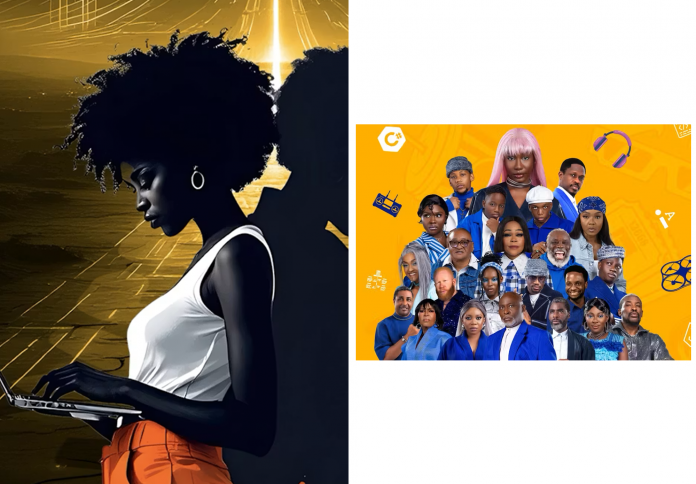
As the global discourse on artificial intelligence remains predominantly anchored in Western technological hubs, the Nigerian feature film “Makemation” offers a refreshing and vital counter-narrative. Released in April 2025, the film marks a historic milestone as Africa’s first feature-length production centered entirely on artificial intelligence. Directed by Michael Akinrogunde and produced by social entrepreneur Toyosi Akerele-Ogunsiji, the movie transcends the boundaries of traditional Nollywood storytelling. It serves as both an inspiring coming-of-age drama and a sophisticated exploration of how indigenous innovation can address the continent’s most pressing challenges. By centering the story on a brilliant but underprivileged young girl, “Makemation” reframes AI not as an abstract, elitist tool, but as a tangible catalyst for social mobility, education, and community-driven development in the Global South.
The Narrative: Innovation Amidst Adversity
The film follows the journey of Zara Sodangi, a 17-year-old living in a struggling community on the outskirts of Lagos. Faced with deep-seated poverty, the illness of her father, and the societal pressures that often discourage girls from pursuing STEM education, Zara’s path is paved with formidable obstacles. Her trajectory shifts when she gains admission to the prestigious “Makemation Institute,” a premier tech academy.

Rather than focusing on the “dystopian” tropes often associated with AI, the film highlights Zara’s agency. She learns to harness data analytics and machine learning to create practical solutions for food security, equitable healthcare, and education within her community. Her journey is a poignant reminder that talent is distributed universally, even if opportunity is not. By showcasing the grit and resilience required to navigate these tech-driven spaces, the film validates the potential of young Africans to shape the future of their own technological ecosystems.
A Technical and Cultural Watershed
Beyond its narrative impact, “Makemation” is a significant experiment in the application of AI within the filmmaking process itself. The production reportedly leveraged a variety of AI models, including large language models and machine learning tools, for elements ranging from script development to promotional materials, such as AI-generated cast reveals. This hybrid approach signals a broader transformation within Nollywood—the world’s second-largest film industry by volume—suggesting a future where AI-driven efficiency can enhance the quality and production speed of African cinema.

However, the film also invites reflection on the risks of this transition. It addresses the “digital divide,” highlighting how unequal access to high-quality education and funding can skew the future of technology toward a narrow, privileged demographic. By bringing these conversations into the mainstream of Nigerian cinema, “Makemation” forces a dialogue about who truly drives innovation and ensures that the narrative of AI development in Africa remains rooted in local needs rather than external assumptions.
Rethinking the Global AI Discourse
Ultimately, “Makemation” pushes back against the notion that significant advancements in AI are exclusively the domain of Silicon Valley or other privileged global centers. It positions Nigeria’s creative and digital economies at a unique intersection, demonstrating how the vibrancy of local tradition and the ambition of youth can co-create tools that serve the interest of humanity.
The film has emerged as more than just entertainment; it is a movement. Through screenings at the Global AI Summit and various innovation weeks, it has successfully engaged policymakers, educators, and the public in urgent discussions regarding digital inclusivity. As it continues to spark debate, “Makemation” serves as a rallying cry for the next generation of African innovators to take charge of their destinies, proving that with the right support, the continent can turn the “age of AI” into an era of unprecedented empowerment.