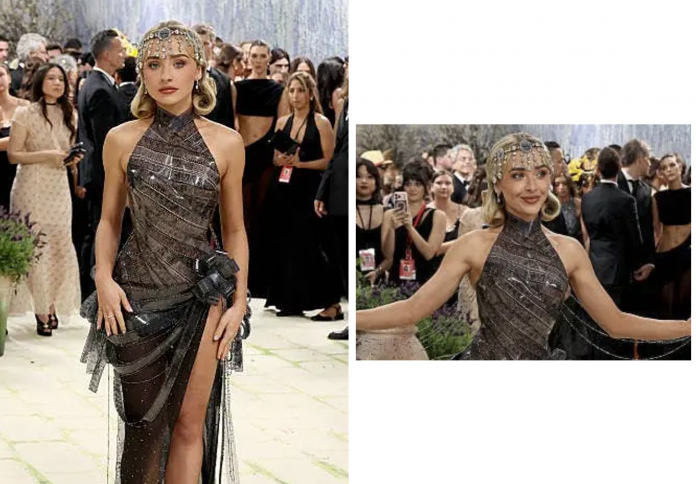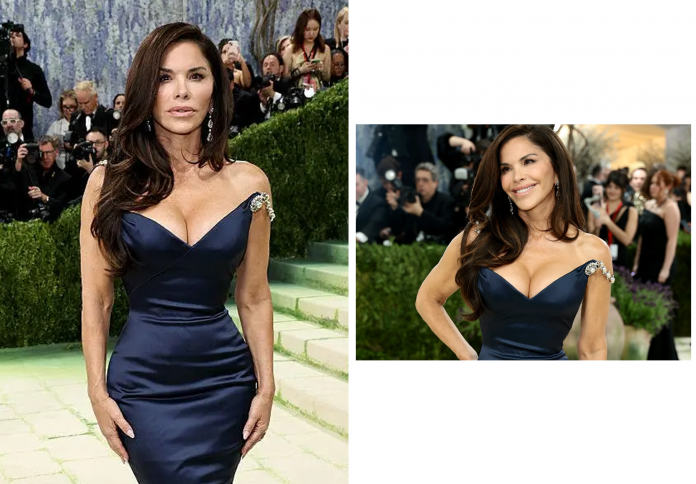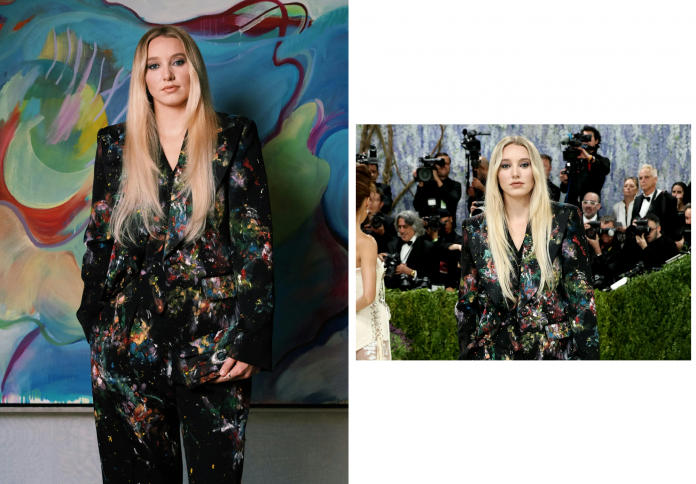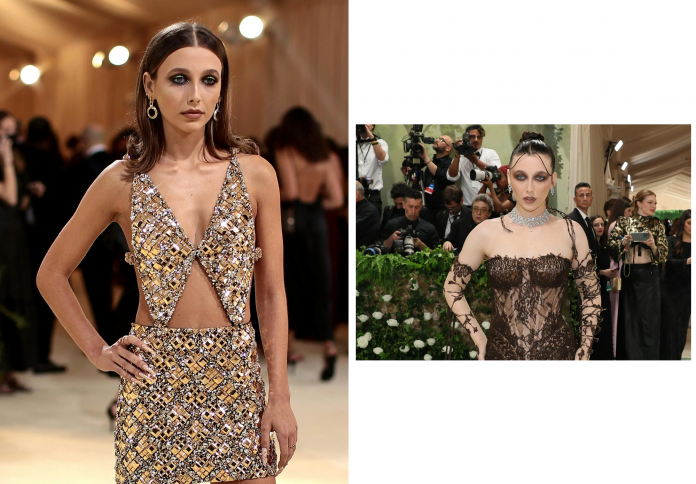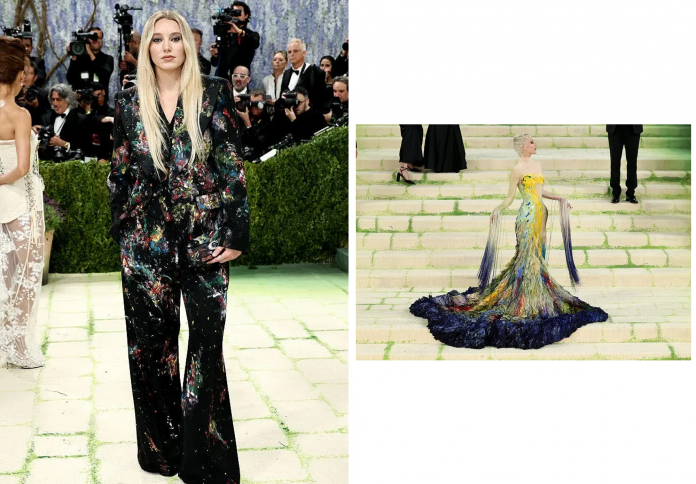
The 2026 Met Gala did not ask guests to dress like paintings. Its more interesting challenge was to consider fashion as an art form that only becomes complete on a body. The May 4 benefit celebrated the Metropolitan Museum of Art’s “Costume Art” exhibition and inaugurated the Costume Institute’s new Condé M. Nast Galleries, with the dress code “Fashion Is Art.” Co-chairs Beyoncé, Nicole Kidman, Venus Williams, and Anna Wintour presided over a carpet where designers interpreted the theme through painted surfaces, anatomical illusions, historical references, sheer constructions, sculpture, and film itself. Emma Chamberlain became a literal canvas in hand-painted Mugler; Sabrina Carpenter wore Dior built from film strips; Beyoncé traced a crystal skeleton over the body. The night’s strongest looks understood that the body was not merely a hanger. It was the site where the artwork changed meaning.
The Exhibition Gave the Carpet a Clear Thesis
“Costume Art,” curated by Andrew Bolton, was organized around the relationship between dress and representations of the body across art history. The exhibition brought nearly four hundred objects from the Met’s collection into dialogue and introduced new permanent gallery space for the Costume Institute near the museum’s Great Hall. That institutional context gave the gala a more precise brief than a generic celebration of creativity.
The official dress code, “Fashion Is Art,” sounded broad but contained a useful challenge. Clothing is not painting or sculpture simply because it is expensive or beautiful. Fashion moves, wrinkles, reveals, conceals, and changes according to the body inside it. The best red-carpet interpretations made that dependency visible rather than hiding it beneath an art-history reference.

Emma Chamberlain Became a Painted Surface
Emma Chamberlain’s custom Mugler gown, designed by Miguel Castro Freitas and hand-painted by artist Anna Deller-Yee, transformed fabric and body into a continuous painterly field. References included works by Van Gogh and Munch as well as archival Mugler, but the result did not resemble a costume of a single famous canvas. Color and texture moved across her figure like paint still in motion.
That approach captured the theme because the garment could not be separated from how Chamberlain carried it. The body became the support structure for the painting, while the paint altered the viewer’s perception of the body beneath. It was a classic trompe-l’oeil idea translated into celebrity fashion: not a copy of fine art, but a conversation with the way art constructs a figure.
Film, Skeletons, and Anatomy Entered the Dress Code
Sabrina Carpenter took “art” through cinema, wearing custom Dior by Jonathan Anderson made from strips of the 1954 film “Sabrina.” The reference folded costume history, Hollywood, material experimentation, and Carpenter’s own name into one garment. It was literal without being obvious because the material carried the narrative.
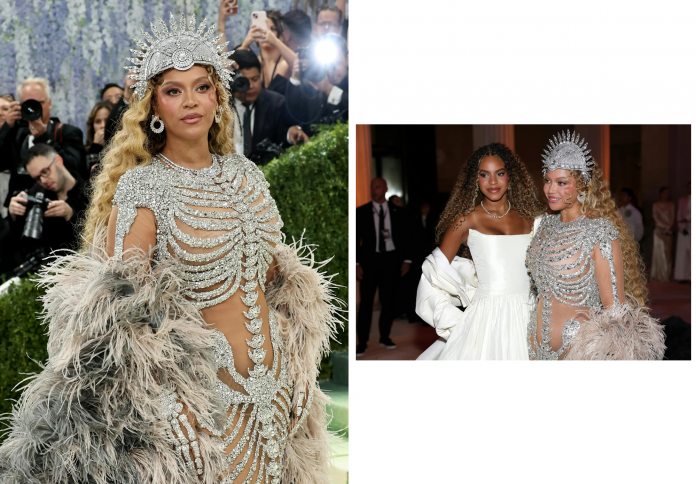
Beyoncé, returning to the Met Gala as a co-chair, approached the body from the inside out. Olivier Rousteing designed a crystal-covered skeletal illusion over a skin-toned base, extending the anatomical motif into the gloves and pairing it with a sweeping feathered train. The look turned bones—usually hidden—into ornament. Together, Carpenter and Beyoncé showed how widely the theme could be interpreted: one made media physical; the other made anatomy decorative.
Sheer Dressing Took on a Different Meaning
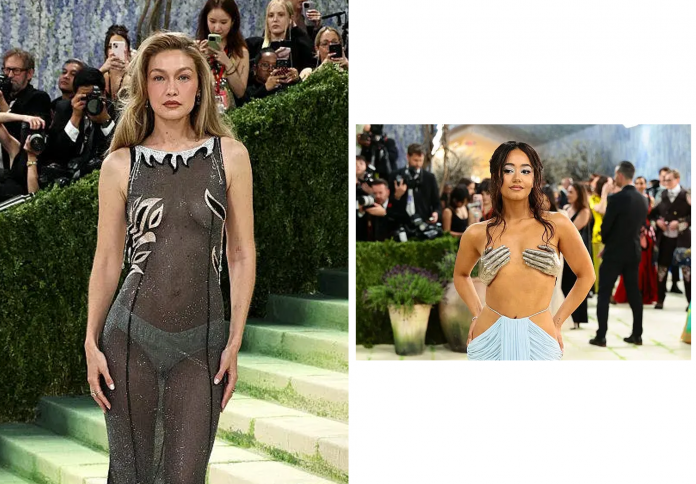
The carpet also featured extensive transparency, exposed skin, corsetry, and body-revealing construction. On another year, those choices might have been reduced to a trend report about naked dresses. Under “Costume Art,” however, the relationship between garment and body was explicitly part of the exhibition’s subject. Sheerness could become concept rather than simply provocation.
That does not mean every revealing look automatically satisfied the brief. The strongest examples used exposure to say something about framing, proportion, vulnerability, or illusion. A transparent layer can reveal the body while also turning it into composition. The theme rewarded designers who understood that visibility is a design decision: what is shown, what is concealed, and what kind of gaze the clothing organizes around the wearer.
The Gala’s Art Argument Now Has a Permanent Home
The 2026 event also marked a structural change for the Costume Institute. The new galleries give fashion a more prominent and stable exhibition space inside the Met, reinforcing the museum’s argument that dress belongs within broader art history rather than at its margins. That institutional move may ultimately matter more than any single red-carpet photograph.
The gala will always generate rankings, memes, and debates about who followed the theme. Those reactions are part of its cultural power. But the strongest outcome of 2026 was the way the carpet and exhibition briefly aligned around one idea: clothing is experienced through bodies, and bodies carry history, identity, age, ability, desire, and social meaning. When fashion is treated as art, those conditions do not disappear. They become the medium.
An Open Theme Made Interpretation More Revealing Than Obedience
“Fashion Is Art” was broad enough that no single visual code could dominate the 2026 Met Gala. That looseness produced uneven results, but it also made comparison more interesting. Guests could approach the theme through painting, sculpture, anatomy, craft, cinema, historical dress, or the sheer labor of couture construction. The strongest looks did not merely resemble artworks; they explained why a particular medium or reference belonged to that wearer.
Open themes expose the difference between styling and costume. When the instruction is highly specific, a celebrity can satisfy it by checking recognizable boxes. A broad instruction demands point of view. The question becomes which version of art a team chooses and how much personal biography enters the decision. That is why a hand-painted Mugler dress, a film-strip Dior construction, or a craft-intensive Indian ensemble can coexist without needing to compete on the same terms. The carpet becomes less a parade of compliance than a temporary exhibition of interpretations. Some are scholarly, some playful, some spectacular, and some barely connected. The unevenness is part of the event’s value: fashion becomes visible as an argument rather than a uniform answer.