As residential architecture evolves, modern house facades are no longer mere exteriors—they are bold design statements. From minimalist silhouettes to avant-garde structures, today’s facades embody personal values, cultural shifts, and sustainable ideals. This article explores key inspirations, materials, and design directions that are shaping contemporary homes, offering insight for homeowners, architects, and developers seeking to build the future, one wall at a time.
The evolution of the modern facade
Once marked by symmetry and traditional materials, modern house facades now celebrate asymmetry, layered textures, and inventive form. Advancements in technology and global design philosophies have liberated facades from convention, transforming them into dynamic canvases that blur the boundaries between form and function.
Contemporary architects draw from diverse movements—industrial minimalism, Scandinavian restraint, biophilic design, and high-tech futurism—to create facades that are as expressive as they are efficient. Innovations such as integrated green walls, smart glass, and perforated metal panels are not just aesthetic additions, but functional strategies for light control, energy efficiency, and climate responsiveness.

The result is a design landscape where facades are integral to a home’s identity, reflecting both lifestyle and locality. Whether in suburban neighborhoods or on remote hillsides, modern homes now wear their philosophies on their sleeves—or rather, on their walls.
Material matters: redefining facade aesthetics

Materials form the backbone of any facade, and in modern design, the palette is both expanded and elevated. No longer limited to brick or siding, today’s homes embrace materials that are bold, sustainable, and texturally rich.
Glass plays a starring role, often used in large panels, curtain walls, or continuous bands. It breaks down the divide between interior and exterior, floods spaces with natural light, and adds a contemporary, open-air feel.
Concrete, once deemed cold, is now sculptural and expressive. Architects use textured or pigment-infused finishes to create rhythm and depth, while benefiting from concrete’s thermal mass and durability.
Metal cladding—aluminum, zinc, or corten steel—offers sleek, industrial precision. It’s resistant to weather, allows for geometric articulation, and introduces a sophisticated contrast when paired with wood or stone.
Timber, however, remains a timeless favorite. In slatted panels, charred surfaces, or warm natural planks, wood adds softness and human scale to otherwise modernist compositions. Its adaptability makes it a perfect bridge between tradition and innovation.
New-age composite panels and ceramic finishes further expand the toolbox, offering lightweight, weather-resistant, and customizable options. The modern facade is as much a study in material science as it is in architecture.
Sustainability on the surface
In an age of environmental urgency, facades are at the forefront of green building strategies. A well-designed facade reduces energy consumption, controls temperature, and interacts intelligently with its surroundings.
Green walls and vertical gardens are more than aesthetic embellishments. They insulate interiors, absorb pollutants, and improve urban biodiversity. Similarly, solar panels—either as rooftop features or integrated into the facade—supply clean energy while contributing to the home’s geometry. Smart glass that modulates light and heat is becoming more common, replacing traditional shading devices while enhancing comfort and efficiency. Meanwhile, the use of recycled and locally sourced materials reflects a growing emphasis on reducing carbon footprints and supporting regional craftsmanship.
Sustainable facades now merge performance with poetry, turning buildings into climate-conscious sculptures that don’t compromise on style.
Defining design through windows and light
Among all elements, windows have undergone perhaps the most dramatic transformation. They are now expansive, expressive, and essential to both appearance and livability. Modern designs favor floor-to-ceiling glazing, corner windows, and ribbon configurations that frame natural views like living artwork. These windows maximize daylight, enhance spatial fluidity, and erase the visual weight of walls.
Frameless glass, slim-line aluminum, and dark powder-coated frames add crispness and architectural clarity. In energy-efficient homes, multi-layered glazing, smart tints, and operable shading systems ensure that performance keeps pace with aesthetics.
Lighting, too, plays a silent yet pivotal role. Thoughtfully placed LED strips, wall washers, or hidden fixtures can animate the facade after dark. By highlighting textures, outlining geometry, or creating programmable color effects, lighting extends the architecture’s narrative from day into night.
Minimalist elegance: the power of simplicity

The minimalist modern house facade is a study in restraint and refinement. Inspired by principles of reduction, these homes use simple volumes and subtle textures to convey elegance and intentionality. Flat roofs, uninterrupted surfaces, and neutral color palettes dominate this style. Facades often feature white, beige, gray, or black tones, allowing form and material to take center stage. Hardware is concealed, transitions are seamless, and windows are precisely proportioned.
Yet simplicity doesn’t equate to blandness. In minimalist facades, the interplay of light and shadow, solid and void, and rough and smooth textures creates a quiet complexity. These homes often reflect passive design principles—solar orientation, cross-ventilation, and thermal regulation—making them both serene and sustainable. Ideal for those who value calm and timelessness, minimalist facades offer lasting appeal in a rapidly changing world.
Bold facades: expressive and architectural
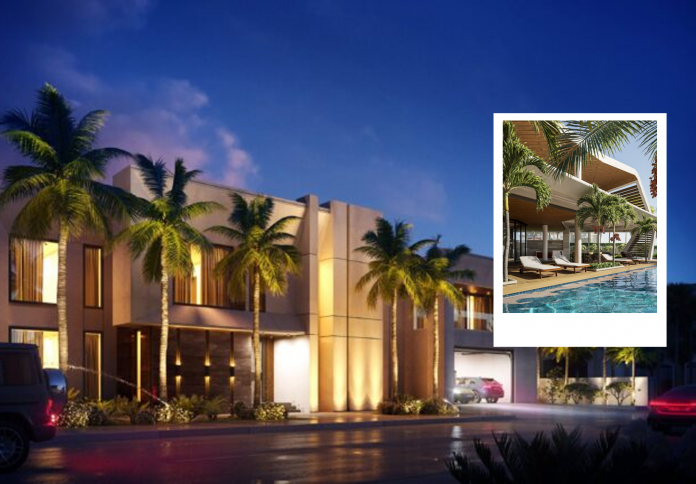
At the other end of the spectrum, bold modern house facades are unapologetically expressive. They experiment with shape, scale, and contrast to craft facades that are part sculpture, part shelter. These homes might feature double-height entrances, cantilevered volumes, and overhanging planes that seem to defy gravity. A mix of materials—reflective glass, weathered steel, textured stone, glossy ceramic—creates visual tension and richness.
Architects designing bold facades often play with layering, asymmetry, and unexpected openings to achieve rhythm and excitement. Despite the visual drama, successful bold facades maintain compositional balance and intentionality.
Luxury is a frequent undercurrent—these designs often include integrated water features, dynamic landscaping, and state-of-the-art lighting. But more than status symbols, these homes become architectural landmarks, telling stories about innovation, courage, and individuality.
The facade as identity
Whether minimalist or expressive, green or high-tech, the modern house facade is more than a wrapper—it’s the architectural face of our values. It speaks to how we live, what we prioritize, and how we see our relationship with the environment.
With the right combination of materials, proportions, light, and technology, facades can inspire both admiration and introspection. They offer a rare opportunity to blend beauty and performance, to build something that’s as smart as it is stunning. As urban and suburban landscapes evolve, the facade stands at the intersection of tradition and progress, of privacy and openness. It’s where architecture meets art, and where the home begins to tell its story—before anyone even steps inside.