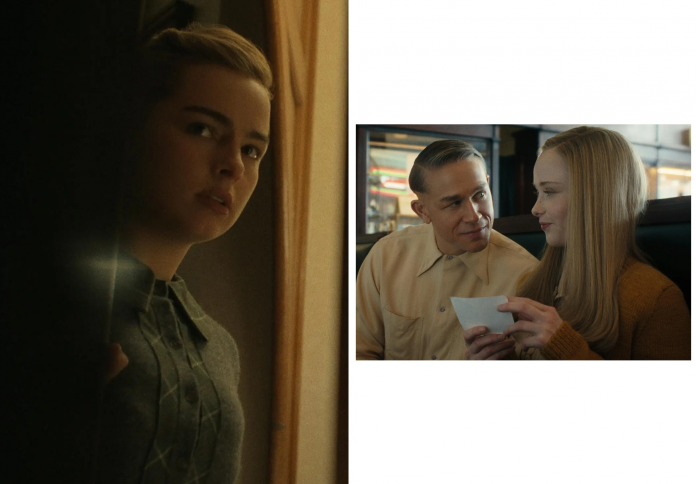
Meghan Markle’s reported cameo as herself in Close Personal Friends reopened a part of her public identity that had been largely dormant since she left acting in 2017. Long before royal life made every appearance a global news event, Markle spent years working through television guest roles, small film parts, and finally a long-running role on Suits as Rachel Zane. That character remains the clearest expression of her screen persona: polished, ambitious, socially perceptive, and determined to earn professional authority inside an elite workplace. Other credits, including Remember Me and a brief appearance in Horrible Bosses, show the less glamorous reality of building an acting career through varied assignments before a defining series arrives. Revisiting those roles is useful not because a cameo guarantees a full Hollywood comeback. It reveals the career Markle had already constructed before public life transformed the meaning of appearing on camera.
Suits Gave Her a Character With Ambition of Her Own
Rachel Zane became Meghan Markle’s signature role because Suits allowed the character to develop across years rather than exist only as a romantic interest. Rachel begins as a talented paralegal at a powerful New York law firm and is defined by an ambition to become an attorney, a goal complicated by test anxiety, family expectations, and the intensely competitive environment around her.
Markle’s performance leaned into composure. Rachel often operates in rooms where status matters, and the character’s clothing, posture, and verbal precision become part of how she navigates that hierarchy. The office wardrobe later became one of the show’s recognizable style elements, but the appeal came from the connection between presentation and aspiration. Rachel dresses like someone building the life she intends to inhabit.

Smaller Roles Show the Work Before the Breakthrough
Before Suits, Markle’s credits included guest appearances across television and supporting film work. That period is easy to flatten once a performer becomes globally famous for reasons outside acting, yet it reflects the ordinary structure of many careers: auditions, episodic parts, modest screen time, and a long wait for a role with enough space to build recognition.
Her appearance in Remember Me placed her inside a romantic drama led by Robert Pattinson, while Horrible Bosses gave her a brief comedic moment. Neither role predicted the scale of attention that would later surround her. Their value in a retrospective is different. They remind viewers that celebrity can make a career look inevitable in reverse even when it was built through incremental work.
Leaving Acting Changed the Meaning of Every Future Appearance
Markle exited Suits as her relationship with Prince Harry moved her into royal life. After their marriage, her public appearances were no longer read primarily through the conventions of entertainment. Speeches, interviews, documentaries, charity work, and media projects became entangled with debates about monarchy, press treatment, privacy, and the couple’s decision to step back from senior royal duties.
That shift explains why even a small acting-related development attracts disproportionate attention. A cameo is not just a cameo when the person has spent years insisting on control over how her story is told. Returning to a set—even briefly—invites audiences to compare two versions of public performance: acting within a scripted production and appearing as oneself inside a celebrity media system.
Playing Herself Makes the Return More Interesting
Reports around Close Personal Friends described Markle as appearing as herself rather than taking on a conventional fictional character. That choice reduces the pressure to declare a complete return to acting while still reconnecting her with film production. It also suits a contemporary comedy in which celebrity self-cameos can function as part of the social world rather than as traditional roles.
The distinction matters. Playing herself does not recreate the pre-royal career, and it should not be treated as proof of a permanent professional pivot. It is better understood as a controlled reentry point: visible enough to be culturally meaningful, but small enough that its significance remains open.
Her Old Roles Now Carry a Different Kind of Nostalgia
For viewers who discovered Suits during its later streaming resurgence, Rachel Zane may feel surprisingly separate from the Meghan Markle who dominates headlines. That distance gives the performance a second life. It belongs to an era before marriage, royal titles, California media ventures, and the political intensity attached to nearly every public move she makes.
Rewatching Markle’s acting career therefore reveals more than a list of credits. It shows how drastically context can rewrite a face audiences think they know. On Suits, her poise served a fictional young professional trying to advance inside a law firm. Today, the same qualities are interpreted through an entirely different public biography. Whether Close Personal Friends remains a one-off cameo or opens another chapter, it reconnects those two histories without pretending they were ever the same thing.
The Return Question Says as Much About Celebrity Culture as It Does About Acting
The fascination with whether Meghan Markle will “return to acting” assumes that acting is a single door that is either open or closed. Her post-Suits life has made that distinction much less tidy. Documentary appearances, interviews, podcasts, produced series, lifestyle programming, speeches, and a self-cameo all involve performance choices, camera awareness, and narrative control even when they are not fictional roles.
That does not make them equivalent to acting in a scripted drama. It does show why the public response to a small film appearance can become disproportionately large. Markle’s image now carries political, royal, commercial, and personal associations that no fictional character can easily erase. If she were to take on a substantial dramatic role again, audiences would bring all of that material into the viewing experience. A cameo as herself acknowledges the problem rather than pretending it does not exist. It lets the film use the cultural meaning of Meghan Markle directly. In that sense, the most interesting “comeback” may not be a restoration of the career she had before 2017, but an exploration of what screen performance can look like after a person’s real-life identity has become more famous than any character she previously played.