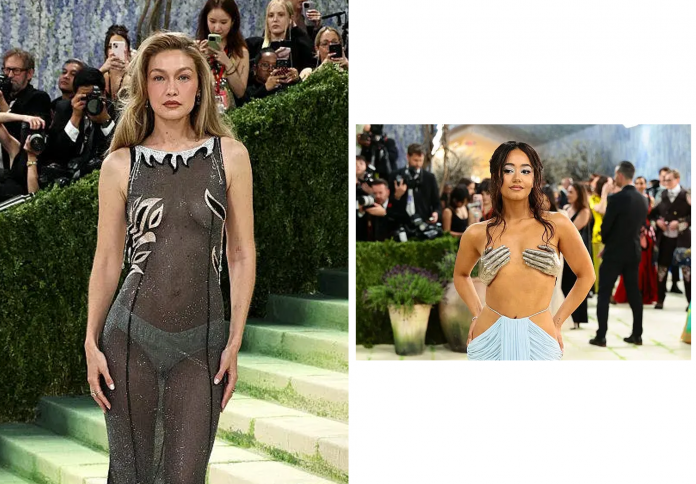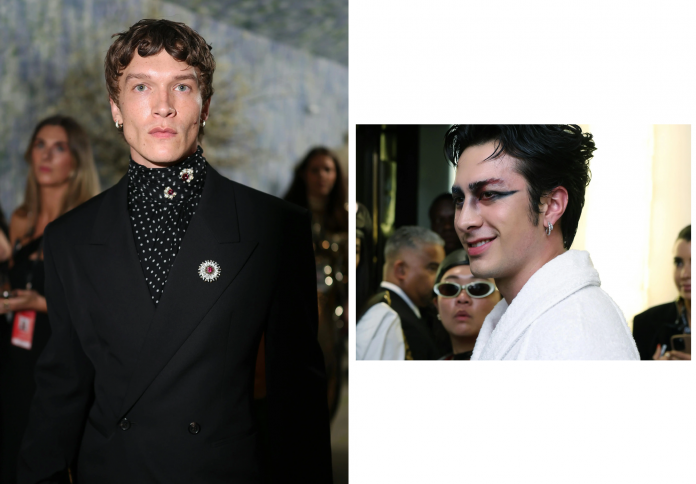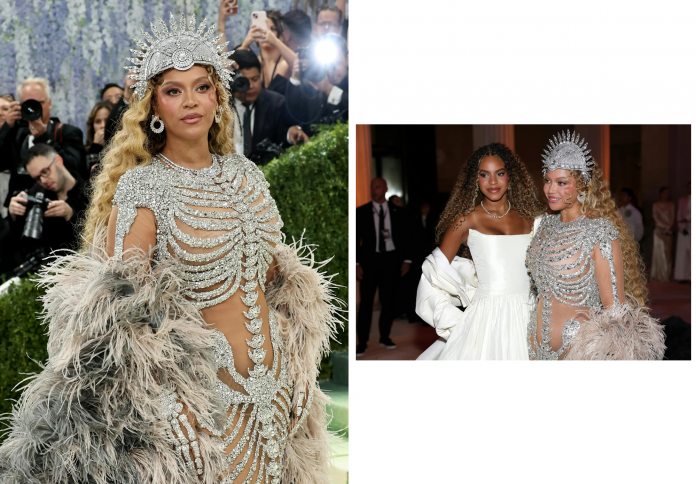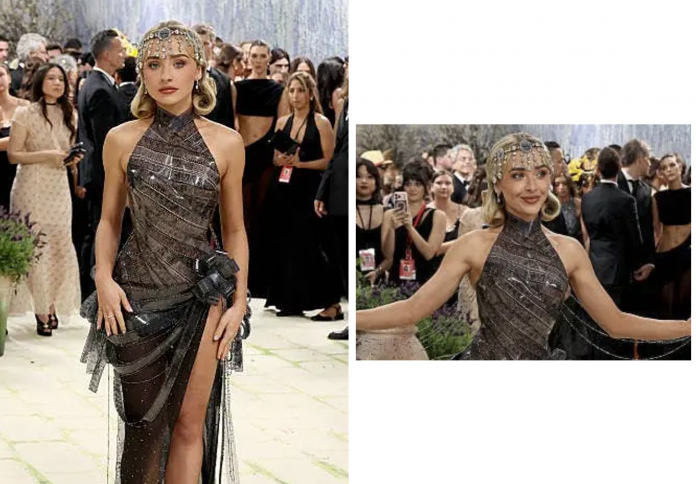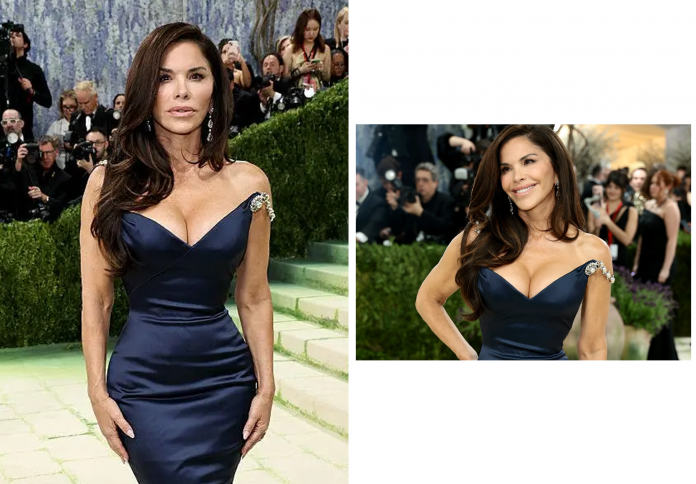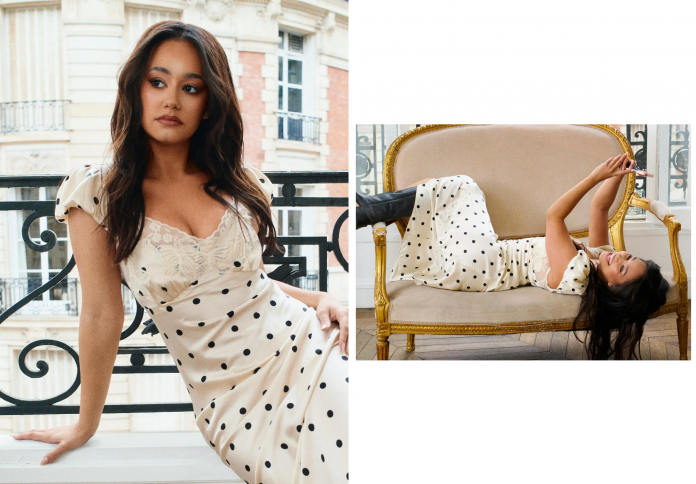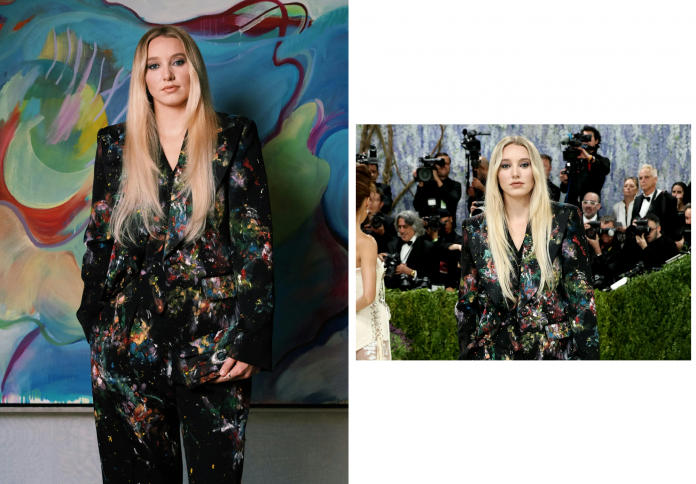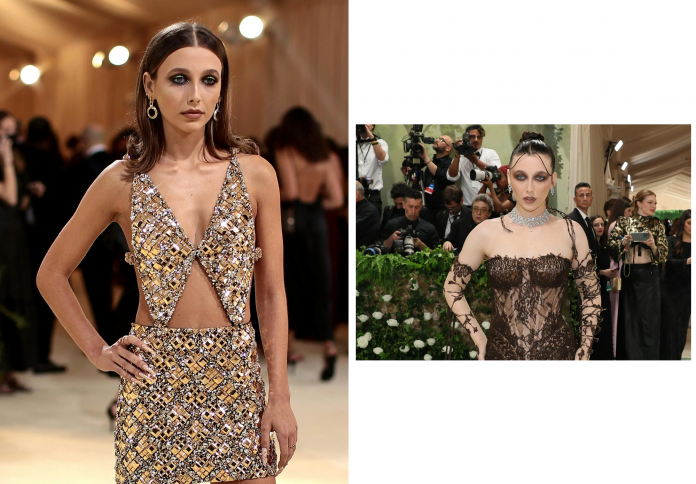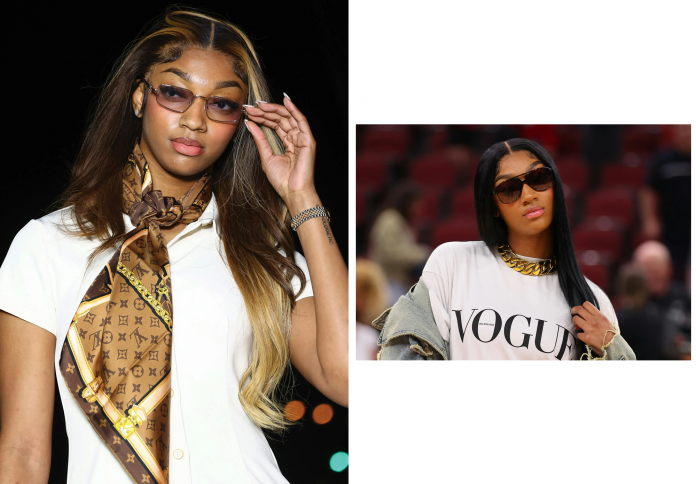
Angel Reese has never treated off-court style as an apology for on-court ambition. By 2026, the forward had already become one of the WNBA’s most visible fashion personalities, using tunnel walks, Met Gala appearances, beauty changes, and designer collaborations to build a public image as deliberately as she built her rebounding reputation. Her basketball story has also moved quickly: drafted seventh overall by Chicago in 2024 after an NCAA championship at LSU, Reese was traded to the Atlanta Dream in April 2026 after two All-Star seasons with the Sky. The new chapter makes her style even more interesting because it shows how athlete identity now travels across multiple platforms at once. Chanel, Thom Browne, Versace, Gucci, and streetwear can coexist with game preparation. For Reese, fashion is not a side hobby that begins when basketball ends. It is another arena in which confidence becomes visible.
Tunnel Fashion Turned Arrival Into a Medium
The athlete tunnel has become one of contemporary fashion’s most productive unofficial runways. It offers a controlled but not fully formal setting: players are arriving for work, cameras are waiting, and the clothing can communicate personality before competition begins. Angel Reese has used that space especially well, moving between preppy tailoring, body-conscious silhouettes, streetwear, and more glamorous references without settling into one formula.
The appeal comes from repetition. A single red-carpet appearance can be explained by a stylist or theme, but tunnel style develops over dozens of games. Viewers start to recognize preferences, risks, and patterns. Reese’s wardrobe becomes serial storytelling. The clothes do not have to relate directly to basketball in order to deepen how fans understand the person entering the arena.
.jpg)
The Met Gala Expanded the Scale
Reese’s appearances at the Met Gala helped move her fashion identity from sports media into the center of celebrity style coverage. By 2026, she had become a familiar presence on the event’s carpet rather than a novelty athlete invitation. That continuity matters because fashion institutions often embrace sports stars for a moment without integrating them into the broader conversation.
Reese has made the crossover feel durable by approaching fashion with genuine interest. She has worked with stylists including Carlyne Cerf de Dudzeele and Matthew and Reginald Reisman and worn major houses across very different aesthetics. The range suggests she is not pursuing one safe image. She is testing how different silhouettes and references interact with a body trained for elite sport, expanding the visual vocabulary available to female athletes.
Beauty Is Part of the Experiment
Her style story also includes hair, nails, and beauty choices that are treated as active forms of self-presentation. In 2026, Reese debuted a short vintage-inspired pixie that changed the proportions of her tailored city looks and offered a sharp contrast to earlier hairstyles. The shift showed how quickly one beauty decision can reframe an entire wardrobe.
That willingness to experiment has roots in an interest in modeling and fashion that predates her professional career. Reese has spoken about growing up watching “America’s Next Top Model,” and the influence is easy to understand: fashion is performance, posture, transformation, and control of the image. Those skills can coexist with athletic discipline without trivializing it. The same person can care deeply about footwork on court and the shape of a haircut off it.
A New Team Creates a New Visual Chapter
Reese entered 2026 with another major transition when Chicago traded her to the Atlanta Dream in April. She had been the seventh pick in the 2024 WNBA Draft and became a two-time All-Star during her first two seasons, building a reputation as an elite rebounder and one of the league’s strongest young personalities. The move to Atlanta changes the competitive context around her.
It also changes the fashion context. Team colors, city culture, arrival spaces, sponsorships, and new audiences all contribute to how an athlete’s public image evolves. Reese does not need to redesign herself because of a trade, but a new city inevitably provides new visual material. Atlanta’s music, fashion, and Black cultural history make it a particularly rich environment for an athlete already comfortable treating style as communication.
Women Athletes No Longer Need One Acceptable Image
For decades, female athletes were often pushed toward a narrow choice: present as conventionally glamorous to remain marketable or avoid fashion entirely to prove seriousness. Reese’s generation is dismantling that false opposition. Strength, femininity, experimentation, luxury, streetwear, beauty rituals, and competitive aggression can occupy the same career without requiring explanation.
That freedom is not superficial. Public image affects sponsorship, media attention, fan communities, and long-term opportunity. Reese understands that the athlete is now also a media platform, but her strongest style moments feel less calculated than curious. She tries things. Some looks are classic, others maximal, others deliberately playful. The consistency lies not in a uniform aesthetic but in the confidence to change. That may be her most influential off-court statement: fashion becomes another way to insist that an athlete can contain more than one story.
Reese’s Style Matters Because Athletes Now Control More of Their Own Narrative
Angel Reese’s visibility extends far beyond box scores. Social platforms, tunnel photography, fashion events, campaigns, and television appearances let athletes shape a public image continuously rather than waiting for broadcasters or magazines to define them. Reese has used that environment with unusual confidence, allowing glamour, streetwear, and high-fashion experimentation to sit beside the competitive identity that made her famous.
That control is significant for women athletes, whose appearance has historically been judged through narrow and often contradictory expectations. Reese does not solve that problem by dressing one “correct” way. She demonstrates the usefulness of range. A dramatic gown does not make her less serious as a player, just as athletic clothing does not cancel fashion ambition. The visibility can attract criticism precisely because it refuses the idea that excellence should produce modesty outside the arena. Her off-court style is therefore not incidental branding. It is part of a larger shift in which athletes recognize that cultural relevance, sponsorship value, and personal expression can reinforce one another. The wardrobe becomes another place where the player, rather than an institution, gets to decide what kind of figure the public sees.