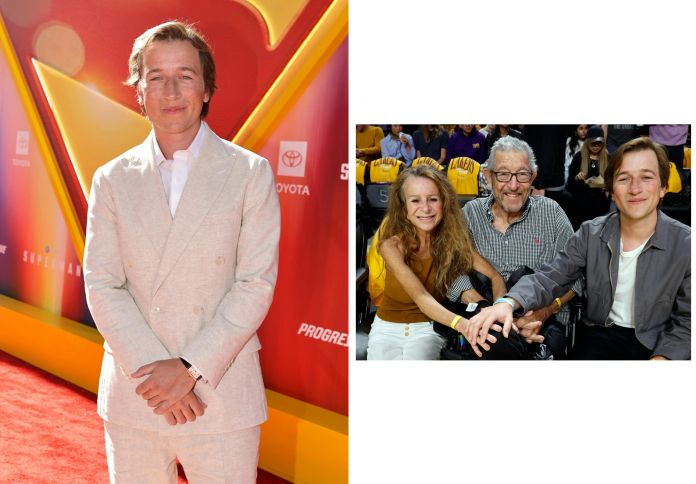
More than two decades after Meet the Parents turned Greg Focker’s anxiety into a durable comedy franchise, Focker-in-Law is built around a clean generational reversal. Ben Stiller returns as Greg, now the suspicious father looking at the person dating his son Henry, played by Skyler Gisondo. Ariana Grande joins the series as Henry’s girlfriend, Olivia Jones, while Robert De Niro returns as Jack Byrnes alongside familiar faces including Teri Polo, Blythe Danner, and Owen Wilson. John Hamburg, a longtime creative force in the franchise, directs and co-writes the fourth film, scheduled for theatrical release on November 25, 2026. The premise understands what made the original work better than a simple reunion would: family embarrassment is renewable when power changes hands. Greg once had to survive Jack’s scrutiny. Now the comedy asks whether experience has made him more empathetic—or simply taught him how to become the interrogator.
The Franchise’s Best Joke Was Always About Power
Meet the Parents worked because Greg Focker entered a family system in which he had almost no control. He wanted approval, especially from Jack Byrnes, and every attempt to appear competent seemed to make him look more suspicious. Robert De Niro’s severe authority turned ordinary courtship nerves into something closer to an interrogation thriller played for comedy.
The sequels expanded the family and increased the chaos, but the basic mechanism remained recognizable: love means entering someone else’s rules. Focker-in-Law refreshes that mechanism by allowing time to do the structural work. Greg is no longer the nervous young outsider. He has become a father with the power to judge someone else’s suitability.

Greg’s Promotion Creates the Sequel’s Real Reason to Exist
Legacy comedies often struggle because nostalgia can supply familiar faces but not a new comic problem. The generational flip gives this film a reason to revisit the Fockers beyond reunion value. Greg knows exactly how humiliating an overprotective parent can be, which should make him less likely to repeat Jack’s behavior. Comedy appears when knowledge fails to produce wisdom.
That contradiction is more interesting than simply making Greg older. If he recognizes himself becoming difficult and continues anyway, the film can turn the franchise’s history into character material. Jack’s presence raises the stakes further. The original source of Greg’s anxiety can now observe what his former target has learned from him.
Ariana Grande Enters as the New Disruptive Variable
Grande plays Olivia Jones, the woman dating Henry Focker. Her casting introduces a fresh energy into an ensemble built around actors viewers already associate strongly with their roles. After years of music superstardom and major screen attention through Wicked, Grande arrives with both comic instincts and a public image much larger than a conventional franchise newcomer.
The role also places her in the position Greg once occupied: the person whose relationship triggers family scrutiny. Yet the movie does not need Olivia to duplicate his nervousness. A stronger generational comedy can make her temperament different enough that Greg’s old defensive strategies no longer work. The humor then comes from a parent trying to control a situation using lessons learned in another era.
Returning Cast Members Carry the Family Memory
Robert De Niro, Teri Polo, Blythe Danner, and Owen Wilson give Focker-in-Law access to an unusually deep reservoir of established relationships. Their characters do not need to be introduced from scratch, which allows small reactions to carry history. A look from Jack can recall years of conflict. Pam’s response to Greg’s behavior can test whether he has changed in the ways he once promised.
John Hamburg’s return is similarly important. He has been connected to the franchise across multiple installments, and directing this chapter gives the film a chance to preserve its particular mixture of humiliation, family affection, and escalating social catastrophe without simply copying the pacing of the early movies.
Thanksgiving Is a Natural Home for This Kind of Comedy
The planned November 25, 2026 theatrical release places the movie directly into the holiday corridor, an especially fitting setting for a franchise about family proximity. The Focker films have always understood that affection becomes more volatile when relatives are forced into the same rooms, meals, traditions, and expectations.
The new film’s test is therefore not whether viewers remember the old jokes. It is whether the family has accumulated enough time for new ones to feel inevitable. Greg becoming a difficult father-in-law figure is promising because it turns aging into a narrative engine instead of a reunion gimmick. The funniest possible outcome is also the most human: after years of resenting Jack Byrnes, Greg may discover that becoming him was much easier than he expected.
The New Generation Can Rescue the Franchise From Pure Nostalgia
Henry and Olivia matter because a legacy sequel cannot survive entirely on the pleasure of seeing Jack and Greg in the same room again. The younger characters create stakes that belong to 2026 rather than 2000. Their relationship gives the older generation something consequential to misunderstand, and it allows the film to explore how family power changes without pretending the original dynamics are still untouched by time.
The strongest version of Focker-in-Law will let Henry and Olivia feel like people with their own comic logic rather than devices designed to activate famous callbacks. Skyler Gisondo and Ariana Grande both have experience playing sincerity inside heightened worlds, which could make the central relationship sturdy enough to withstand the surrounding farce. That sturdiness is important. Meet the Parents worked because Greg’s desire to join Pam’s family was emotionally credible beneath the disasters. The fourth film needs a comparable center. Nostalgia can bring viewers into the theater, but a new couple has to give all the old anxiety somewhere fresh to land. Otherwise, Greg becoming Jack is only a clever trailer premise rather than a full generational story.