The 98th Academy Awards race of 2026 will be remembered as a year of bold, auteur-driven filmmaking that reshaped the record books. With the nominations announced on January 22, 2026, at the Samuel Goldwyn Theater by actors Danielle Brooks and Lewis Pullman, the season signaled a departure from traditional studio fare in favor of ambitious, socially charged sagas. Leading the pack was Ryan Coogler’s Sinners, a Jim Crow-era vampire epic that achieved a historic 16 nominations, eclipsing a 75-year-old record once held by cinema classics. While the industry celebrated the sheer scale and creative daring of this year’s top contenders, the awards season was equally defined by the surprising absence of major expected players, specifically the complete shut-out of blockbuster sequel Wicked: For Good.
A Record-Breaking Narrative: The Reign of Sinners
Ryan Coogler’s Sinners did more than just lead the field; it set a new industry benchmark. By capturing 16 nominations, the film surpassed the long-standing record of 14 nods previously shared by All About Eve, Titanic, and La La Land. The film’s presence was felt across the board, securing prestigious spots in Best Picture, Best Director, and multiple acting categories, including recognition for Michael B. Jordan, Delroy Lindo, and Wunmi Mosaku.

This historic haul underscored an Academy appetite for expansive, genre-bending storytelling that fuses historical commentary with high-concept spectacle. The sheer breadth of the film’s nominations—stretching from the top-tier creative categories down to the most intricate craft disciplines—cemented its status as the singular, defining force of the 2026 awards cycle.
The Political and Poetic Heavyweights
While Sinners dominated, it was trailed by other significant cinematic achievements, most notably Paul Thomas Anderson’s One Battle After Another. The political saga garnered 13 nominations, solidifying itself as the season’s critical powerhouse. Alongside it, Chloé Zhao’s Hamnet emerged as a major contender with eight nominations, including a Best Picture nod that affirmed the strength of its literary roots.
The Best Picture field remained a competitive, diverse assembly of 2026’s most impactful projects, including Marty Supreme, Frankenstein, Bugonia, and The Secret Agent. This year’s selections highlighted a distinct shift toward idiosyncratic, personal filmmaking. Whether through the lens of a “breakneck table tennis epic” or a gothic reimagining of classic horror, the Academy’s choices favored visionary direction over safe, predictable narratives.
The Notable Absence: The Wicked Snub
Perhaps the most discussed narrative of the nomination announcement was the complete omission of Wicked: For Good. Despite the immense buzz and the massive success of its predecessor just a year prior, the sequel failed to secure a single nomination. The absence of stars Cynthia Erivo and Ariana Grande from the lead and supporting actress categories sent shockwaves through the industry, marking a stark end to the franchise’s current awards-season momentum.
This exclusion serves as a reminder of the volatile nature of the Oscars. Even films positioned as early-season favorites can find themselves sidelined when faced with a voting body that, this year, leaned heavily toward gritty, auteur-led projects rather than the polished, high-gloss musical theater adaptations that have historically found favor with the Academy.
The Ceremony and the Road Ahead
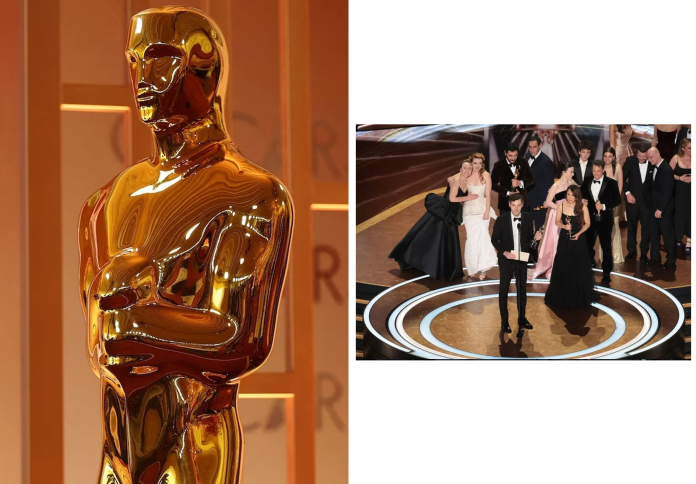
The 98th Academy Awards ceremony took place on March 15, 2026, at the Dolby Theatre in Hollywood, hosted once again by comedian Conan O’Brien. His second consecutive year at the helm was marked by a commitment to balancing the “magic” of the movies with the realities of the wider world. The event itself served as the final chapter in a season defined by the tension between mass-market appeal and individual artistic vision.
As the dust settled on the 2026 race, the overarching takeaway was clear: the Academy had firmly backed the auteur. From the record-shattering achievements of Sinners to the quiet, poetic resonance of Hamnet, the nominations were a testament to a changing landscape. It was a year where the stories that felt the most daring, the most specific, and the most fiercely directed took center stage, forever altering the expectations for what a record-breaking Oscar film can be.