At the 2025 Venice Architecture Biennale, Morocco’s pavilion challenges the dominance of concrete by celebrating the wisdom of ancient building techniques—and rethinking the future of soil as a modern, resilient material.
A pavilion rooted in earth
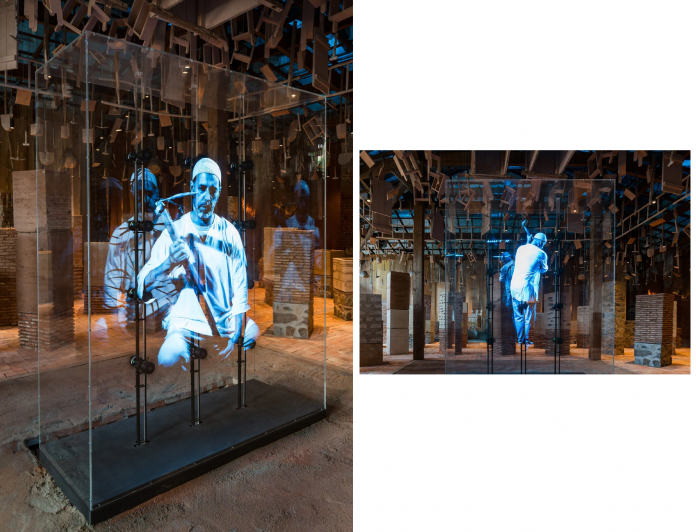
The Morocco Pavilion at the 2025 Venice Architecture Biennale stands as a literal and conceptual monument to the power of earth. Titled Materiae Palimpsest, the installation explores the architectural possibilities of soil—its cultural memory, tactile strength, and potential for resilience in a rapidly changing world. Created by Moroccan architects Khalil Morad El Ghilali and El Mehdi Belyasmine, the pavilion presents a powerful argument: that traditional earthen materials, when paired with modern engineering, offer a sustainable and culturally rich alternative to concrete.

The heart of the pavilion features 72 pillars crafted from an array of earth-based materials, including rammed earth, adobe, cob, stone, and brick—each linked to distinct vernacular traditions in Morocco. Held together by a post-tensioning system developed by El Ghilali’s firm Atelier Be, these prefabricated blocks showcase not only material versatility but structural innovation. This same technique, tested in real-world conditions, proved effective during Morocco’s 6.9-magnitude earthquake in 2023—the strongest in the country’s history.
Learning from the past to build the future
El Ghilali’s architectural mission goes beyond preservation; it is about adaptation. In Morocco’s mountainous regions, where traditional earthen construction is widespread, the earthquake exposed both vulnerabilities and opportunities. El Ghilali believes that with the right foundations—literally and metaphorically—earthen buildings can be made earthquake-resistant, flood-proof, and multi-storey. “We can build high with this kind of material,” he said. “We can build fast, and instead of covering buildings with fake textures, we can build with authenticity.” The pavilion reflects this ethos: a blend of ancient technique and contemporary engineering, grounded in local know-how but aimed at a global future.
Yet, as El Ghilali warns, that knowledge is at risk of disappearing. “It was geniuses who created the forts of Rabat, Marrakesh, and the Medina of Fez,” he reflected. “The problem now is that knowledge is getting lost.” Materiae Palimpsest becomes a living archive—an invitation to rediscover, refine, and preserve techniques that have shaped Moroccan identity for centuries.
Challenging the reign of concrete
At its core, the pavilion critiques modern architecture’s over-reliance on concrete, a material El Ghilali sees as a product of globalization that has flattened local building traditions. “Research has turned its back on material diversity and focused only on concrete,” he said. “That, for us, is one of the greatest losses of the 20th century.”

Instead of erasing the past, El Ghilali advocates upgrading it. His hope is that architects around the world will reconsider the value of earth not just as a symbol of heritage, but as a forward-looking material capable of meeting modern demands—environmental, aesthetic, and structural. “These norms are something that research needs to dig into,” he insisted.
Morocco is already taking steps in that direction. The country is leading discussions around building regulations that integrate paraseismic engineering using local materials. Alongside several other Arab nations, Morocco has proposed that UNESCO add earthen building traditions to its list of Intangible Cultural Heritage—an important move to ensure these techniques are not just remembered but revived.
A global shift toward the soil

Morocco’s earthen vision is not alone in Venice. Soil has emerged as a recurring theme at the Biennale, with national pavilions from Mexico and Turkey also exploring ancient construction methods rooted in earth. El Ghilali sees this convergence as a sign of “global consciousness” reawakening.
“It’s about natural intelligence, not just artificial intelligence,” he remarked, nodding to the biennale’s 2025 theme Intelligens Natural Artificial Collective. For El Ghilali, intelligence in architecture comes from the ground up—literally. “You cannot just come with drawings. You need to build with your hands and show people how to do it.” His vision is one of collaborative craftsmanship: architects who are not distant designers but part of the communities they serve. In this way, the pavilion is as much a call to action as it is a physical exhibit—challenging architects, governments, and educators to reconnect with the earth.

Reclaiming common sense through architecture
As the Venice Biennale continues through November, Materiae Palimpsest stands as a humble but forceful reminder of what architecture could be when stripped of excess. It doesn’t seek to romanticize the past, but to retool it—offering a blueprint for building that is grounded in sustainability, identity, and resilience.
In an age where architecture often races toward the future, Morocco’s pavilion dares to look down—to the earth beneath our feet—and ask how the past might still shape what’s to come.